

How SOPHIE Stabilizes Practice Operations
SOPHIE reinforces operational standards across your team so work gets done to expectation, performance stays stable, and the owner stops acting as the reminder system.
It connects how your practice is designed to how it actually runs so execution holds throughout the day.
THE CHALLENGE
You Have Checklists.
You Don't Have Reinforcement.
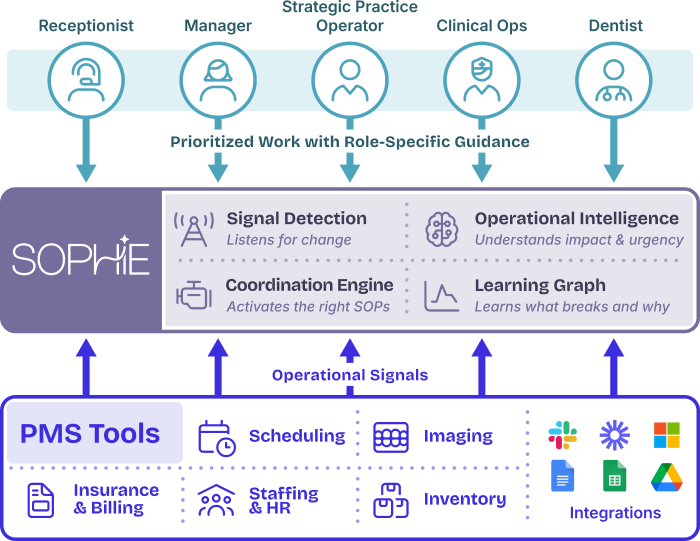
Teams usually know what should happen. But when standards live in binders, meetings, or memory, execution becomes inconsistent...and performance becomes fragile.
Small breakdowns compound across scheduling, treatment, insurance, and patient follow-up until results start to swing. Because nothing is carrying those expectations into the day.
SOPHIE reinforces standards where work actually happens so execution holds throughout the day without constant reminders.
THE SOPHIE EXECUTION ENGINE
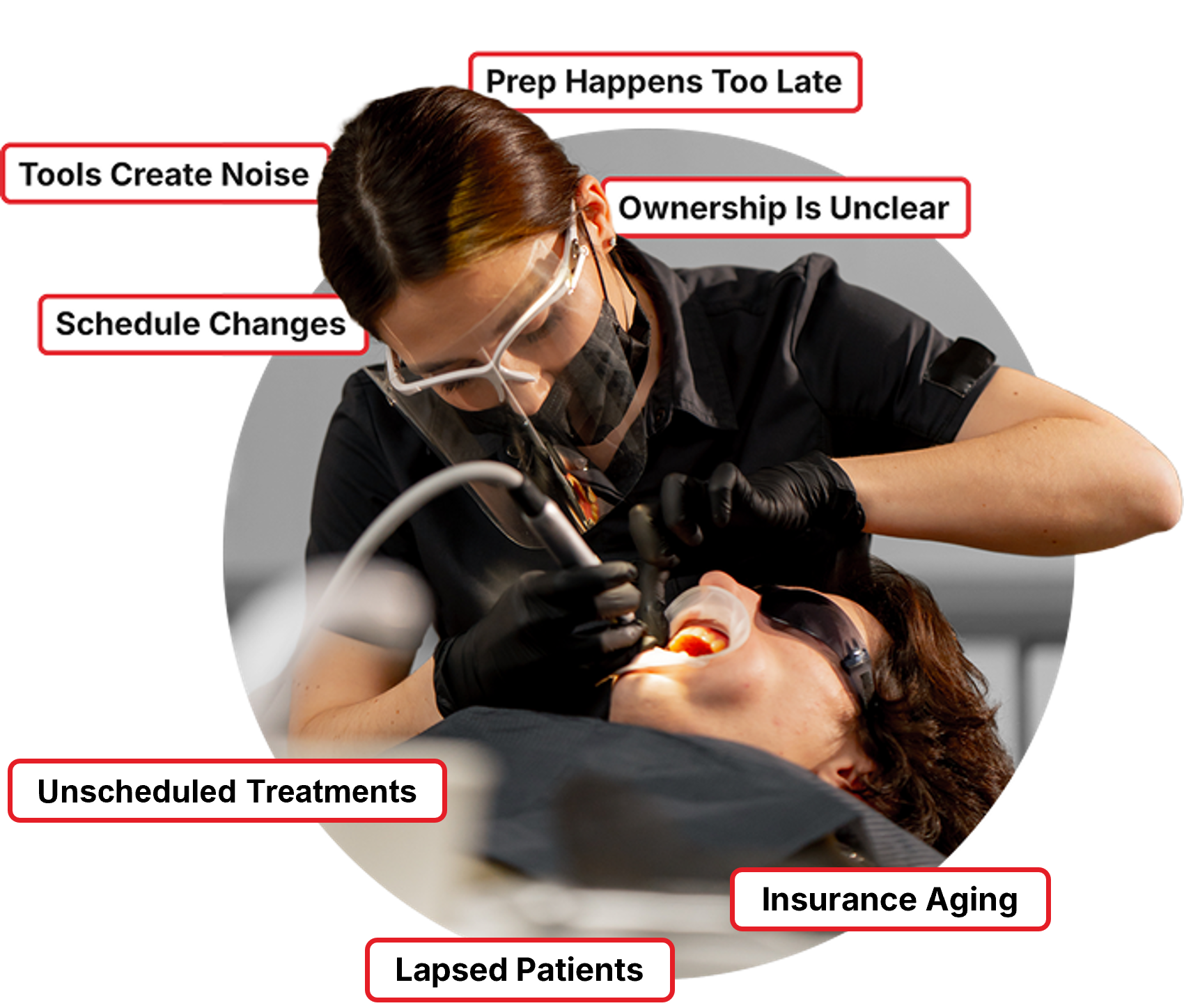
Detect. Direct. Reinforce. Improve.
Operational stability doesn’t come from more meetings or more checklists.
It comes from reinforcing standards continuously across the day.
CONNECT SYSTEMS TO YOUR PRACTICE
How SOPHIE Connects Your Practice to How It Runs
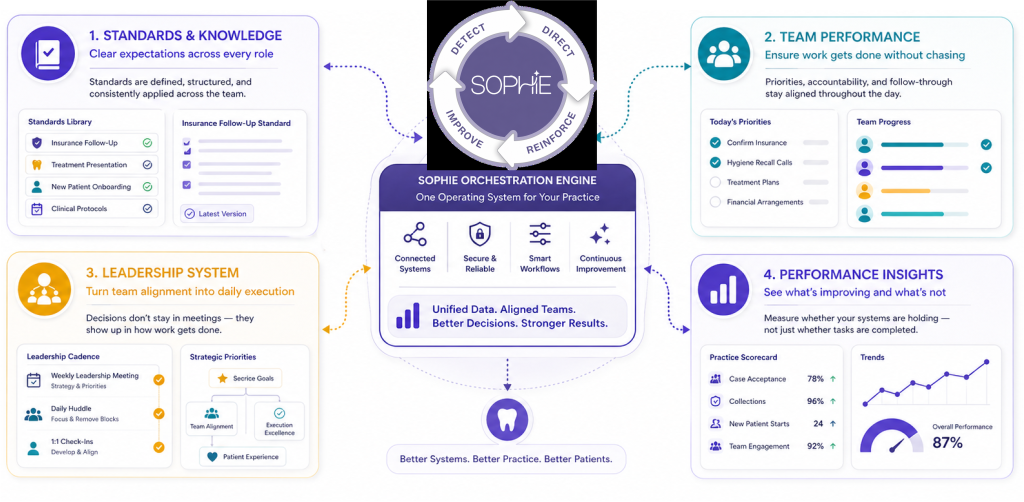
SOPHIE operates as a system across four layers:
Standards → Execution → System → Performance
Standards
Explore Standards & Knowledge ➜Define how work should happen across your practice.
• Role-based expectations
• Prebuilt dental workflows
• Knowledge from your tools and systems
Team Performance
See Dynamic Execution ➜Ensure work actually gets done throughout the day.
• Real-time prioritization across roles
• MyDay: what each role needs to focus on now
• Automated nudges and escalation when work stalls
Leadership System
Explore Practice OS ➜Run your practice with structure, visibility, and accountability.
• Scorecards and KPIs
• Fix lists and issue tracking
• Power hours and execution cadence
Performance Insights
Explore Performance ➜Measure execution strength across your team and practice.
• Practice Stability Score
• Team and role performance
• Visibility into execution gaps
Decisions don’t stop at meetings...they carry into execution and stay consistent across the day.
HOW IT WORKS
From Setup to Reinforcement in Hours
PREBUILT FOR DENTAL PRACTICES
Start With Standards Already Mapped To Your Team
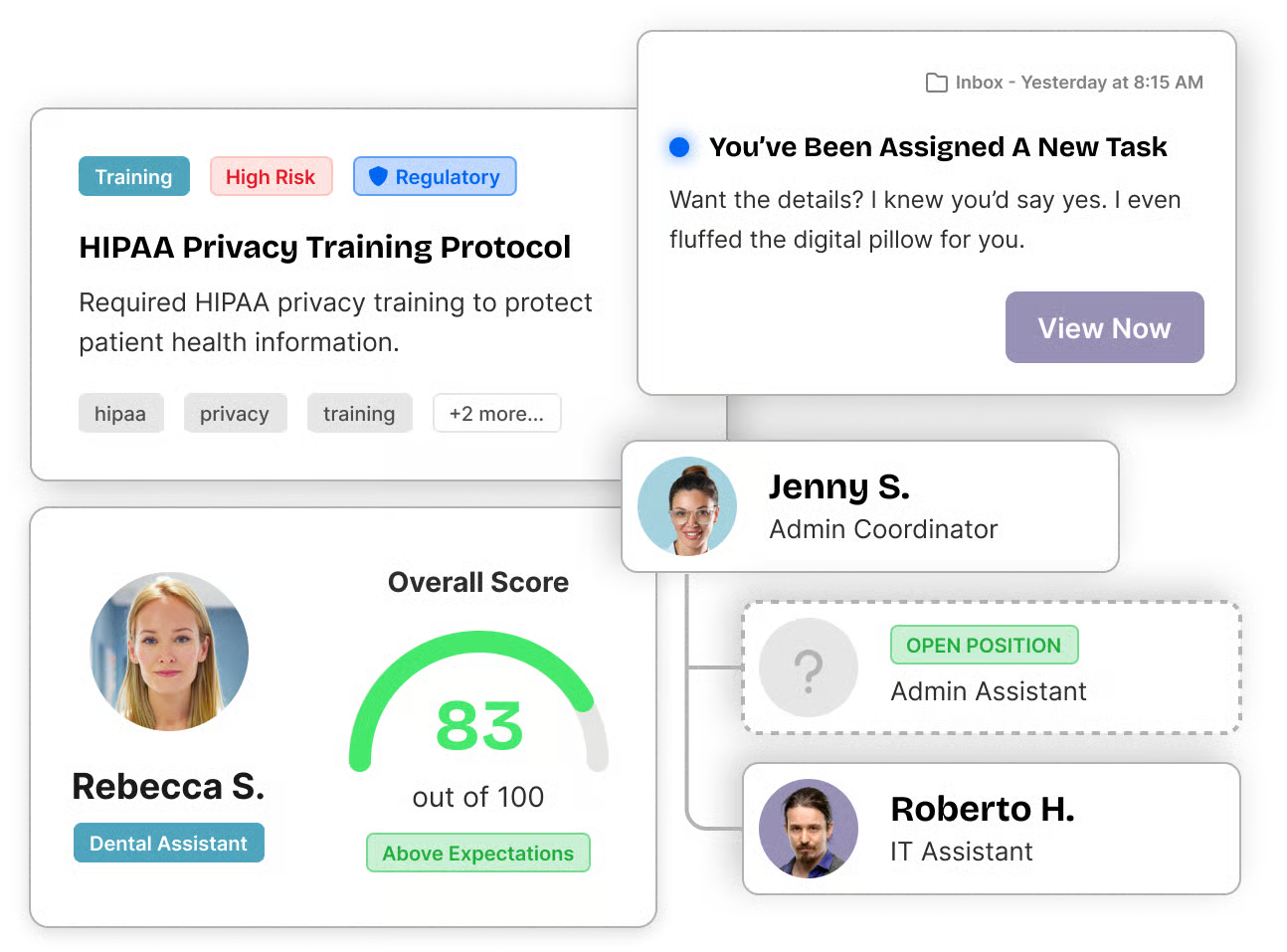
SOPHIE comes with a complete role-based system already aligned to how dental practices operate so you don’t start from scratch. Assign your team to roles and execution begins reinforcing immediately.
Case Acceptance Consistency
- Schedule confirmations
- Treatment follow-up
- Recall reactivation
Denise N.
Receptionist

Patient Follow-Through
- Case presentation
- Financing follow-ups
- Treatment scheduling
Mauricio A.
Treatment Coordinator

Daily Execution Holds
- Daily priorities
- Team coordination
- Operational oversight
Linda H.
Office Manager

Insurance Follow-Through
- Claim follow-ups
- Aging reports
- Payment posting
Susan P.
Insurance Coordinator


THE SHIFT
Stop Handing Out Tasks.
Start Running a System.
Checklists create activity.
Reinforcement creates consistency.
When standards hold across the team, performance becomes stable.
You stop holding everything together...the system starts doing it for you.
LEARN More
See Where Your Practice May Be Losing Stability
If your practice depends on constant reminders, catching mistakes, or one person holding everything together... SOPHIE reinforces the system that makes performance hold.