From Patient Journey to Dental Practice Stability: What Actually Makes Growth Hold


By  April 17, 2026

Your Process Isn't the Problem. Your Execution Is.

Most dental practices already know what to do. The gap isn't knowledge — it's the system that makes sure it actually gets done.


Walk into almost any dental practice today and you'll find a recognizable structure. Scheduling, check-in, consultation, diagnosis, treatment, follow-up. The stages are mapped. Roles are assigned. Metrics are on someone's dashboard. And yet, two practices running what looks like an identical operation will produce wildly different results month after month.


That inconsistency rarely comes from a broken process. It comes from something harder to fix: the gap between a defined process and a performed one.


The Map Is Not The Territory

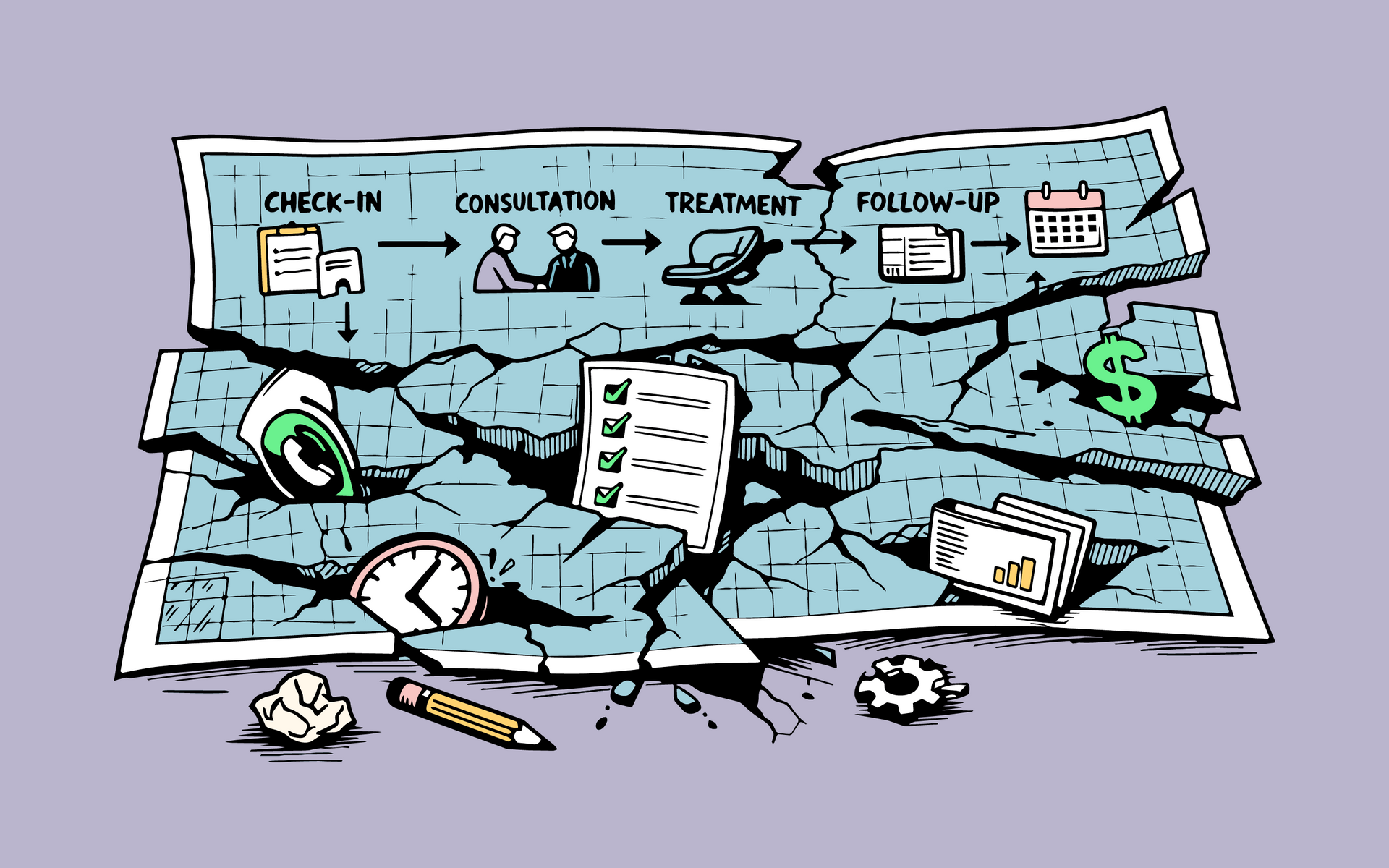
On paper, the patient journey is sequential and controlled. In reality, it's full of places where execution quietly falls apart. A call gets missed and nobody loops back. A treatment plan gets presented once, then dropped. A follow-up sits in a task list until it doesn't. A financial conversation loses momentum and the case goes cold.


None of these are training failures. The staff knows what should happen. The breakdown is in the handoff between knowing and doing — and it compounds silently until it shows up in your numbers.

"A defined process does not guarantee a performed process."

Why Incremental Fixes Don't Hold

The standard response to execution drift is incremental improvement: better scripts, updated SOPs, additional training, a new tool in the stack. And those changes often work — for a while. Then the system drifts back.


Not because the strategy was wrong. Because the fix was built on unstable ground: memory, individual motivation, and the hope that accountability will happen on its own. Those aren't foundations. They're variables. And in a busy practice under daily pressure, variables lose.


The Real Lever Is Stability, Not Optimization

The shift most practices need isn't more optimization. It's more stability. The difference matters.

An optimized practice knows what to do. A stable practice ensures that what should happen actually happens — consistently, across people, across roles, and under pressure.


Stability means tasks aren't just assigned; they're completed. Follow-ups aren't just planned; they're executed. Metrics aren't just reviewed; they're acted on. Ownership isn't just defined; it's enforced. It removes the reliance on heroics and replaces it with structure.


Even Well-Run Practices Break Down

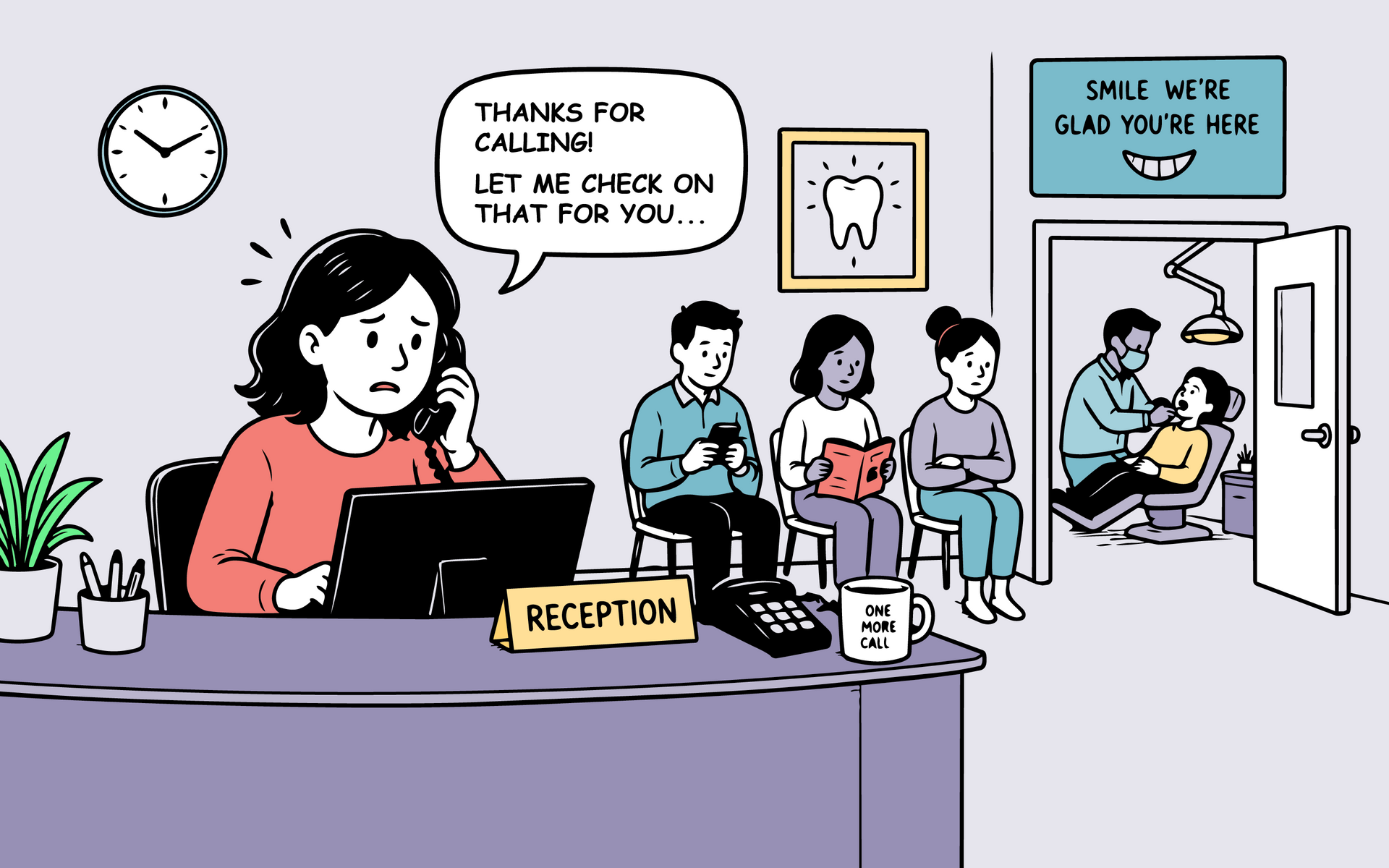
The breakdown points are predictable. Missed calls that are never recovered. Unscheduled treatment that ages out without a second touchpoint. Hygiene opportunities that surface once and disappear. Follow-ups assigned to no one in particular, which means they belong to everyone and get done by no one.


Each of these is an execution gap, not a knowledge gap. And execution gaps don't stay isolated — they compound. A single unrecovered missed call isn't a crisis. Three hundred of them over a year is a material revenue problem. The math gets uncomfortable fast.


What's Missing: Continuous Reinforcement

The layer most practice management systems skip isn't insight. They're fairly good at showing you what happened. What they don't provide is a mechanism that ensures what should happen actually does — every day, across every role, without relying on a manager to follow up on the follow-ups.

Without that enforcement layer, even the best-designed workflows degrade over time. Not because the team is failing. Because no system has been built to hold them.


A Different Question To Ask

Most practices ask: "Do we have the right process?" The better question is: "Do we have a system that ensures the process holds?"


That's the category SOPHIE operates in. Not another tracking tool. Not an AI assistant. A system that sits across your existing workflows, assigns and monitors execution across roles, surfaces where breakdowns are happening in real time, and quantifies what those breakdowns are costing you.

The result isn't that your team learns something new. It's that what your team already knows finally gets done — every time.


What Changes When Stability Arrives?

When execution becomes consistent, the outcomes aren't subtle. Missed opportunities get recovered before they age out. Treatment completion rates climb. Team performance becomes something you can predict and build on. Growth stops being a function of whoever had a good week and starts being a function of the system itself.


That's what stability produces. Not a better strategy — a better floor.
See what SOPHIE AI can do for you!

Apply for the 2-Week Stability Test

You will have a dedicated resource walking you through the process.

This offer is only valid for a short time and space is limited.

SHARE THIS

Latest Posts

AI Receptionists in Dentistry: Why They Work for Some Practices—and Fail for Others
April 6, 2026
AI receptionists can improve call handling—but they don’t fix what happens next. Learn why inconsistent systems cause most dental practices to lose revenue.
dental patient journey
April 6, 2026
Dental patient journeys often fail due to inconsistent execution, not poor strategy. Learn where breakdowns happen and how to fix operational leaks.
dental performance software
April 2, 2026
Most small to midsize dental practices don’t have a growth problem. They have operational leaks costing $100K–$300K+ per year. Learn why visibility doesn’t fix it and how to measure what actually holds.
dental coaching insights
April 2, 2026
A dentist spent $50K on coaching and found the real driver of performance wasn’t strategy...it was execution. Here’s what most practices miss.
dental practice sofware
March 24, 2026
Most dental practice software tracks activity—but doesn’t ensure execution. Learn why case acceptance, unscheduled treatment, and insurance aging persist—and what actually fixes it.
dental practice operational improvements
March 24, 2026
If your dental practice improves—but never stays consistent—this explains why. Discover the hidden reason execution keeps breaking (and what actually fixes it).
dental consultant
March 23, 2026
Dental consultants drive improvement—but why doesn’t it last? Discover the real reason change fades and what’s missing inside dental practice operations.
dental training fails
March 23, 2026
You trained your team. So why isn’t the work happening consistently? The real reason training fails in dental practices—and what actually fixes it.
dental task management
March 21, 2026
Task tools are built for projects—not real-time clinical operations. Here’s why they break in dental practices and what actually works instead.
dental analytics practice intelligence
March 20, 2026
Your reports show exactly what’s wrong—but nothing changes. Here’s why dental analytics tools fail to improve performance.
Show More