
AI Receptionists Are Not The Problem


By  April 25, 2026

...But They're Not the Solution Either.

The debate over AI call handling is missing the point. The question was never whether to answer more calls — it's whether your practice can hold the patients who come through them.

AI receptionists are having a moment in dentistry. Some practice owners swear by them. Others won't go near them. Most are somewhere in the middle, wondering if the hesitation is instinct or just fear of change.


When a technology produces this much disagreement among experienced operators, the technology usually isn't the problem. The outcomes are inconsistent because the systems they're being dropped into are inconsistent. That's the conversation the industry keeps missing.

What Practitioners Are Actually Saying

Scroll through any active dental operations group and you'll find the full spectrum: practices that love their AI receptionist, practices where patients complained, and everything in between. One line from a dental office manager cuts through all of it:

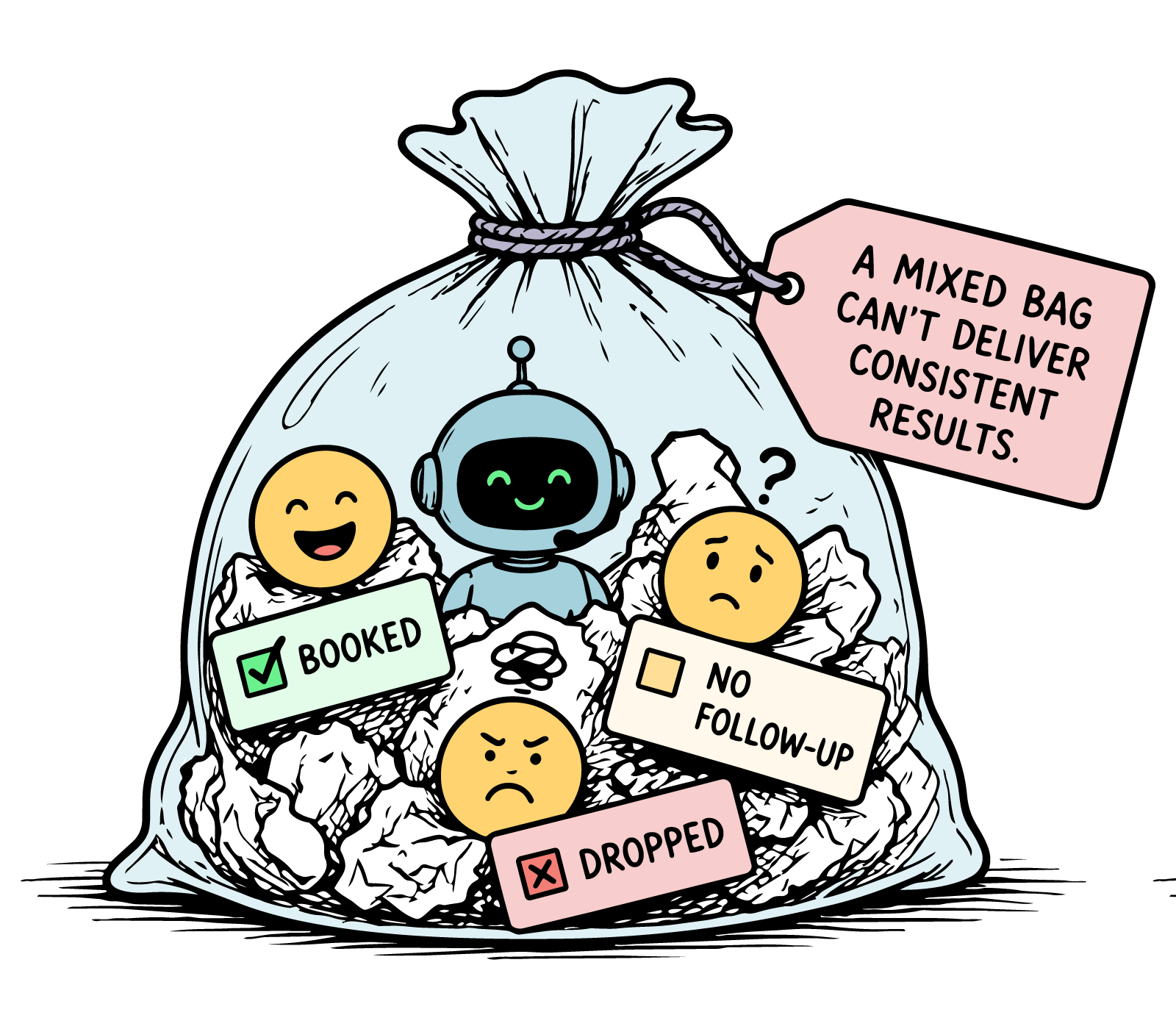
"Your front line should not be a mixed bag."

- Dental Office Manager (from a Dental Operations Forum)

That's not a complaint about AI. It's a diagnosis of what happens when any tool gets placed into an unstable system. The mixed results aren't random. They're predictable.

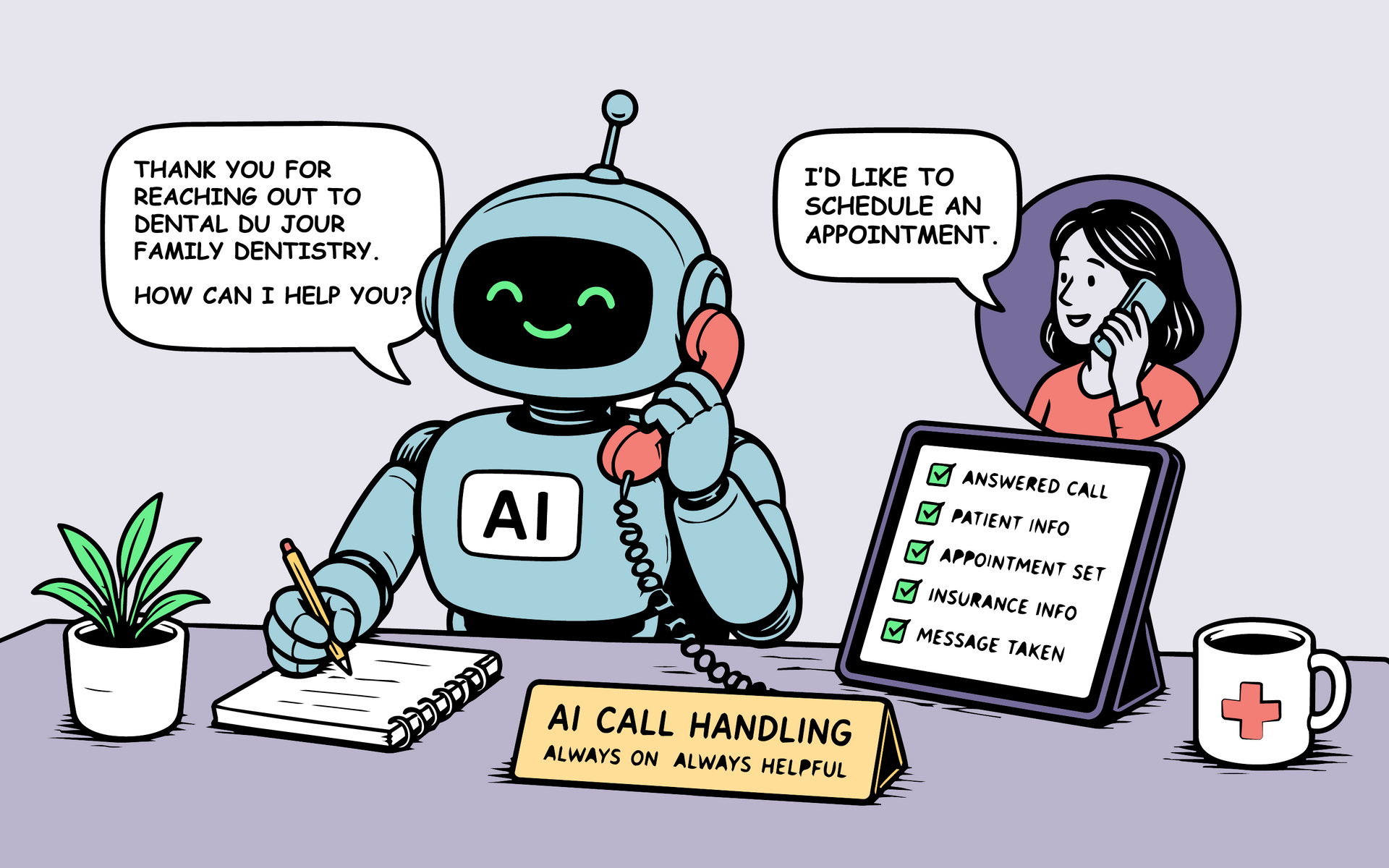
Solves Access

  • Answers more calls
  • After-hours coverage
  • Overflow handling
  • Reduces missed connections

Doesn't Solve Execution

  • Patient actually schedules
  • Treatment gets accepted
  • Follow-through on plans
  • Completed follow-ups

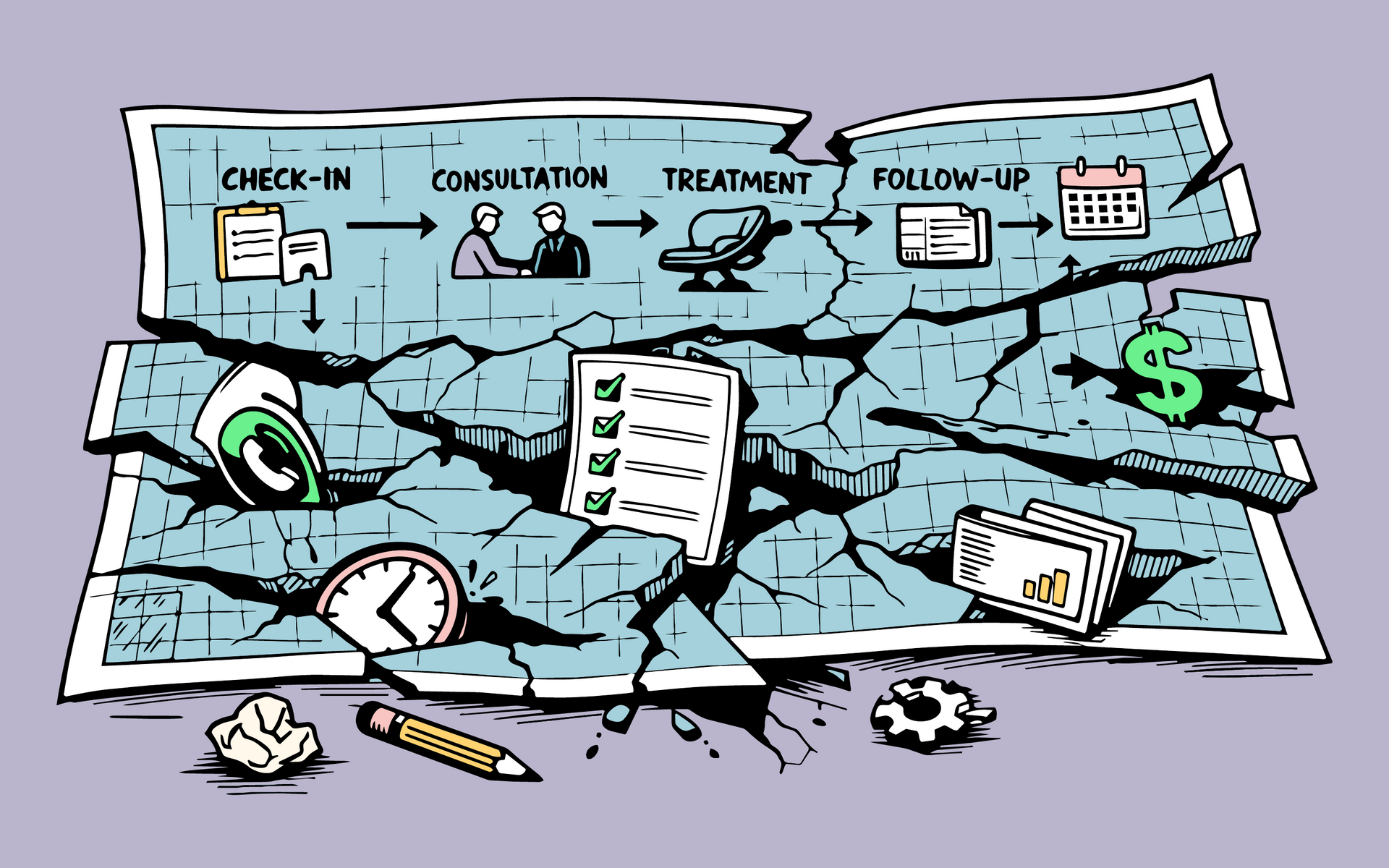
Most practices aren't losing revenue at the call. They're losing it after, when a follow-up doesn't happen, a treatment plan goes unaddressed, or a recare opportunity ages out. That's not a front-desk problem. That's a system execution problem.

The hidden risk of scaling intake into a broken system

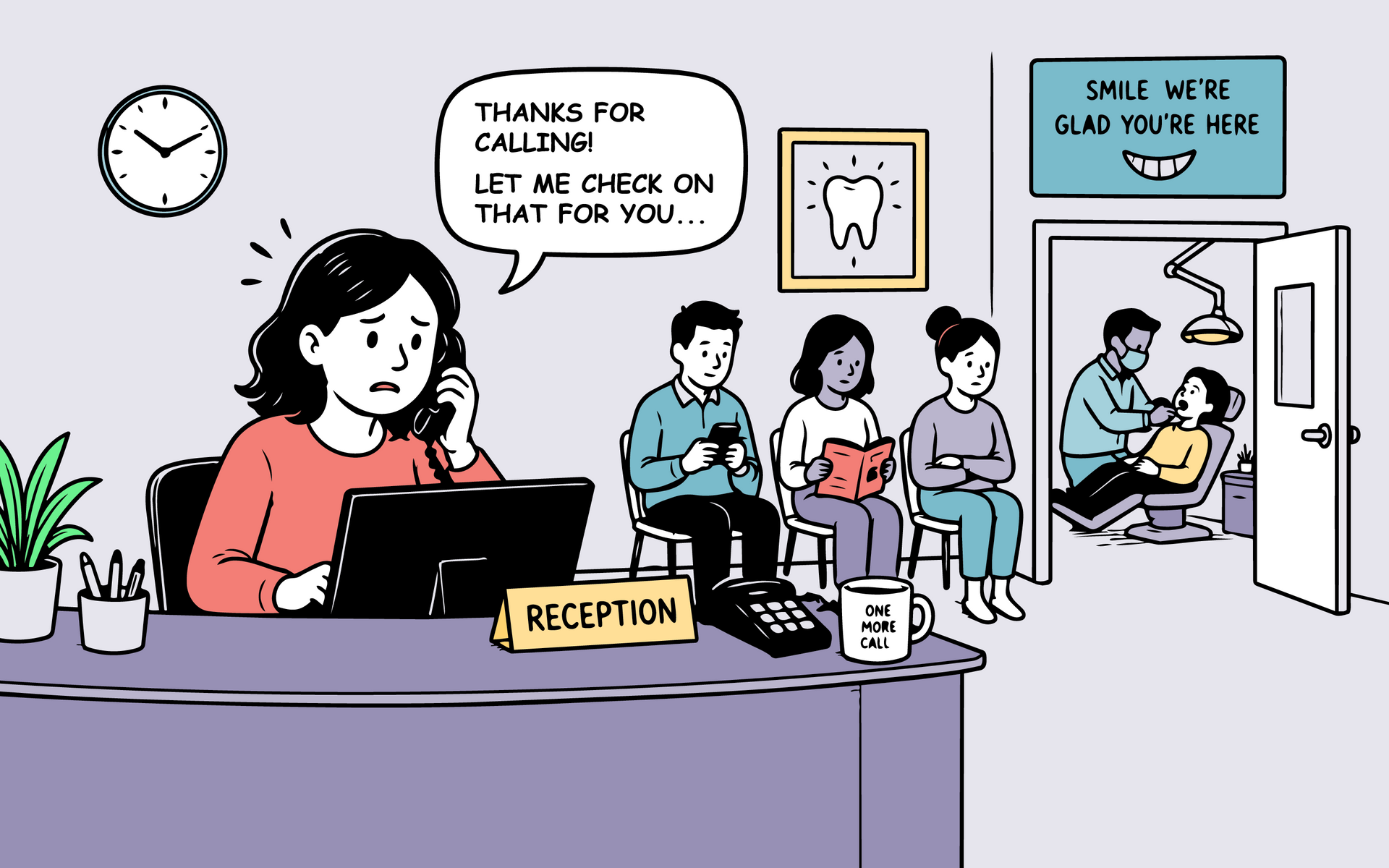
If your downstream execution is already inconsistent, more intake volume doesn't fix it.  This only amplifies it. More answered calls means more patients entering an inconsistent system, which means more breakdowns, more revenue walking out the door, and now at higher volume than before.


You can fix your answer rate and still lose the patient. You can solve the access problem and still have a growth problem.


Why results vary so much across practices

AI receptionists don't perform consistently across practices — they perform consistently within the constraints of the system they're placed into. A strong operational system makes an AI receptionist look like a great decision. A weak system with execution gaps makes it look like a liability. The technology didn't change. The system around it did.


The question worth asking instead

Most practices evaluating AI receptionists ask: "Should we get one?" The better question is: "What happens to a patient after they enter our system?"


If the answer is "it depends on who's working that day", the AI receptionist is a downstream problem, not a solution. The practices that see the best results aren't the ones with the best AI. They're the ones with systems that ensure scheduling completes, treatment conversations get revisited, and follow-ups don't fall through. The AI handles the door. The system handles everything behind it.


What actually needs to be fixed first

The leverage isn't at the top of the funnel. It's in consistent execution across the full patient journey. It starts with the initial call and goes all the way through treatment acceptance and recare (routine, long-term maintenance appointments). AI receptionists are not the problem. They're just incomplete. They solve access. They don't solve execution. And for most practices, execution is where the money is actually going missing.

See what SOPHIE AI can do for you!

Apply for the 2-Week Stability Test

You will have a dedicated resource walking you through the process.

This offer is only valid for a short time and space is limited.

SHARE THIS

Latest Posts

April 17, 2026
Your Process Isn't the Problem. Your Execution Is. Most dental practices already know what to do. The gap isn't knowledge — it's the system that makes sure it actually gets done. Walk into almost any dental practice today and you'll find a recognizable structure. Scheduling, check-in, consultation, diagnosis, treatment, follow-up. The stages are mapped. Roles are assigned. Metrics are on someone's dashboard. And yet, two practices running what looks like an identical operation will produce wildly different results month after month. That inconsistency rarely comes from a broken process. It comes from something harder to fix: the gap between a defined process and a performed one. The Map Is Not The Territory On paper, the patient journey is sequential and controlled. In reality, it's full of places where execution quietly falls apart. A call gets missed and nobody loops back. A treatment plan gets presented once, then dropped. A follow-up sits in a task list until it doesn't. A financial conversation loses momentum and the case goes cold. None of these are training failures. The staff knows what should happen. The breakdown is in the handoff between knowing and doing — and it compounds silently until it shows up in your numbers.

dental patient journey
April 6, 2026
Dental patient journeys often fail due to inconsistent execution, not poor strategy. Learn where breakdowns happen and how to fix operational leaks.
dental performance software
April 2, 2026
Most small to midsize dental practices don’t have a growth problem. They have operational leaks costing $100K–$300K+ per year. Learn why visibility doesn’t fix it and how to measure what actually holds.