

AI Receptionists in Dentistry Aren’t the Problem. But They’re Not the Solution Either.

Share

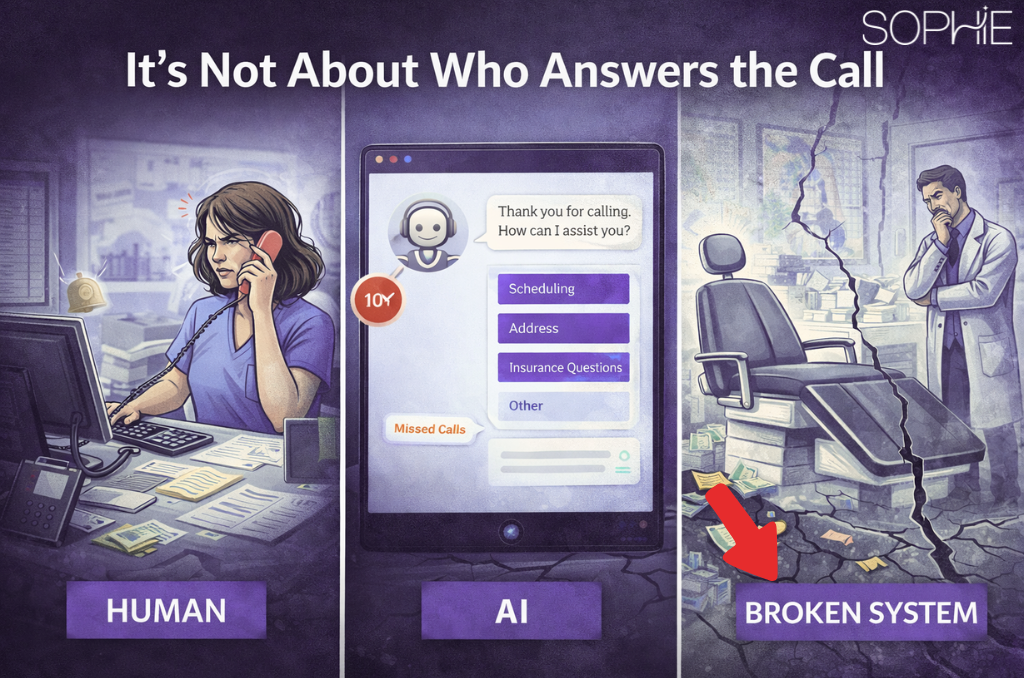
The Conversation Everyone Is Having (And Missing)

AI Receptionist in dentistry

The Conversation Everyone Is Having (And Missing)

AI receptionists are everywhere right now in dentistry. Some practices are all in. Others won’t touch them. Most are somewhere in between.


Depending on who you ask, they’re either:

  • a game changer
  • or something patients “hate talking to”


That kind of split should tell you something. Not that the technology is flawed. But that the outcomes are inconsistent.

What Real Practices Are Actually Saying

dental ai receptionists

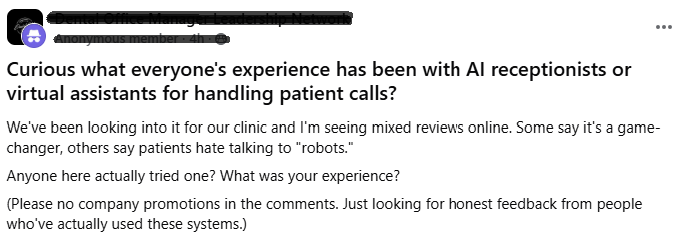
The question itself says everything: Practices are not asking what AI can do.


They’re asking:

“Does this actually work in the real world?”

And the answers are… all over the place.

The Pattern You Can’t Ignore

ai virtual assistants for dental practices

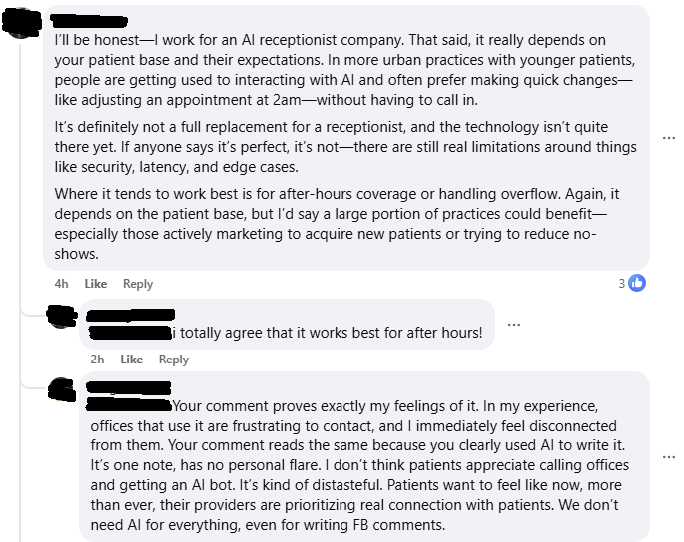
From people actually using these systems:

  • “We love it… we use it for everything.”
  • “I hate talking to AI…”
  • “It depends on your patient base…”
  • “It’s not a full replacement…”
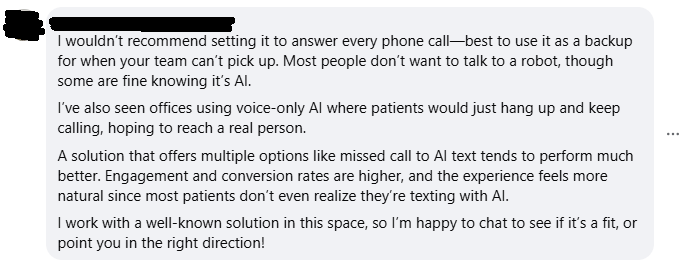
  • “Your front line should not be a mixed bag.”


That last line is the one that matters.

"Your front line should not be a mixed bag."

— Dental Office Manager (Facebook Group)

This Isn’t an AI Problem

It’s a consistency problem.


AI receptionists introduce:

  • variability in patient experience
  • variability in execution
  • variability in outcomes


And that variability shows up immediately.


Not because AI is bad. But because the system around it isn’t stable.

ai receptionists for dental practices

What AI Receptionists Actually Solve

Let’s be precise.


AI receptionists are very good at:

  • answering more calls
  • handling overflow
  • providing after-hours coverage
  • reducing missed opportunities at the top


That’s real value.

What They Don’t Solve

What happens after the call.


They don’t ensure:

  • the patient actually schedules
  • the patient shows up
  • the treatment is accepted
  • the follow-up is completed
  • the plan is carried through


And that’s where most practices lose revenue.

You can fix the call and still lose the patient.

The Hidden Risk No One Talks About

If your system is already inconsistent… Adding more intake doesn’t fix it.


It amplifies it.


More calls → more patients → more breakdowns

More breakdowns → more leakage


Now you’re just scaling inefficiency.

Why Some Practices Love Them (And Others Don’t)

This is the part most people miss. AI receptionists don’t perform consistently across practices.


They perform consistently within the constraints of the system they’re placed into.


So:

  • Strong systems → AI appears to work well
  • Weak systems → AI exposes more problems

The Real Question Practices Should Be Asking

Not:

“Should we use an AI receptionist?”

But:

“What happens after the patient enters our system?”

Because that determines everything.

Where Most Practices Actually Break

Not at the call. After it.


  • Patients don’t schedule
  • Treatment isn’t accepted
  • Follow-ups don’t happen
  • Plans don’t get completed


That’s not a front desk problem. That’s a system execution problem.

What Actually Needs to Be Fixed

If you want growth to hold, you don’t start with:

  • more calls
  • more marketing
  • more intake


You start with:

  • ensuring execution is consistent across the entire practice


Because without that:

Every new patient is just another opportunity to leak.

More patients into a broken system doesn’t create growth.
It creates more loss.

Where This Leaves AI Receptionists

They’re not useless.

They’re just incomplete.

They solve access.


They don’t solve execution.

The Missing Layer

What most practices need isn’t:

better call handling


It’s:

  • a system that ensures what happens after the call actually holds

Across:

  • scheduling
  • treatment follow-up
  • team execution

Final Thought

AI receptionists are not the problem. But if your system is inconsistent…


They will make it visible faster.


If you want to understand where your practice is actually breaking—and how much that’s costing—you need to measure it.


Because most practices don’t have a demand problem.


They have a system that doesn’t hold once the patient is inside it.

dental patient journey and practice stability
April 6, 2026
The Industry Has Already Mapped the Journey
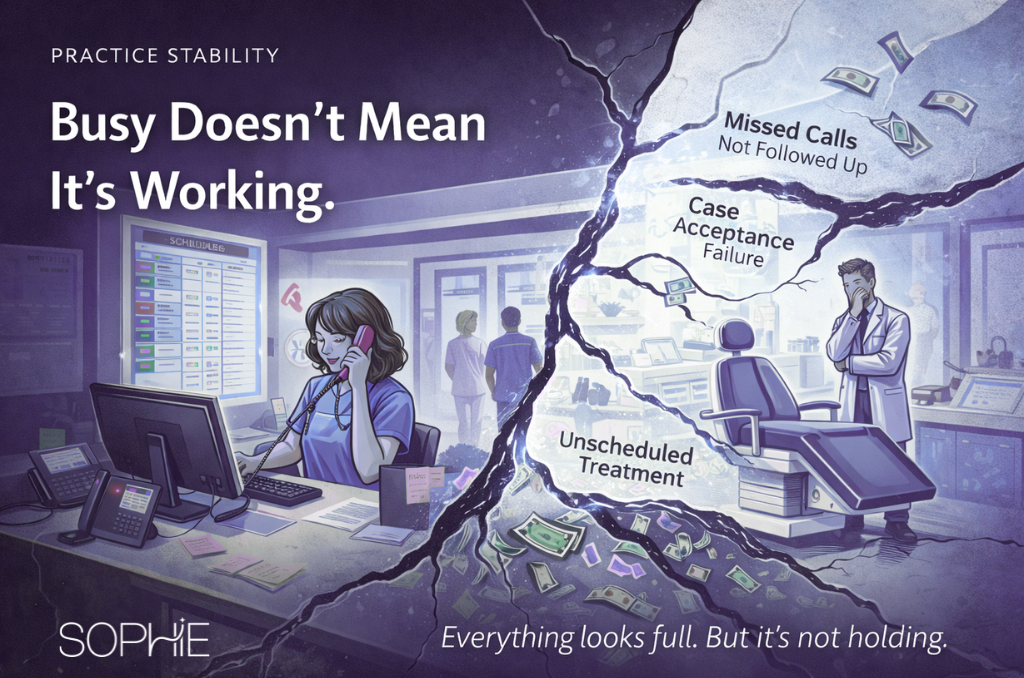
dental patient journey
April 6, 2026
Dental patient journeys often fail due to inconsistent execution, not poor strategy. Learn where breakdowns happen and how to fix operational leaks.
dental performance software
April 2, 2026
Most small to midsize dental practices don’t have a growth problem. They have operational leaks costing $100K–$300K+ per year. Learn why visibility doesn’t fix it and how to measure what actually holds.
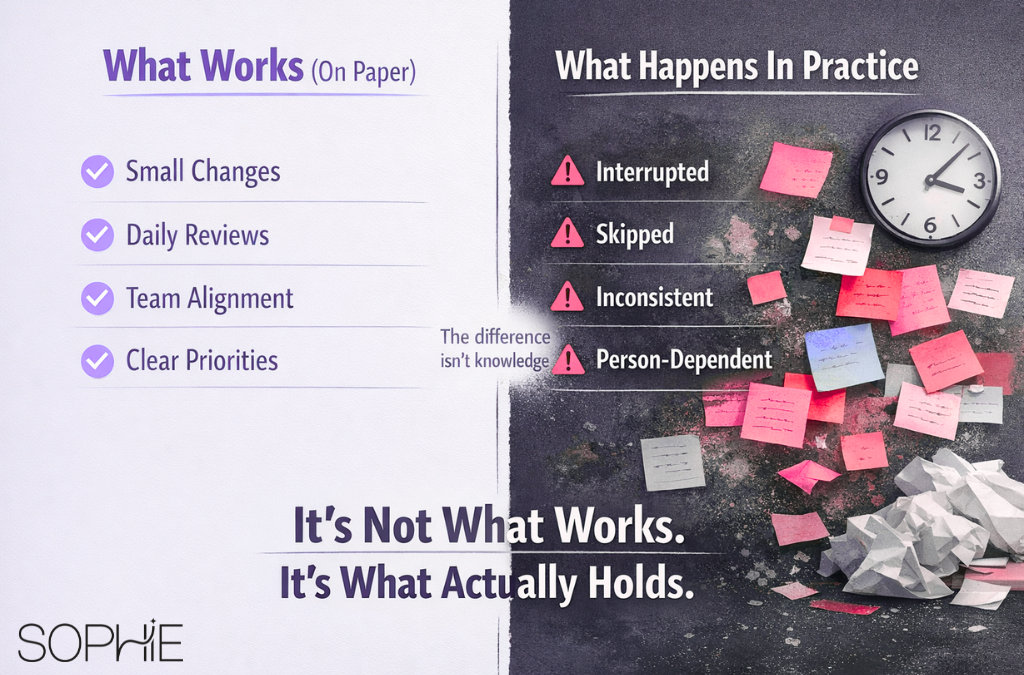
dental coaching insights
April 2, 2026
A dentist spent $50K on coaching and found the real driver of performance wasn’t strategy...it was execution. Here’s what most practices miss.

dental practice sofware
March 24, 2026
Most dental practice software tracks activity—but doesn’t ensure execution. Learn why case acceptance, unscheduled treatment, and insurance aging persist—and what actually fixes it.
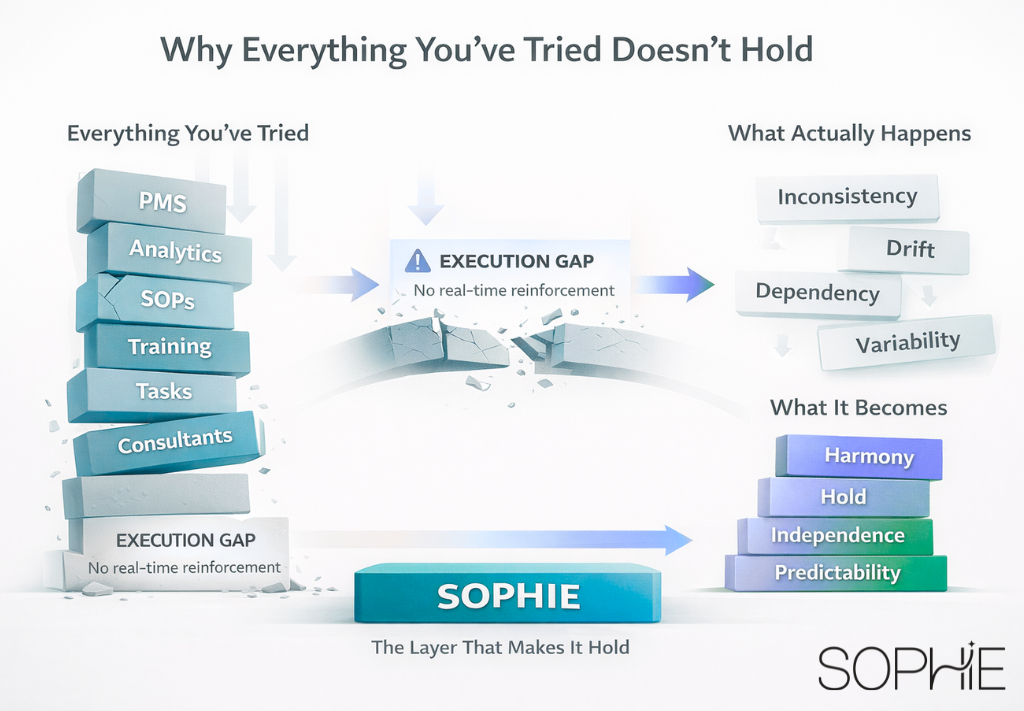
dental practice operational improvements
March 24, 2026
If your dental practice improves—but never stays consistent—this explains why. Discover the hidden reason execution keeps breaking (and what actually fixes it).

dental consultant
March 23, 2026
Dental consultants drive improvement—but why doesn’t it last? Discover the real reason change fades and what’s missing inside dental practice operations.
dental training fails
March 23, 2026
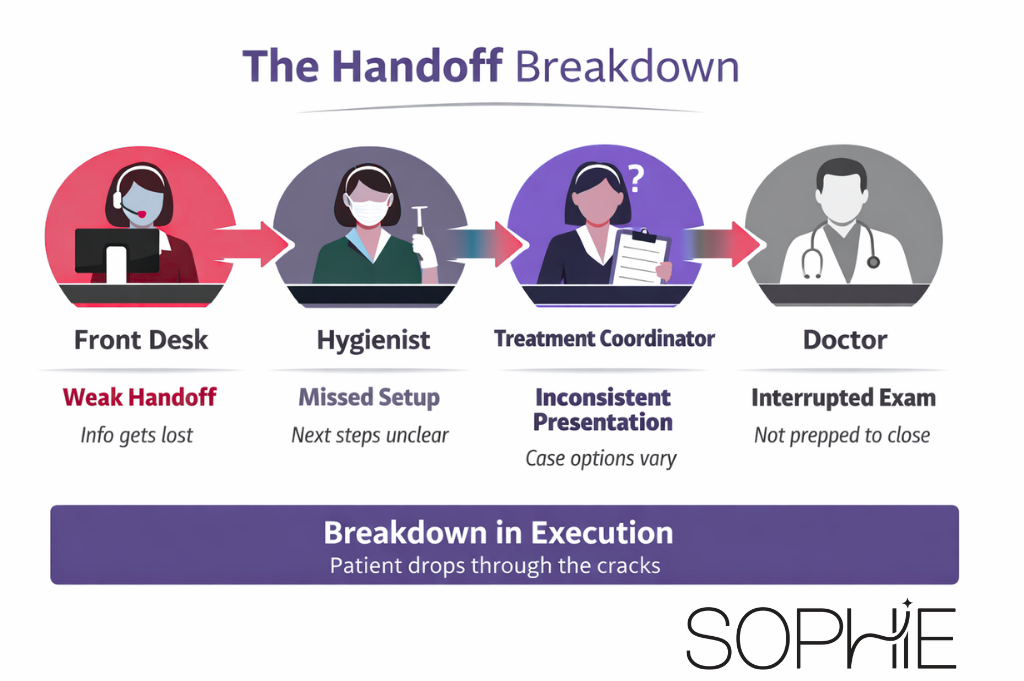
You trained your team. So why isn’t the work happening consistently? The real reason training fails in dental practices—and what actually fixes it.
dental task management
March 21, 2026
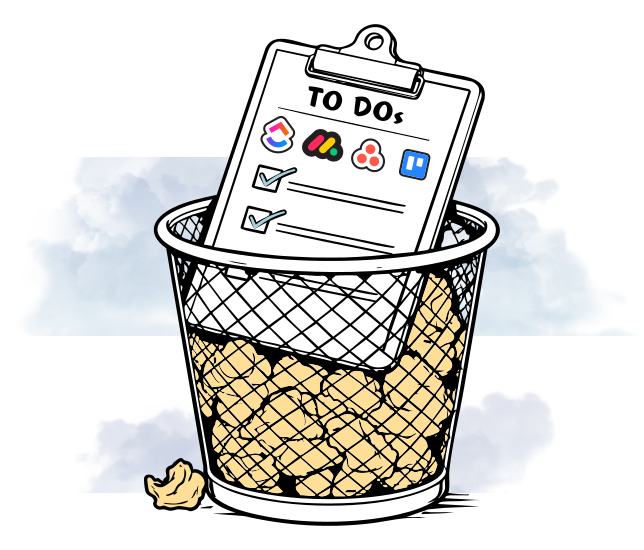
Task tools are built for projects—not real-time clinical operations. Here’s why they break in dental practices and what actually works instead.
dental analytics practice intelligence
March 20, 2026
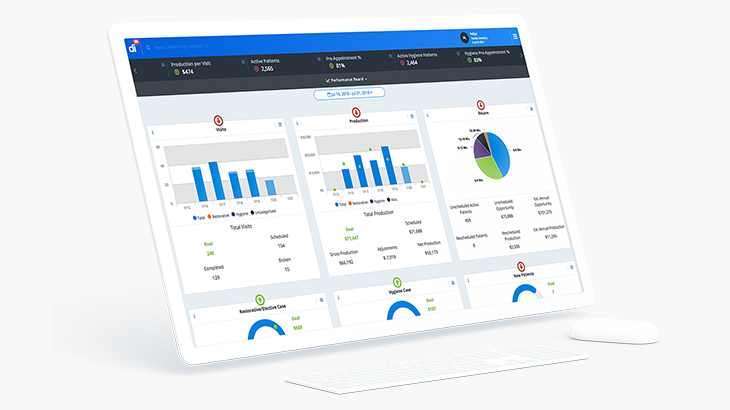
Your reports show exactly what’s wrong—but nothing changes. Here’s why dental analytics tools fail to improve performance.

Show More