
The $50K Dental Coaching Insight Most Practices Miss
(And why most of what works has nothing to do with what you paid for)

The post that should make you pause
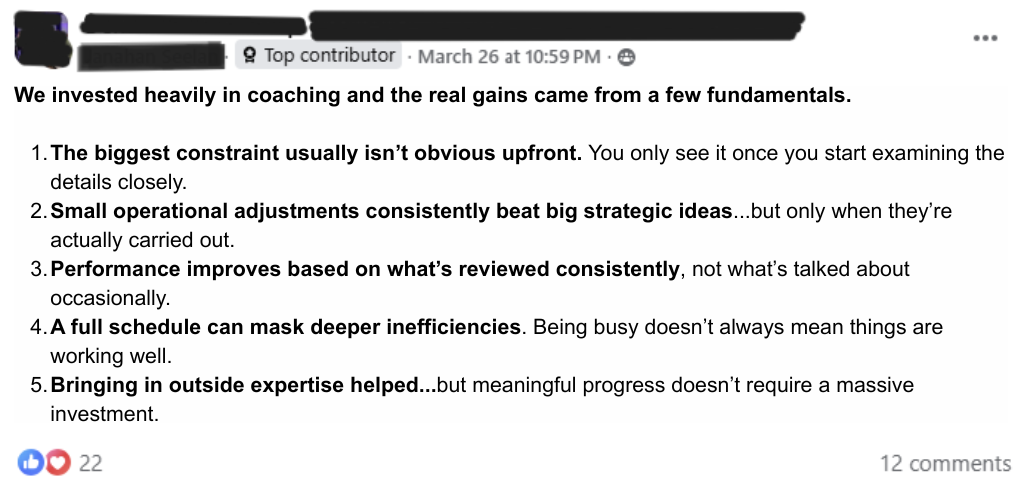
A dentist recently shared this after spending $50,000 on dental coaching:
These are patterns we consistently see across practice owner discussions.
Most of what worked comes down to five simple things.
Not frameworks.
Not systems.
Not strategy decks.
Just five things.
That summary should create tension.
Because if that’s true, then the question isn’t:
“What should I invest in next?”
It's:
“Why didn’t this work before?”
What actually worked (according to someone who paid $50K)
Let’s start with what they said...because it’s not wrong.
- The biggest constraint usually isn’t obvious at first
- Small operational changes outperform big ideas (if they’re followed through)
- Performance improves based on what gets reviewed regularly
- Being busy hides inefficiency
- You don’t need $50K to improve a practice
All of that is directionally correct.
But it’s incomplete.
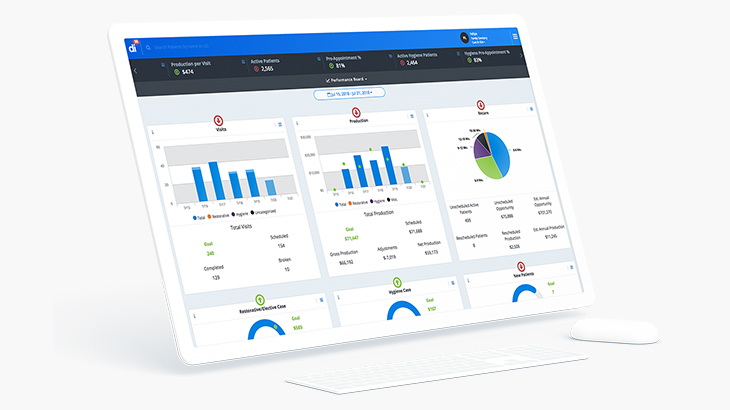
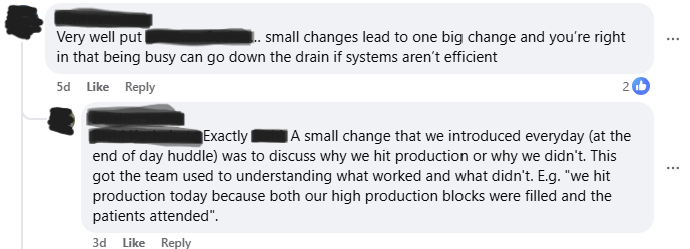
And to be fair...some practices do try to operationalize this:
This is a good example of what “doing the basics” actually looks like inside a practice.
The part no one says out loud
Here’s what’s missing:
None of those things work on their own.
They only work when someone is actively:
- paying attention
- reinforcing them
- correcting deviations
- keeping them alive
And that’s where most practices quietly break.
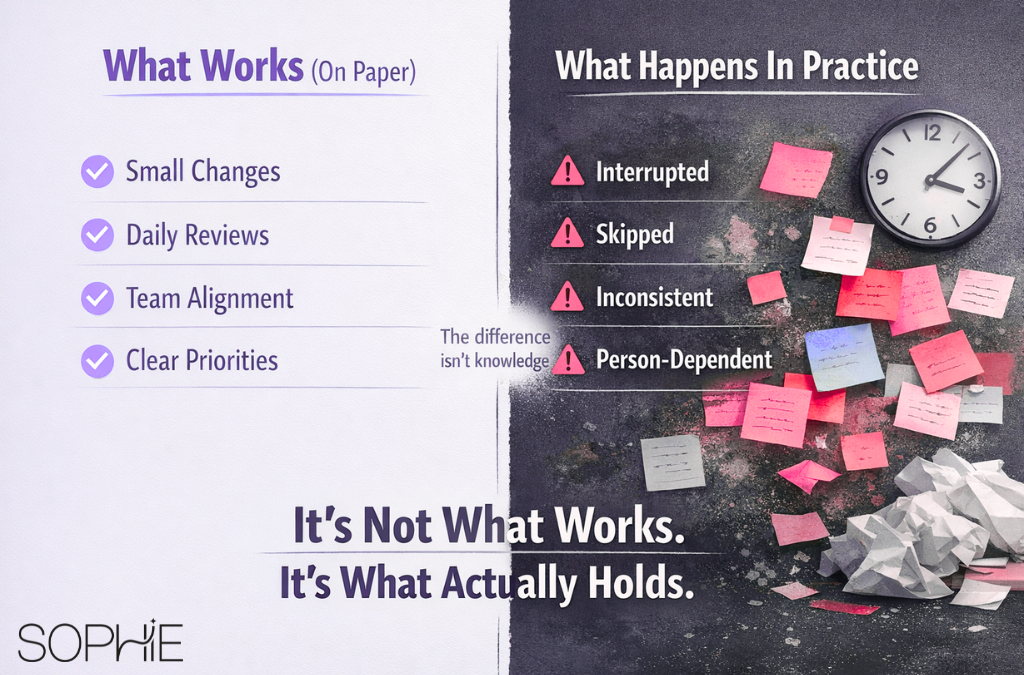
The insight isn’t what works.
The insight is what makes it stick.
Why this insight gets misinterpreted
Most practices hear this and think:
“We don’t need more help...we just need to focus on the basics.”
That sounds reasonable. It’s also where things start to unravel. Because “focus” is not a system. And in a dental practice:
- conditions change hourly
- patients don’t follow scripts
- teams vary in consistency
- interruptions are constant
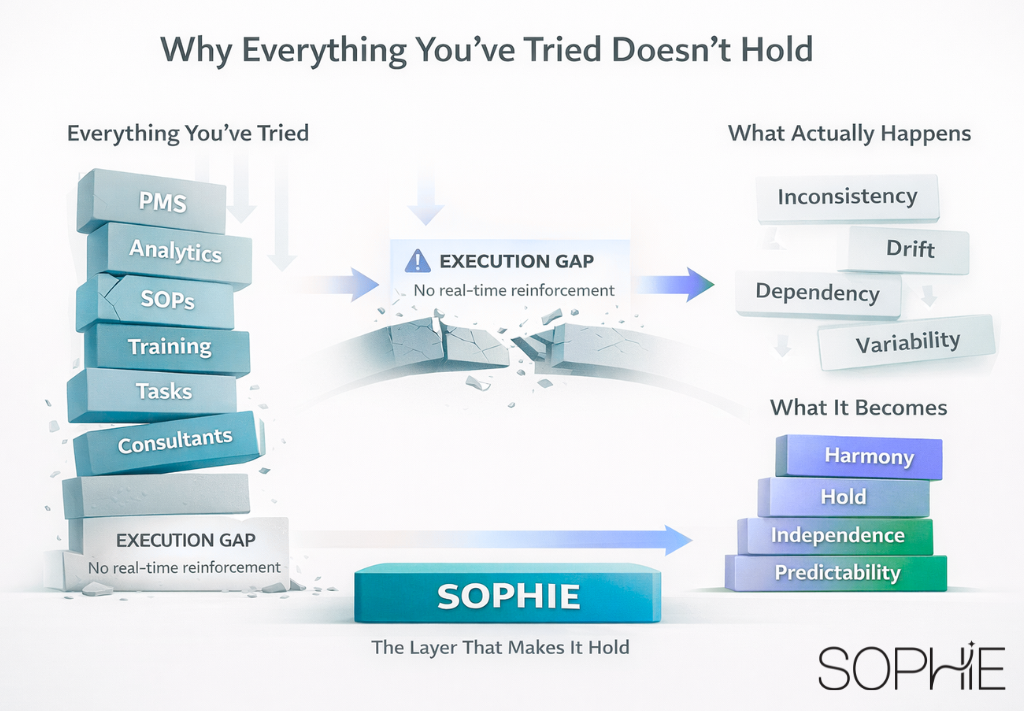
So what happens? The “simple things” become:
- inconsistently applied
- dependent on memory
- dependent on mood
- dependent on who’s working
Simple doesn’t fail because it’s wrong.
Simple fails because it doesn’t hold.
The real constraint isn’t what you think
Let’s go back to insight #1: “The biggest constraint usually isn’t obvious at first.” True. But here’s the deeper version:
The constraint isn’t:
- case acceptance
- scheduling gaps
- AR
- front desk performance
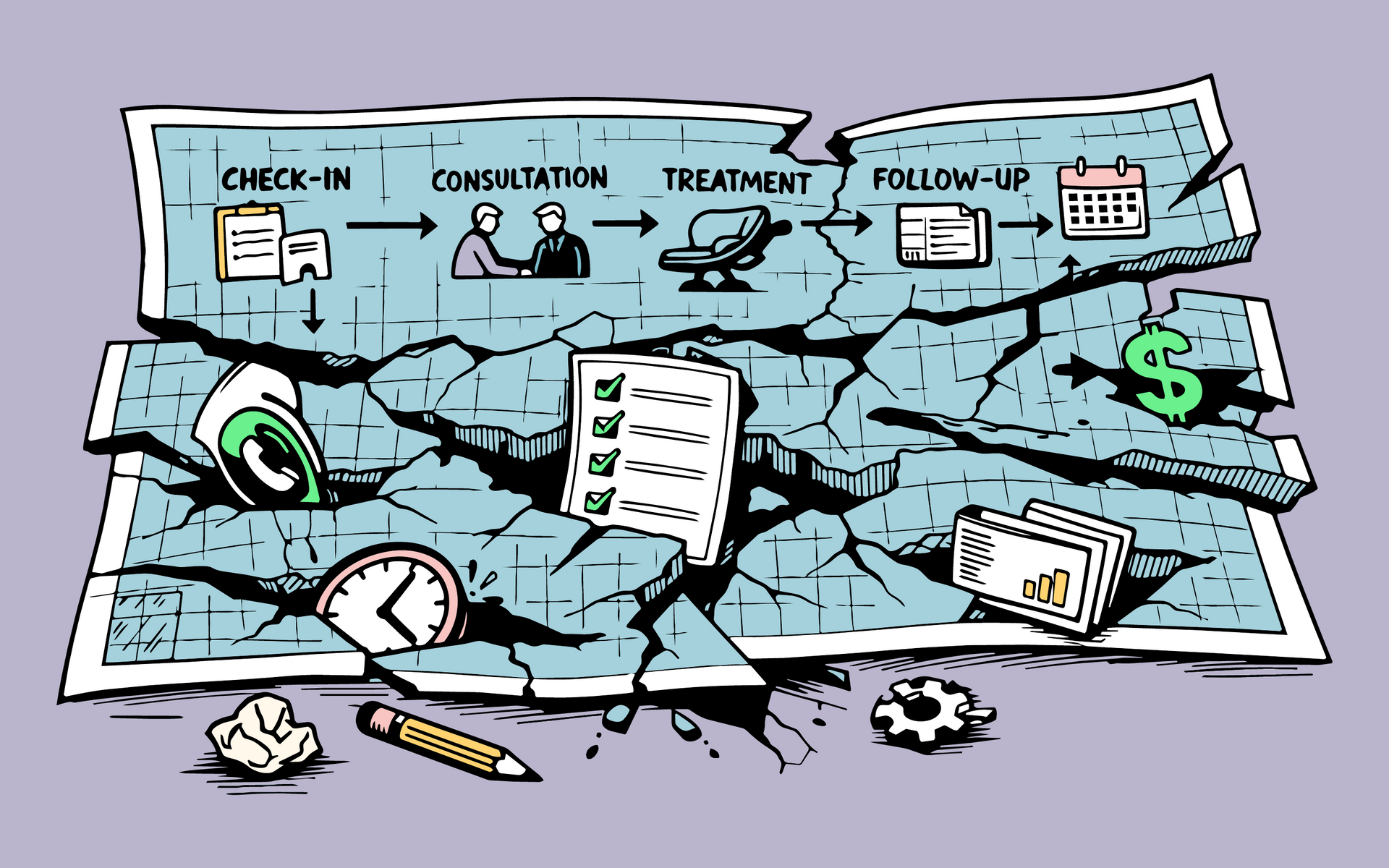
Those are symptoms. The real constraint is: Your practice cannot reliably execute the same standard, every time, under real conditions.
Where this shows up (even in “good” practices)
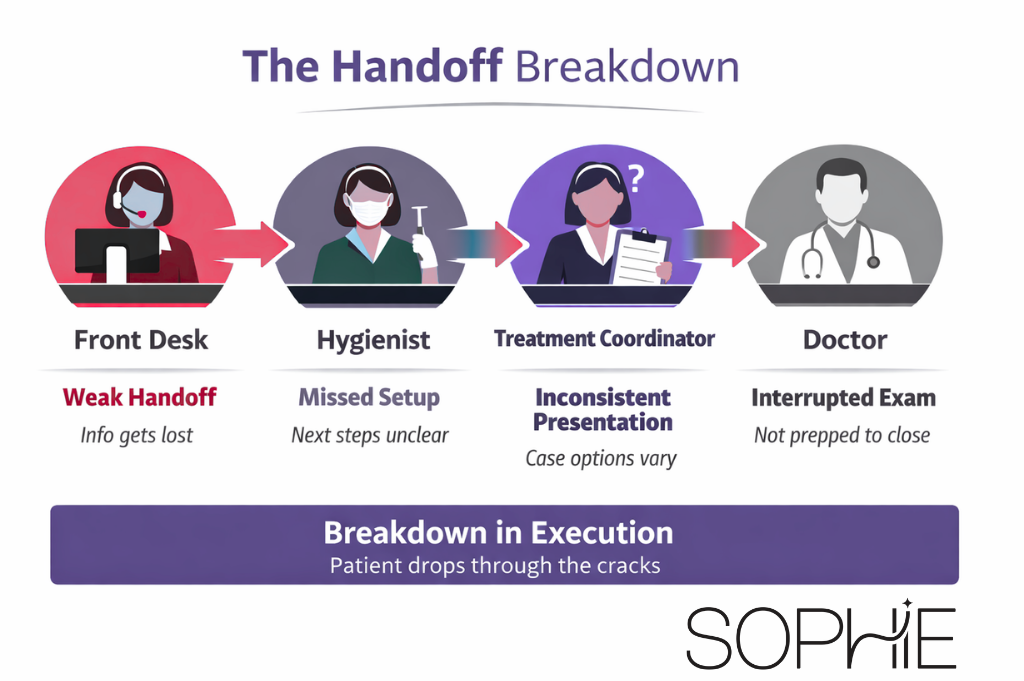
You’ll see it in small moments:
- A treatment plan is presented differently depending on who explains it
- A follow-up doesn’t happen because the day got busy
- A claim isn’t touched because no one “owned” it clearly
- A task is completed (but not correctly)
Individually, these don’t look like system failure. Collectively, they are.
The dangerous illusion of “we already trained them”
This is where insight #2 breaks down: “Small operational changes outperform big ideas...if they’re followed through.”
Most practices stop at:
- training
- SOPs
- checklists
And assume: “They know what to do.” But knowing ≠ doing.
Especially when:
- time pressure increases
- patient interactions vary
- accountability is inconsistent
Training creates understanding.
It does not create consistency.
What actually drives performance (and why it’s uncomfortable)
Insight #3 is the closest to the truth: “Performance improves based on what gets reviewed regularly.” Yes...but not just reviewed. Reinforced. Corrected. Tracked in real conditions.
Because here’s the uncomfortable reality:
Most practices don’t have a review problem.
They have a follow-through problem between reviews.
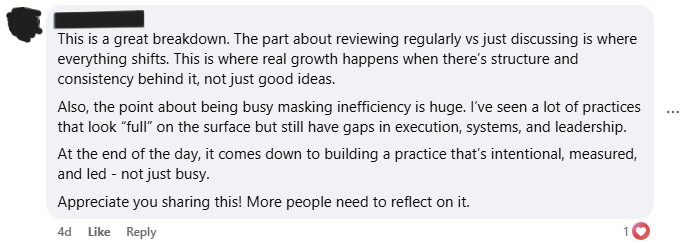
What’s interesting is even coaches see the same pattern:
Why being “busy” is misleading
Insight #4 is one of the most dangerous: “Being busy can hide inefficiency.” But it’s worse than that.
Busy practices often:
- normalize inconsistency
- accept variability
- tolerate missed steps
- operate on effort, not standards
Which creates a false sense of: “We’re doing fine.” Until growth stalls (or chaos increases).
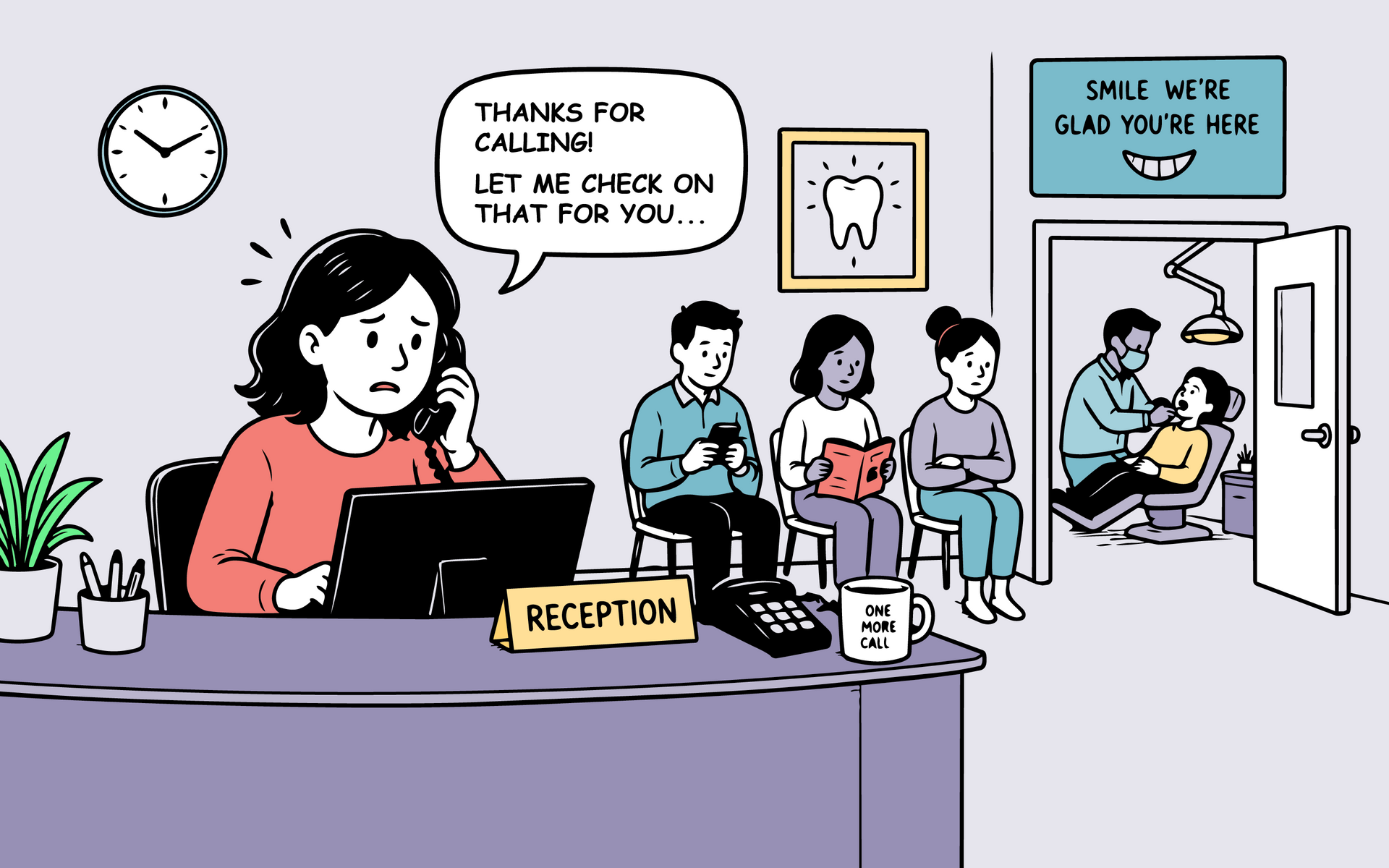
Full schedules don’t mean strong systems.
They often hide weak ones.
So what did the $50K actually buy?
This is the real question. Because the value wasn’t just: advice, frameworks, or insights.
It was:
- temporary structure
- external accountability
- forced attention
In other words: The coaching worked because someone made the practice execute differently...for a period of time.
Why it fades after coaching ends
Here’s what most practices experience: improvements during engagement...then, regression after it ends. Not because the advice was wrong.
But because: Nothing remained in place to make those behaviors continue.
Most improvements don’t disappear.
They were never stabilized.
What most practices miss entirely
This is the actual takeaway:
The difference between:
- ideas that work
- and results that last
Is not intelligence.
Is not effort.
Is not even training.
It’s:
Whether execution is reinforced in real time (without relying on people to remember).
Where this connects to everything else
This is why practices keep cycling through:
👉 Dental Practice Management Systems (PMS)
Each one solves part of the problem. None of them ensure it holds.
- So when you want to actually reinforce execution:
👉 Read: Dental Practice Software That Actually Fixes Execution
The shift (without turning this into a pitch)
If you take anything from this:
Don’t ask:
“What should we do next?”
Ask:
“What ensures this actually happens consistently?”
Because until that is solved:
- insights won’t stick
- training won’t hold
- systems won’t perform
You don’t need better ideas.
You need execution that survives real conditions.