

Why Dental Consultants Don’t Create Lasting Change in Practices
Most dental consultants are not the problem. In fact, they’re often the reason a practice improves at all.

Dental consultants bring:
- clarity where there was confusion
- structure where there was chaos
- accountability where there was none
And for a period of time—things get better.
Production rises.
KPIs stabilize.
The team aligns.
Then something subtle happens.
The consultant steps back.
And over time…
the performance fades.
Not all at once.
Not dramatically.
Just enough that the owner starts stepping back in again.
Most consultants leave behind:
- clearer processes
- better alignment
- stronger intent
And yet, 60–90 days later, performance returns to baseline.
The Pattern No One Talks About
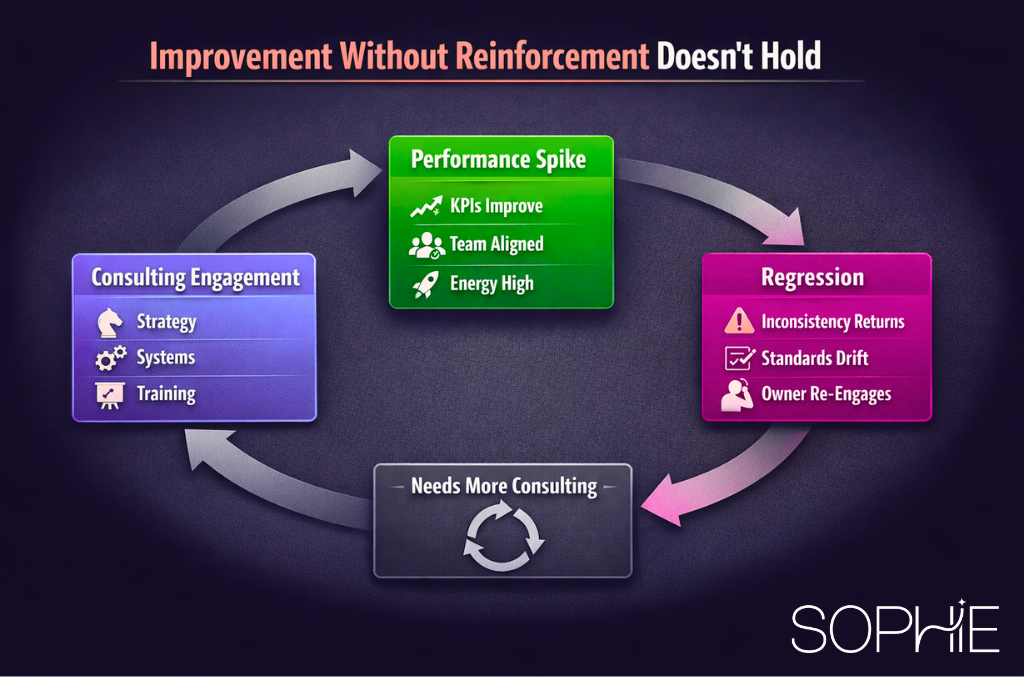
If you’ve worked with a consultant before, you’ve likely experienced this cycle:
- New systems introduced
- Team trained and aligned
- Metrics improve
- Energy increases
Then:
- Follow-through starts slipping
- Variability returns
- Standards loosen
- Leadership re-engages to stabilize
This isn’t a failure of strategy.
It’s a failure of persistence.
The Industry Is Directionally Right (But Incomplete)
Across dentistry, the guidance is remarkably consistent.
Build better systems.
Define clear KPIs.
Document processes.
Train the team.
Coach consistently.
This aligns with what leading organizations and consulting groups promote:
- a systems mindset
- leadership development
- structured playbooks
- measurable performance
And to be clear—this is all necessary.
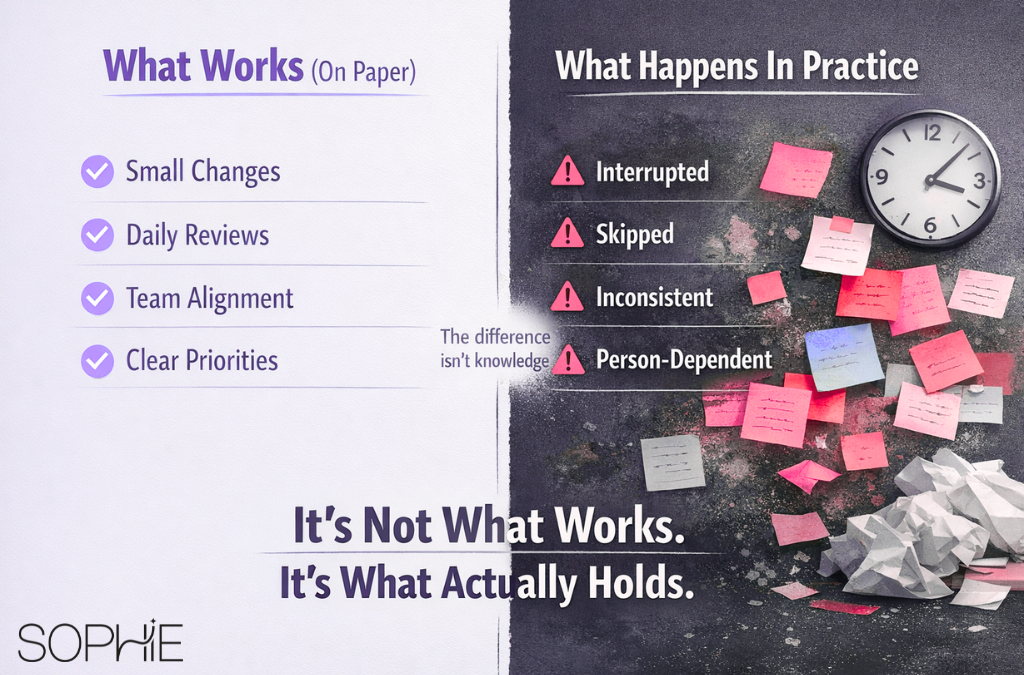
But it assumes something that doesn’t hold under real conditions:
👉 That once defined, trained, and communicated…
execution will sustain itself.
It doesn’t.

What Actually Breaks (And Why Consultants Feel It First)
Consultants see this more clearly than anyone.
Because they experience the moment when:
- the playbook is in place
- the team understands it
- expectations are clear
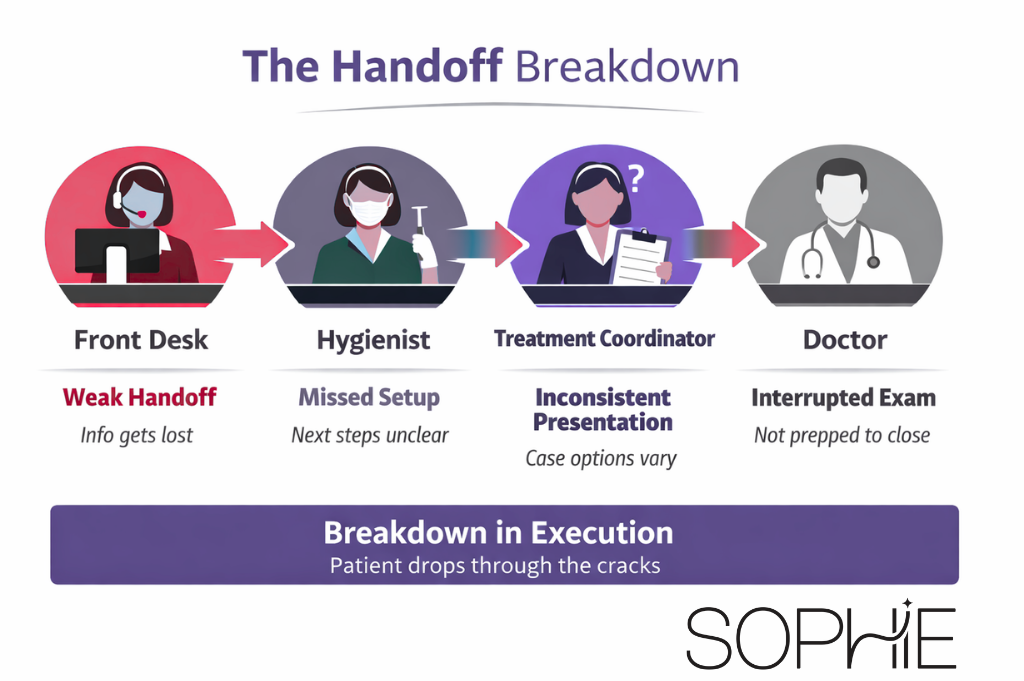
…and execution still varies.
Not because people don’t care.
Because:
- priorities shift throughout the day
- interruptions change focus
- different team members interpret differently
- accountability diffuses in real time
This is the part no framework fully solves:
👉 Execution under changing conditions
Consulting creates direction. Systems create persistence.
The Hidden Constraint: Reinforcement
Consulting works best in structured environments:
- scheduled meetings
- defined initiatives
- active leadership focus
But dental practices don’t operate there.
They operate in:
- patient interruptions
- schedule changes
- staff variability
- real-time decision pressure
And in that environment:
- processes aren’t followed consistently
- standards drift
- accountability becomes situational
Not because the system is wrong—
but because nothing is reinforcing it moment-to-moment.
Why Change Doesn’t Hold Without the Consultant
This is the uncomfortable truth:
Most operational systems in dentistry are person-supported.
Meaning:
- They hold when someone is actively reinforcing them
- They weaken when that reinforcement is removed
That “someone” is often:
- the owner
- the office manager
- or the consultant
So when the consultant steps back:
👉 the system doesn’t continue
👉 the system depends
And that dependency is what creates regression.
This is not a failure of strategy.
It’s the absence of a layer that ensures the strategy continues without constant reinforcement.
This Is Not a Consulting Problem
...It’s a System Design Problem
It’s easy to misdiagnose this.
To think:
- “We need more training”
- “We need better accountability”
- “We need to stay more disciplined”
But those are attempts to fix people.
The real issue is structural:
👉 The system relies on human consistency
in an environment that guarantees inconsistency
That will always break.
The Missing Layer Between Strategy and Execution

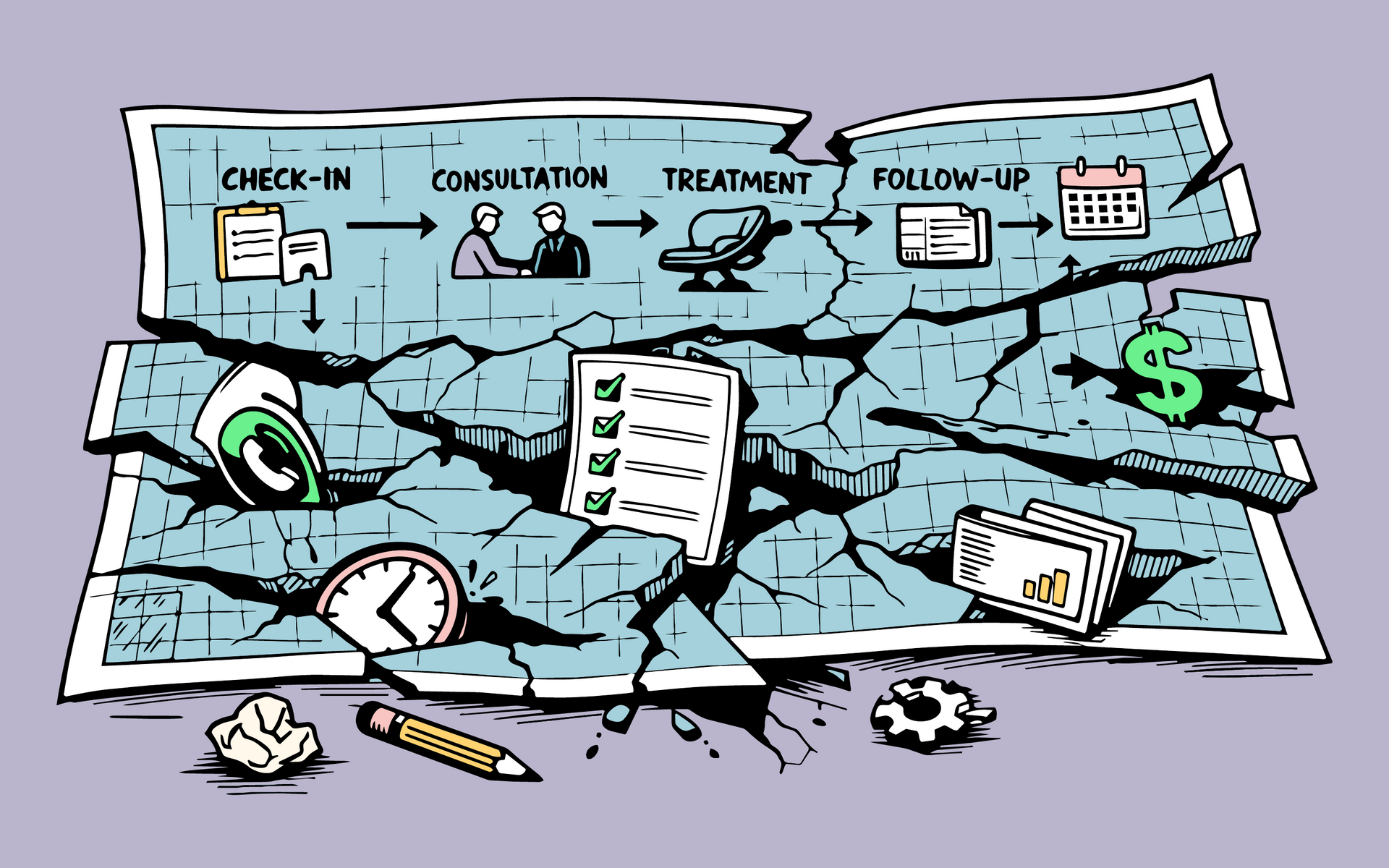
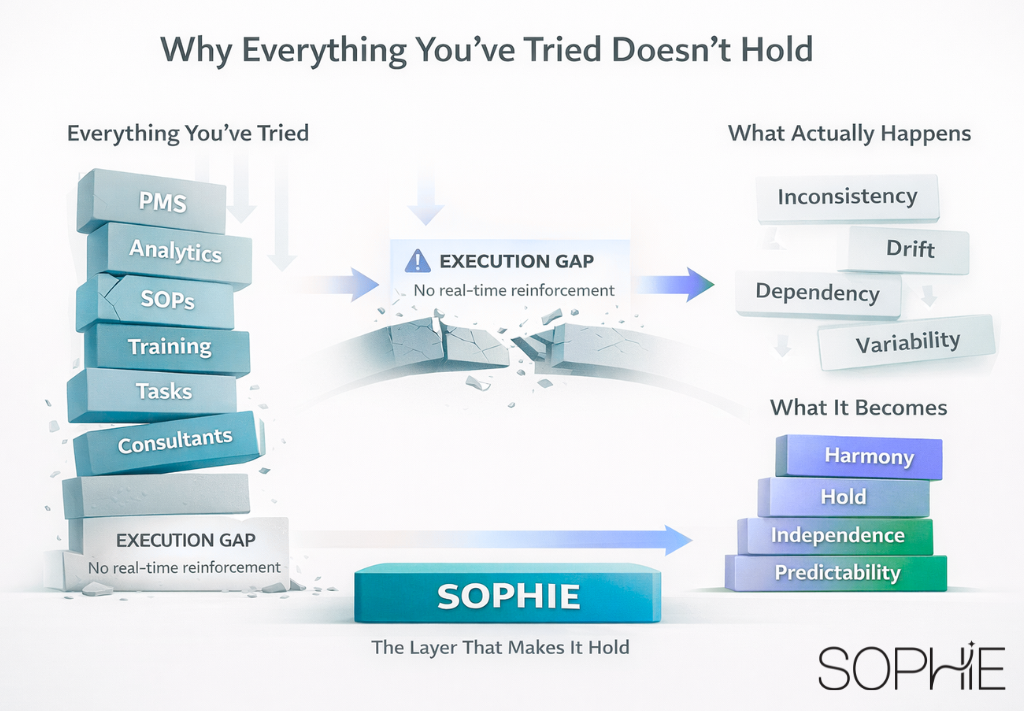
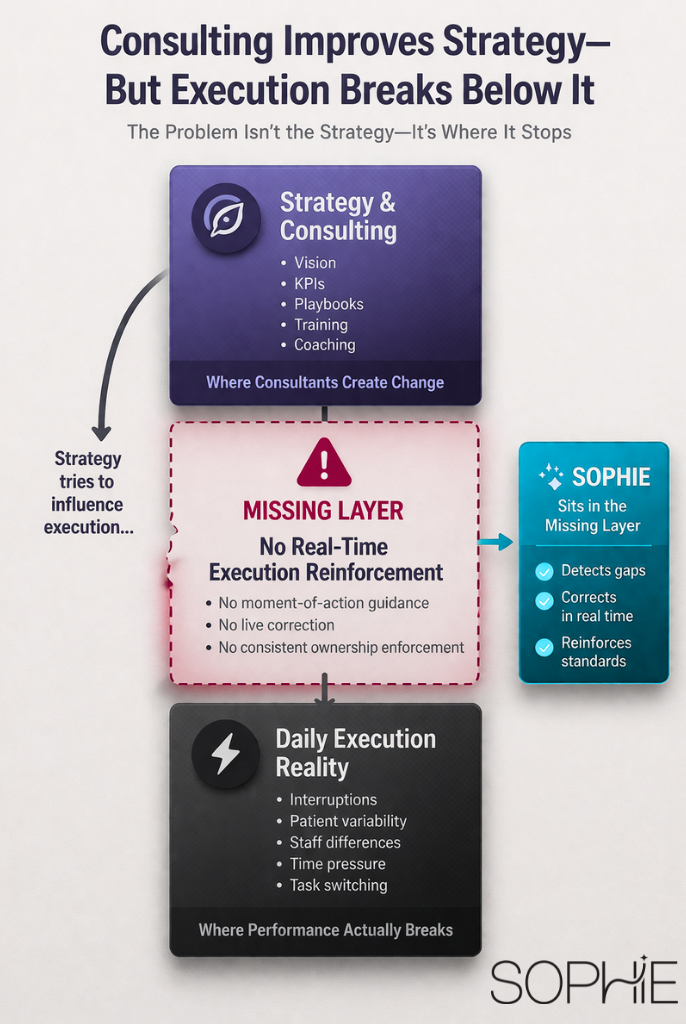
If we step back, the model most practices follow looks like this:
- Strategy (consulting, leadership)
- Systems (SOPs, KPIs, playbooks)
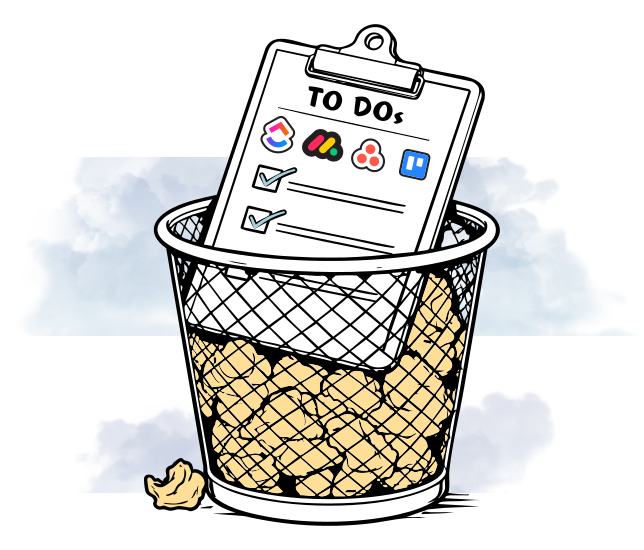
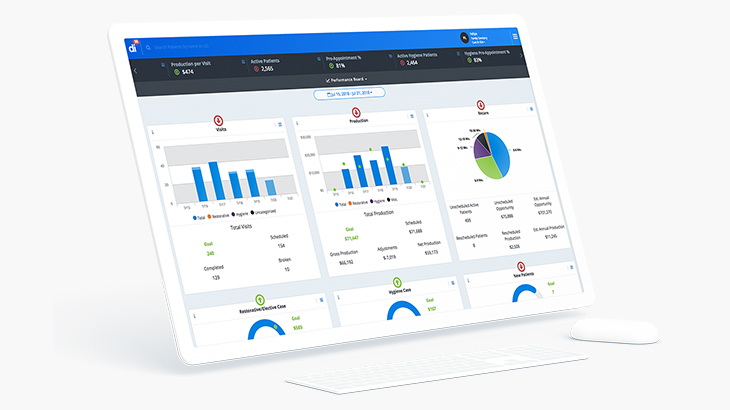
- Tools (PMS, analytics, task systems)
What’s missing is the layer that ensures:
👉 What was defined actually happens
👉 When it’s supposed to happen
👉 Regardless of who is working
This is the gap between:
- knowing and doing
- planning and execution
- alignment and consistency
What Consultants Actually Need (And Already Feel)
The best consultants aren’t trying to:
- write more SOPs
- create more dashboards
- run more meetings
They’re trying to:
👉 make the change stick
Because they know:
- the strategy is sound
- the team is capable
- the systems are clear
But without reinforcement:
- execution varies
- outcomes drift
- progress reverses
From Improvement to Stability
Improvement is not the same as stability.
Consulting drives improvement.
But stability requires something different:
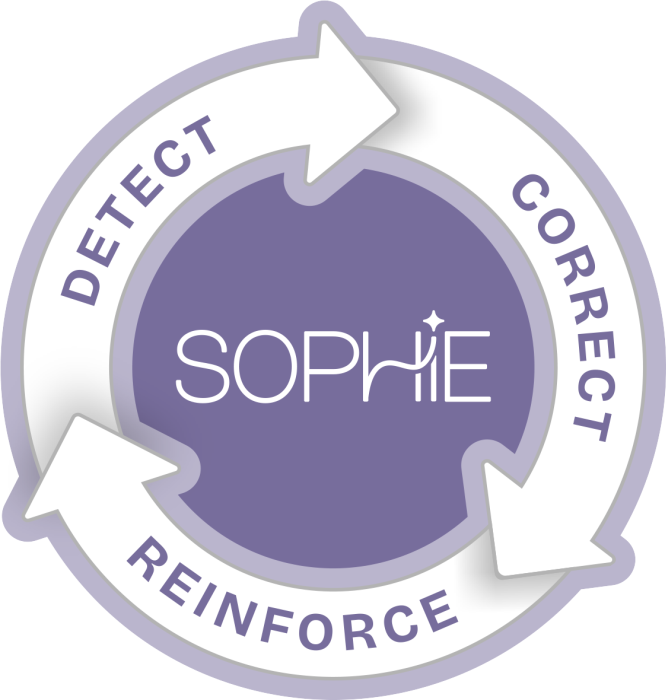
A system that:
- Detects when execution starts to drift
- Corrects priorities in real time
- Reinforces standards continuously
Not during meetings.
Not during reviews.
During the actual work.
Where SOPHIE Fits (Without Replacing Consultants)
Detect
Early signals that execution is breaking:
- missed follow-ups
- inconsistent workflows
- gaps in ownership
Correct
Surfaces what matters:
- to the right role
- at the right time
- based on actual conditions
Reinforce
Ensures standards are followed:
- consistently
- across people
- across days
- without relying on memory or oversight
A Different Relationship Between Strategy + Execution
When this layer exists:
Consultants
- define the system
- refine the strategy
- elevate performance
SOPHIE AI
- ensures it actually happens
- every day
- across every role
This is when:
👉 change stops being temporary
👉 and becomes operationally stable
The Real Reframe
Dental practices don’t struggle because they lack:
- strategy
- systems
- or expertise
They struggle because:
👉 what they know doesn’t consistently happen
And no amount of:
- consulting
- training
- or planning
....will fix that alone.
If your practice improves when someone is actively involved—but doesn’t hold when they step away…
You don’t have a strategy problem.
You don’t have a team problem.
You have a system that doesn’t sustain execution.