Dental Practice Software That Actually Fixes Execution

Share

Most Dental Practice Software Tracks Activity, But Doesn’t Fix What’s Breaking

If you’ve searched for dental practice software, chances are you’re trying to solve one of these:

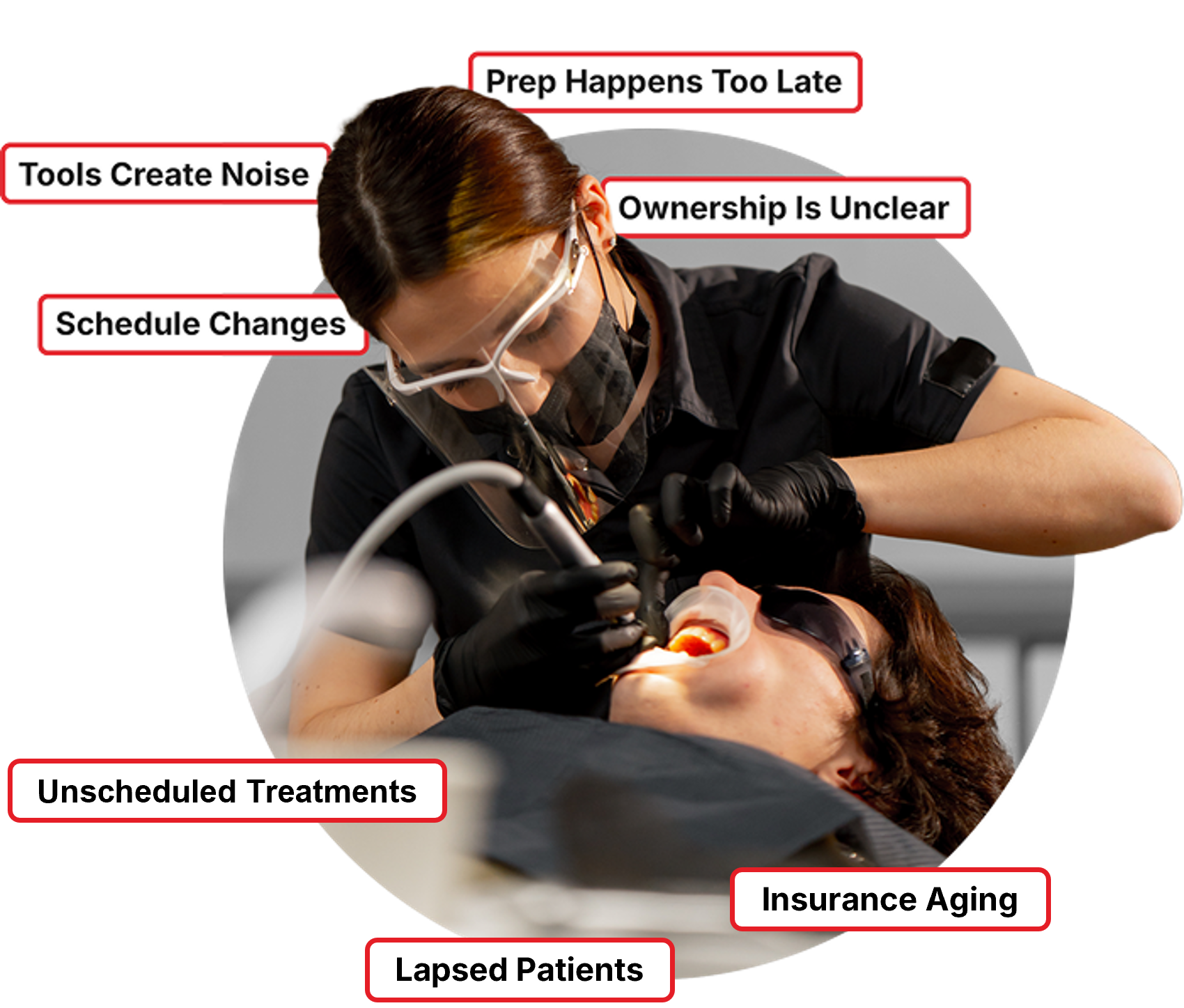
  • Case acceptance isn’t where it should be
  • Too much diagnosed treatment goes unscheduled
  • No-shows and gaps are hurting production
  • Insurance claims are aging past 30–45 days


So you look for:

  • better reporting
  • better systems
  • better training


And yet… the same issues keep showing up.


Not because your team doesn’t care. Not because you don’t have tools. But because something deeper is breaking.

The Problem Isn’t Visibility. It’s Follow-Through.

Most practices already have:

  • a PMS tracking everything
  • reports showing what’s happening
  • SOPs outlining what should happen


And still:

🚩30–50% of diagnosed treatment goes unscheduled

🚩10–20% of production opportunity sits unused

🚩Insurance aging drifts beyond 30–45 days

🚩Case acceptance varies depending on who presents


That’s not a visibility problem. It’s an execution problem.

If This Feels Familiar, You’re Not Alone

Across hundreds of real conversations with practice owners and teams, the pattern is consistent:

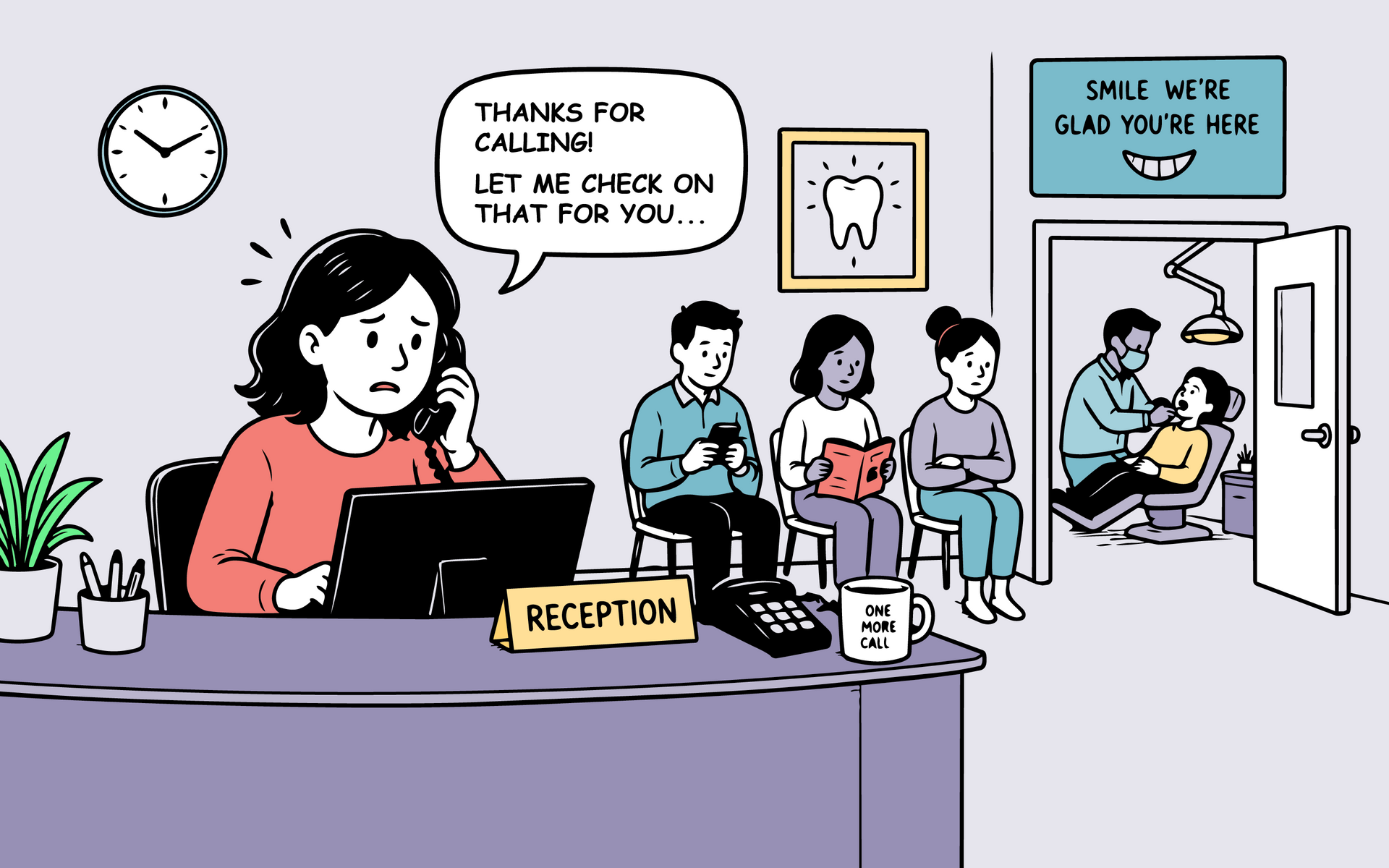
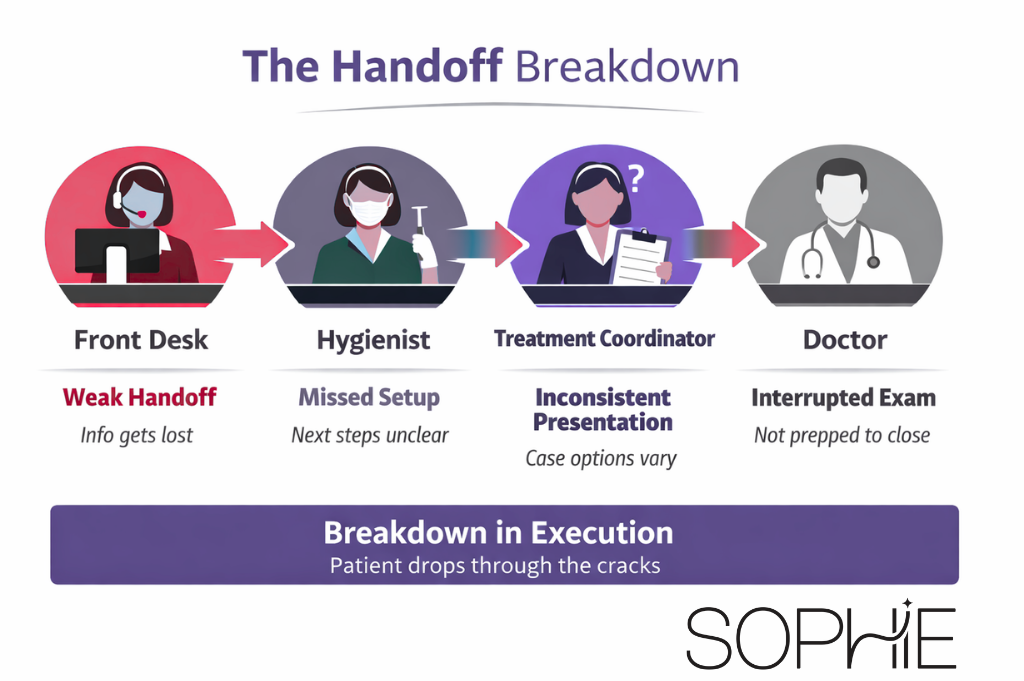
  • Your front desk performs differently depending on who’s working
  • Yesterday’s priorities don’t reliably carry into today
  • Insurance follow-up depends on someone “staying on top of it”
  • Things run well when you’re present—but slip when you’re not


This shows up even in: well-trained teams high-producing practices multi-location groups


👉 Because the issue isn’t effort.


It’s that execution isn’t consistently reinforced.

Why These Problems Don’t Go Away
(Even With Good Systems)

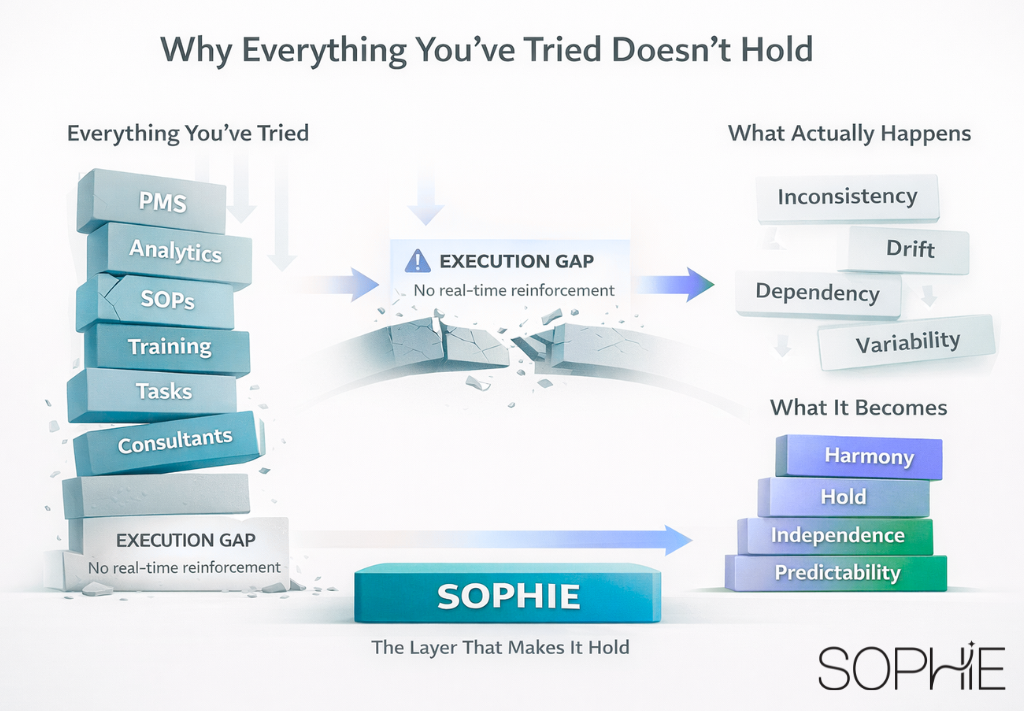
Most practices try to fix this by: 

  • Adding more marketing → more leads 
  • Hiring consultants → short-term improvements 
  • Training the team again → temporary alignment 
  • Adding SOPs → documented processes

But here’s what actually happens: 

  • Marketing increases demand—but exposes operational gaps 
  • Consultants improve performance—but it fades after they leave 
  • Training creates understanding—but not consistency 
  • SOPs define standards—but don’t enforce them 

👉 The system doesn’t hold. So performance doesn’t hold.

What’s Actually Happening:  Operational Drift

These aren’t isolated problems like:

  • “case acceptance issue”
  • “insurance issue”
  • “front desk issue” 

They’re symptoms of something bigger: Operational Drift

Where:

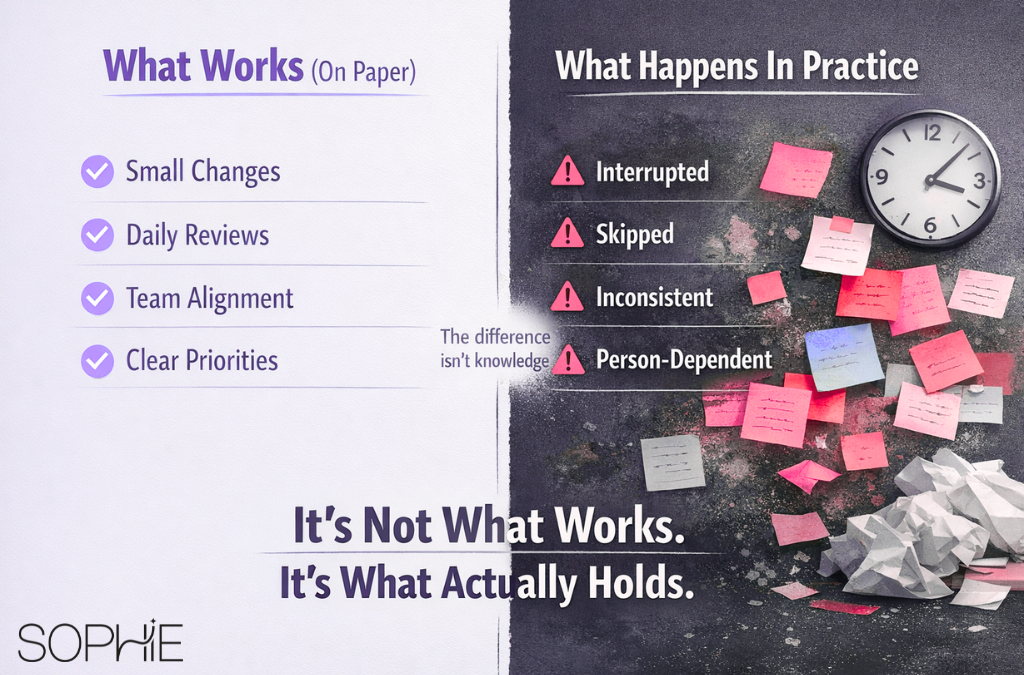
  • work gets done differently across roles
  • priorities shift throughout the day
  • follow-through depends on individuals
  • standards exist—but aren’t consistently executed

This is why:

  • one coordinator closes at 80%, another at 40%
  • AR performance varies week to week
  • unscheduled treatment quietly accumulates

Nothing is technically broken. But nothing is consistently holding either.

Why Traditional Dental Software Doesn’t Fix This

Let’s be clear about what existing tools actually do:

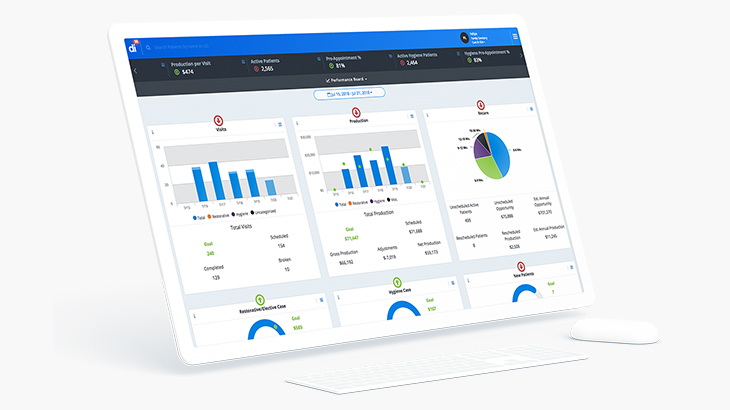
PMS (Practice Management Systems)

  • Track patients, procedures, and activity
  • Show what happened


👉 They record execution They don’t ensure it happens.


Learn more ➜

Analytics & Reporting Tools

  • Surface insights
  • Identify gaps


👉 They explain problems after the fact They don’t correct them in real time.


Learn more ➜

SOPs & Training Platforms

  • Define how work should be done


👉 They document standards They don’t reinforce them daily.


Learn more ➜

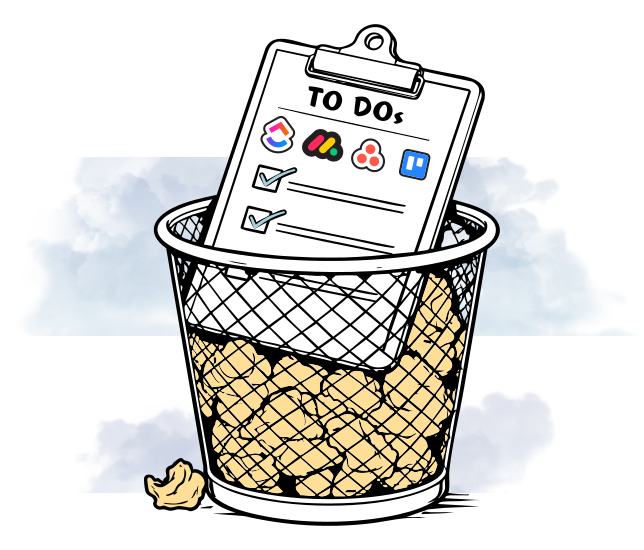
Task Management Tools

  • Assign work


👉 They rely on discipline They don’t create consistency.


Learn more ➜

What Actually Fixes Execution:
A Practice Stability System

To fix execution, you don’t need another tool.


You need a system that ensures:

  • work gets done to standard
  • priorities stay visible
  • follow-through happens consistently
  • performance holds—regardless of who is working


This is where a new category emerges:


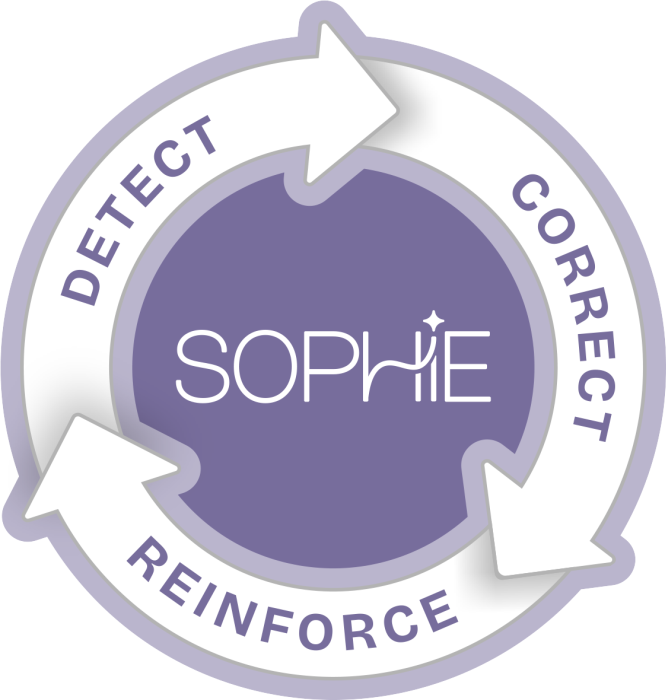
A system designed to:

  • Detect execution gaps early
  • Correct priorities in real time
  • Reinforce standards across roles

How SOPHIE Stabilizes Execution

1. Detect

Execution gaps don’t show up in reports first.

They show up in signals:

  • unscheduled treatment not being followed up
  • insurance claims not being touched
  • priorities not being completed

SOPHIE surfaces these early—before they become performance problems.

2. Correct

Instead of relying on memory or meetings:

  • the right actions surface
  • to the right role
  • at the right time

So work doesn’t get lost between:

  • shifts
  • team members
  • competing priorities

3. Reinforce

This is where most systems fail.

SOPHIE ensures:

  • work is completed
  • to standard
  • consistently

So:

  • follow-up actually happens
  • conversations align across coordinators
  • processes don’t degrade over time

What This Looks Like Day-to-Day

Without Stability

🚩 Morning huddle sets priorities

🚩 Team starts strong

🚩 By mid-day → things drift

🚩 By end of day → gaps remain

Follow-up becomes:

  • inconsistent
  • dependent
  • incomplete

With SOPHIE
✅ Priorities stay visible all day

✅ Ownership is clear across roles
✅ Gaps surface before they compound

✅ Follow-through happens without chasing

The result:

  • treatment gets scheduled
  • insurance stays within threshold
  • performance becomes predictable

Why This Matters More as You Grow

This problem compounds with scale:

  • Multi-location practices → standards fragment
  • New hires → require constant retraining
  • Leadership absence → performance drops


From real-world patterns:

  • Remove leadership → performance collapses
  • Expand locations → inconsistency increases
  • Add volume → gaps become visible


👉 Growth doesn’t fix this. It amplifies it.

This Is Why Most Practices Feel Stuck

Not because they lack:

  • patients
  • effort
  • systems


But because: Their system doesn’t ensure execution holds.


So:

  • improvements don’t stick
  • performance fluctuates
  • owners stay involved in everything

The Shift:

From Managing Work → Stabilizing Execution

The goal isn’t:

  • better reporting
  • more tasks
  • more oversight

The goal is: A system where work gets done to standard—without constant intervention.


That is what SOPHIE enables.

If Your Practice Depends on You to Run, This Is the System You’re Missing

If you’re still:

  • checking reports daily
  • reminding your team to follow up
  • stepping in to keep things moving


You don’t have an effort problem. You have a system problem.

See How SOPHIE Stabilizes Your Practice

SOPHIE is the Practice Stability System that ensures your operations hold—so performance stays consistent, regardless of who is working.


👉 See how SOPHIE stabilizes your practice

dental practice operational improvements
March 24, 2026
If your dental practice improves—but never stays consistent—this explains why. Discover the hidden reason execution keeps breaking (and what actually fixes it).
dental consultant
March 23, 2026
Dental consultants drive improvement—but why doesn’t it last? Discover the real reason change fades and what’s missing inside dental practice operations.
dental training fails
March 23, 2026
You trained your team. So why isn’t the work happening consistently? The real reason training fails in dental practices—and what actually fixes it.
dental task management
March 21, 2026
Task tools are built for projects—not real-time clinical operations. Here’s why they break in dental practices and what actually works instead.
dental analytics practice intelligence
March 20, 2026
Your reports show exactly what’s wrong—but nothing changes. Here’s why dental analytics tools fail to improve performance.
practice management software
March 20, 2026
Your PMS shows everything—but doesn’t control anything. Here’s why operational problems persist and what’s actually missing in dental practices.
dental SOPs
March 20, 2026
SOPs tell your team what to do—but don’t ensure it happens. Here’s why dental SOPs fail and what actually drives consistent execution.
dental practice performance
March 20, 2026
Most dental software tracks activity—but doesn’t ensure execution. Here’s why performance doesn’t improve and what’s actually missing.
dental operations system
March 20, 2026
Many dental practices appear stable—until one person leaves. Learn why person-dependent systems create hidden risk and how to build consistent execution across your team.
dental staffing opertional standards
March 20, 2026
Flexible staffing can solve coverage problems, but many dental practices still break down after team changes. Learn why temp and new staff expose operational instability—and what fixes it.
Show More