
Why Dental Training Programs Don’t Translate Into Performance

Share

You Did the Training

You invested in it.


  • onboarding checklists
  • SOP walkthroughs
  • shadowing
  • coaching
  • maybe even a formal program


You didn’t skip it.


You didn’t ignore it.


You trained them.

So the expectation is reasonable:

they should be doing it.

But They’re Not. Not Consistently.

Not the way you showed them.

Not the way you expect.


And what makes it worse is this:

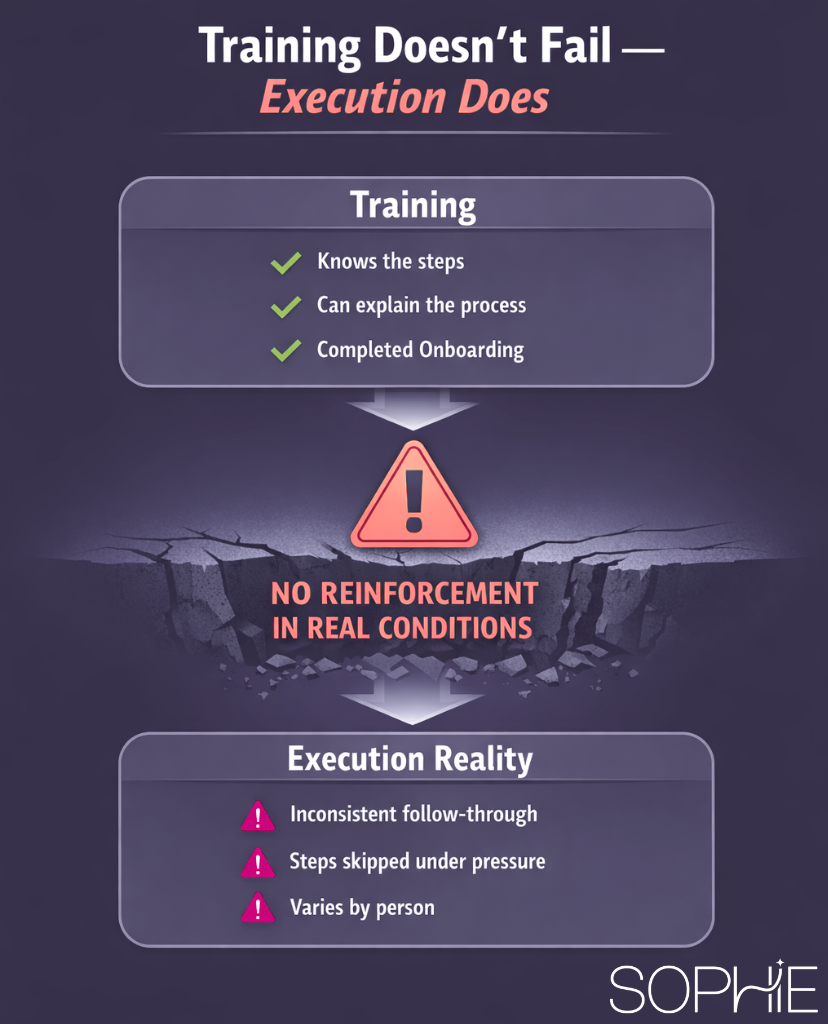
They know what to do.


If you ask them, they’ll explain it back to you.


Step by step.


Correctly.

A coordinator can explain your financing options perfectly in training…

and then skip them entirely when a patient hesitates in a real conversation.

This Is the Moment That Frustrates Owners the Most

Because now it’s not a knowledge problem.


It feels like:

  • carelessness
  • lack of accountability
  • poor attitude
  • “they just don’t get it”


So the response becomes predictable:

  • retrain
  • remind
  • reinforce verbally
  • step in

Again.

Two team members complete the same onboarding.

One follows the process exactly.

One improvises.

Both believe they’re doing it right.


Your system has no way to correct either.

This Is Where Most Practices Get It Wrong


You assume:

if someone knows what to do, they will do it That’s not how execution works.

Training Creates Understanding...

Not Follow-Through. Or Consistency.

Training solves for:

  • awareness
  • exposure
  • comprehension

It does not solve for:

  • consistency
  • timing
  • prioritization
  • follow-through under pressure


And that’s where performance actually breaks.

Every major training and consulting approach in dentistry follows the same model:

teach the process

reinforce it through coaching

measure it through KPIs


And again—none of that is wrong.


But it assumes something that isn’t true in real operations:

That knowing what to do is enough to ensure it happens.

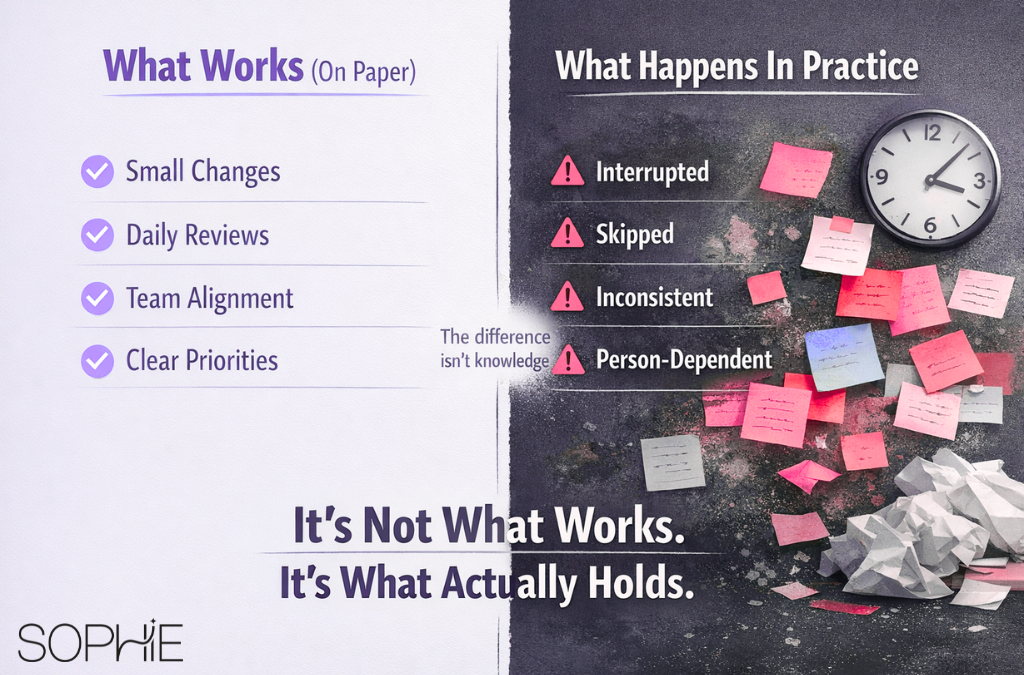
Because the Real World Doesn’t Look Like Training

Training happens in controlled conditions.


Real work doesn’t.

  • patients interrupt flow
  • priorities shift mid-process
  • multiple responsibilities compete
  • context changes constantly

So what happens?


The standard gets replaced by:

what feels most urgent right now

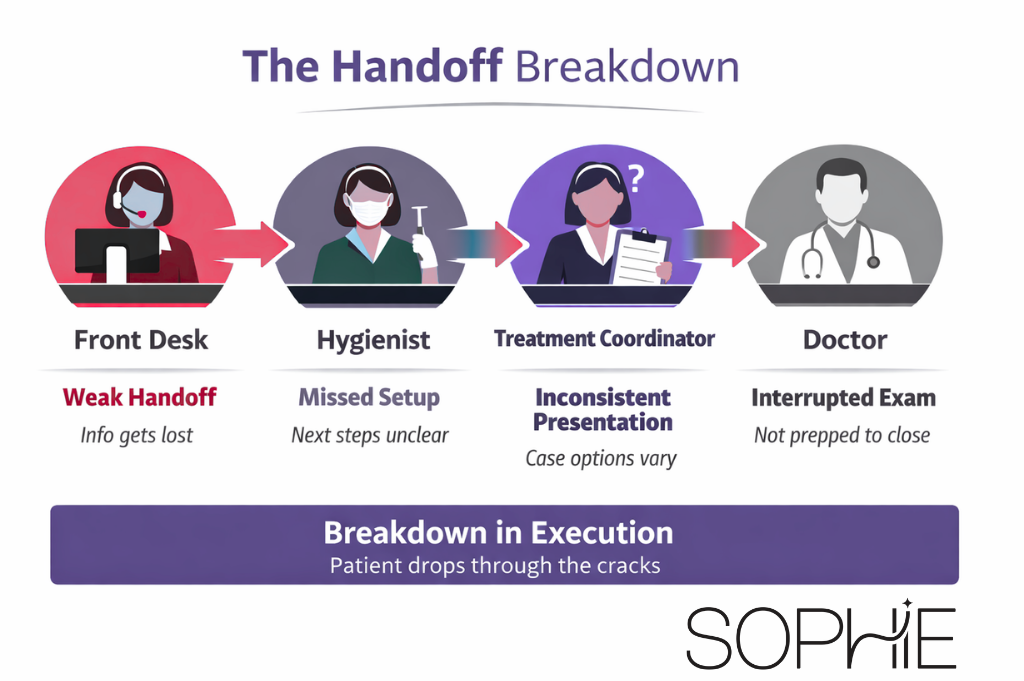
The Breakdown Happens at the Handoff

Not during training.

After it.


At the moment where:

  • no one is watching
  • conditions are different
  • priorities are unclear


That’s where execution is decided. And nothing is reinforcing it.

So Performance Becomes Personal

Now results depend on:

  • who’s working
  • how experienced they are
  • how they interpret the situation
  • whether they remember


Not the standard.

This Is Why Retraining Doesn’t Fix It

You can retrain:

  • once
  • twice
  • ten times


It doesn’t change the environment where execution happens.


So the same breakdown repeats.

The Hard Truth Most Owners Avoid

Your team is not the core problem.


And neither is your training. 

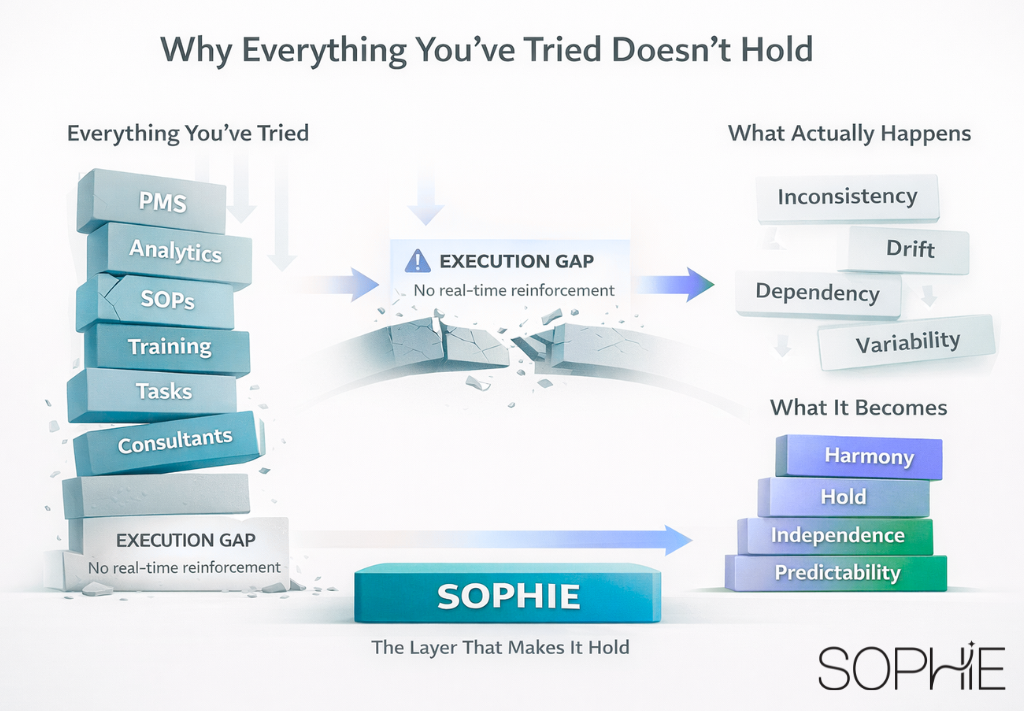
What’s missing is:

something that ensures the work happens after training ends

Because Execution Is Not a Knowledge Problem

It’s an environment problem.


If the environment doesn’t:

  • surface what matters
  • reinforce expectations
  • correct drift in real time

Then performance will always:

vary degrade depend on the individual

What Actually Changes Behavior

Not more information.


Not more training.


Not more reminders.


A system that:

  • detects when execution is off
  • corrects priorities in the moment
  • reinforces standards continuously

Where SOPHIE Changes the Equation

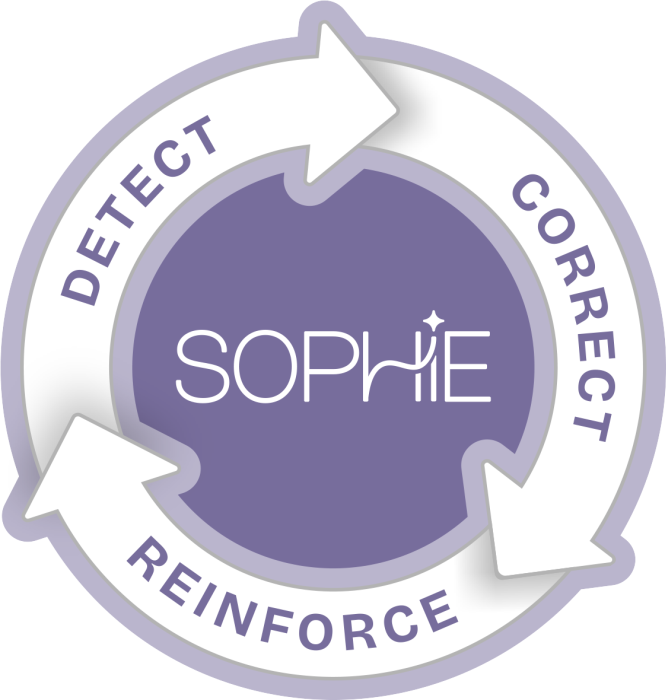
Detect

When execution deviates from standard

Correct

What needs to happen now (not what was taught before)

Reinforce

So behavior holds across roles, days, and conditions

If Training Worked on Its Own, You Wouldn’t Be Dealing With This

That’s the reality.


You’ve already invested in:

  • onboarding
  • documentation
  • coaching


And yet:

  • follow-through varies
  • results fluctuate
  • you’re still stepping in


That’s not a training failure. That’s a system gap.

See What Happens When Execution Doesn’t Depend on Memory or Motivation

SOPHIE ensures:

  • training translates into action
  • standards hold across the team
  • performance stays consistent


Even when:

  • people change
  • priorities shift
  • conditions get messy


👉 See how SOPHIE stabilizes your practice

dental practice sofware
March 24, 2026
Most dental practice software tracks activity—but doesn’t ensure execution. Learn why case acceptance, unscheduled treatment, and insurance aging persist—and what actually fixes it.
dental practice operational improvements
March 24, 2026
If your dental practice improves—but never stays consistent—this explains why. Discover the hidden reason execution keeps breaking (and what actually fixes it).

dental consultant
March 23, 2026
Dental consultants drive improvement—but why doesn’t it last? Discover the real reason change fades and what’s missing inside dental practice operations.
dental task management
March 21, 2026
Task tools are built for projects—not real-time clinical operations. Here’s why they break in dental practices and what actually works instead.
dental analytics practice intelligence
March 20, 2026
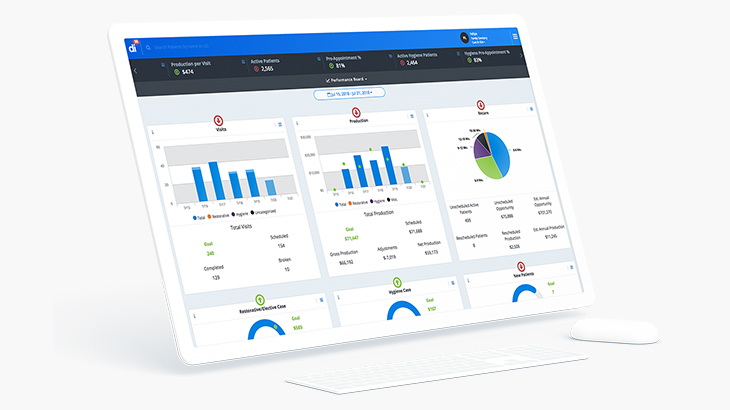
Your reports show exactly what’s wrong—but nothing changes. Here’s why dental analytics tools fail to improve performance.
practice management software
March 20, 2026
Your PMS shows everything—but doesn’t control anything. Here’s why operational problems persist and what’s actually missing in dental practices.
dental SOPs
March 20, 2026
SOPs tell your team what to do—but don’t ensure it happens. Here’s why dental SOPs fail and what actually drives consistent execution.
dental practice performance
March 20, 2026
Most dental software tracks activity—but doesn’t ensure execution. Here’s why performance doesn’t improve and what’s actually missing.
dental operations system
March 20, 2026
Many dental practices appear stable—until one person leaves. Learn why person-dependent systems create hidden risk and how to build consistent execution across your team.
dental staffing opertional standards
March 20, 2026
Flexible staffing can solve coverage problems, but many dental practices still break down after team changes. Learn why temp and new staff expose operational instability—and what fixes it.
Show More