

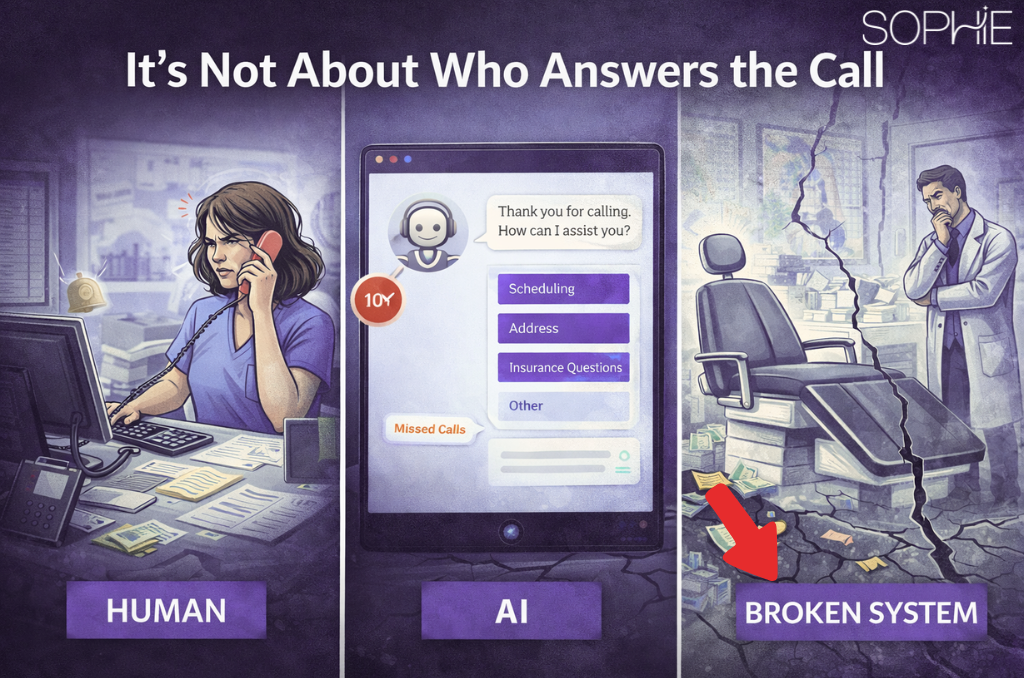
From Patient Journey to Dental Practice Stability: What Actually Makes Growth Hold

Share

The Industry Has Already Mapped the Journey

dental practice patient journey mapping

The Industry Has Already Mapped the Journey

Most dental practices today are not lacking structure.


They understand the stages:

  • scheduling
  • check-in
  • consultation
  • diagnosis
  • treatment
  • follow-up


Frameworks exist. Roles are defined. Metrics are known. And yet, performance still varies wildly between practices with nearly identical setups.


That inconsistency is not coming from a lack of knowledge. It’s coming from something much harder to see.

The Problem Isn’t the Journey.
It’s What Happens Between the Steps.

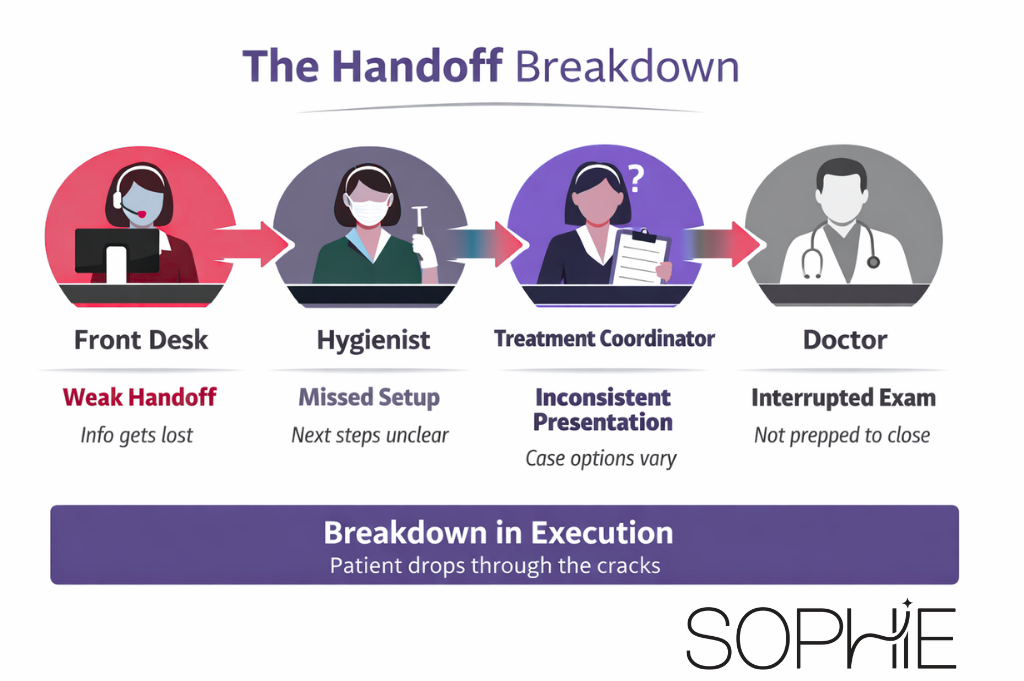
On paper, the dental patient journey is sequential and controlled. In reality, it’s fragmented.


A call gets missed.

\A follow-up gets delayed.

A treatment plan isn’t reinforced.

A financial conversation loses clarity.


None of these failures happen because the process is unclear. They happen because there is no system ensuring that execution is consistent across every step.


And when execution becomes inconsistent, growth becomes unpredictable.

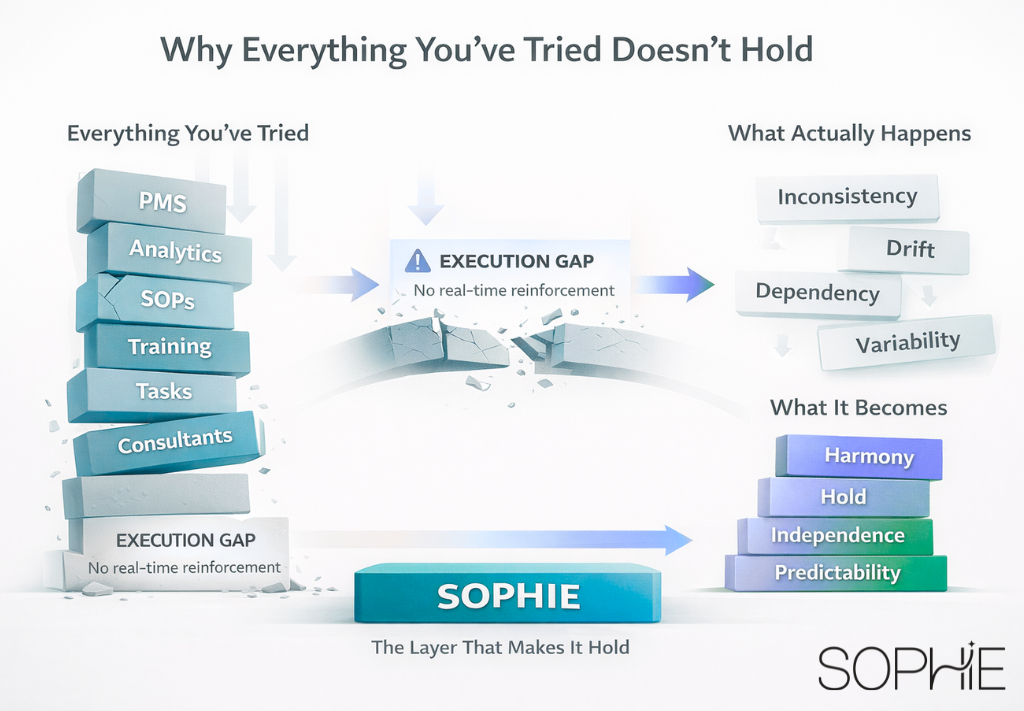
A defined process does not guarantee a performed process.

Why Operational Improvements Don’t Stick

Most practices try to solve this with incremental improvements:


And those changes often work...for a short period. Then the system drifts. Not because the strategy was wrong.


But because the system depends on:

  • memory
  • motivation
  • individual accountability


Those are not stable foundations. Without reinforcement, every improvement becomes temporary.

The Shift: From Design to Stability

To make growth hold, the focus has to shift. Not toward more optimization. But toward stability.


A stable practice is not one that:

  • knows what to do


It is one that:

  • ensures what should happen actually happens—consistently


Across:

  • people
  • time
  • pressure

Stability is what turns best practices into actual performance.

What Practice Stability Actually Means

Practice stability is not a concept. It’s a system.


It means:

  • tasks are not just assigned, they are completed
  • follow-ups are not just planned, they are executed
  • metrics are not just reviewed, they are acted on
  • ownership is not just defined, it is enforced


It removes reliance on: memory, heroics, and constant oversight.


And replaces it with: structure, visibility, and accountability.

Where Most Practices Break

Even well-run practices tend to break in predictable places:

  • missed calls that are never recovered
  • unscheduled treatment that is never revisited
  • hygiene opportunities that are never expanded
  • follow-ups that are never completed


Each of these is not a knowledge problem. It is an execution gap. And execution gaps compound.

The Missing Layer: Continuous Reinforcement

What most systems lack is not insight. It’s reinforcement.


A mechanism that ensures:

  • what should happen
  • actually does happen


Every day. Across every role. Without relying on reminders or manual oversight.


Without that, even the best-designed systems degrade over time.

Introducing a Different Approach

Instead of asking:

“Do we have the right process?”

The better question is:

“Do we have a system that ensures the process holds?”

That is where a different category begins. Not software that tracks. Not tools that assist.


But systems that enforce execution and maintain operational integrity.

Where SOPHIE Fits

SOPHIE was designed to solve this exact gap. Not by replacing your systems. But by sitting across them and ensuring they hold.


It:

  • assigns and tracks execution across roles
  • enforces follow-through on key actions
  • surfaces where breakdowns are happening in real time
  • quantifies the impact of those breakdowns


So instead of relying on: meetings, memory, and manual follow-up...you have a system that ensures consistency.

You don’t need better ideas.
You need systems that hold under pressure.

What Changes When Stability Is Introduced

When execution becomes consistent:

  • missed opportunities are recovered
  • treatment completion increases
  • team performance becomes predictable
  • growth becomes measurable and repeatable


Not because the practice learned something new. But because it finally has a system that ensures what it already knows is actually happening.

The Next Step

Before implementing anything new, the first step is understanding where your system is currently breaking. Because most practices already have the right pieces. They just don’t have a way to make them hold.


The Practice Stability Assessment evaluates:

  • where execution is inconsistent
  • where revenue is leaking
  • and how much of that can be recovered


So you’re not guessing where to improve.


You’re measuring it.

AI Receptionists in Dentistry: Why They Work for Some Practices—and Fail for Others
April 6, 2026
AI receptionists can improve call handling—but they don’t fix what happens next. Learn why inconsistent systems cause most dental practices to lose revenue.
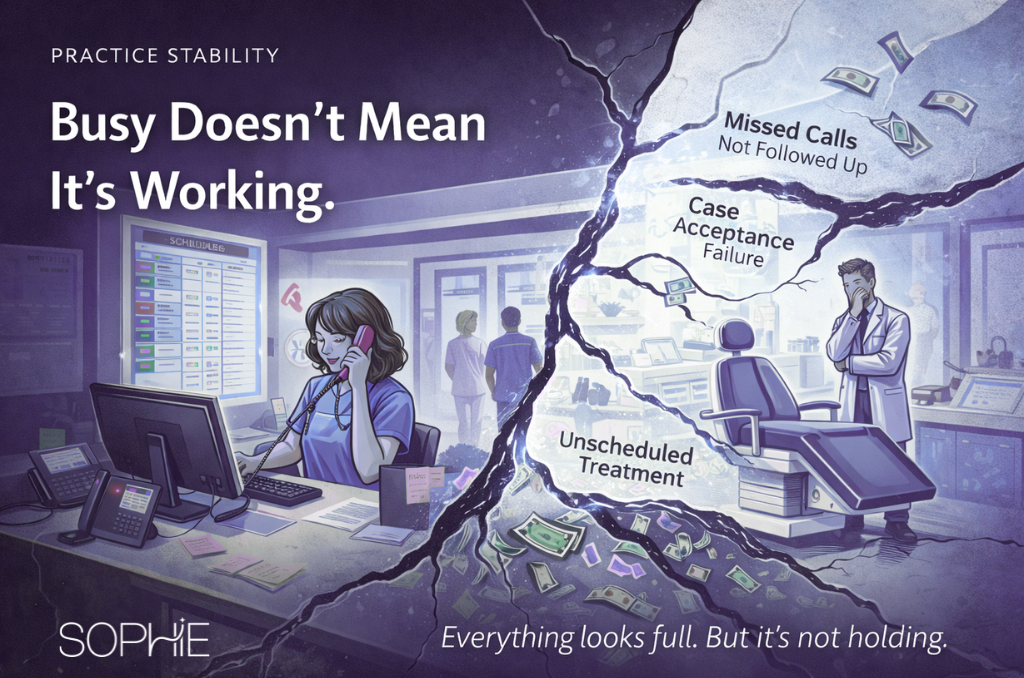
dental patient journey
April 6, 2026
Dental patient journeys often fail due to inconsistent execution, not poor strategy. Learn where breakdowns happen and how to fix operational leaks.
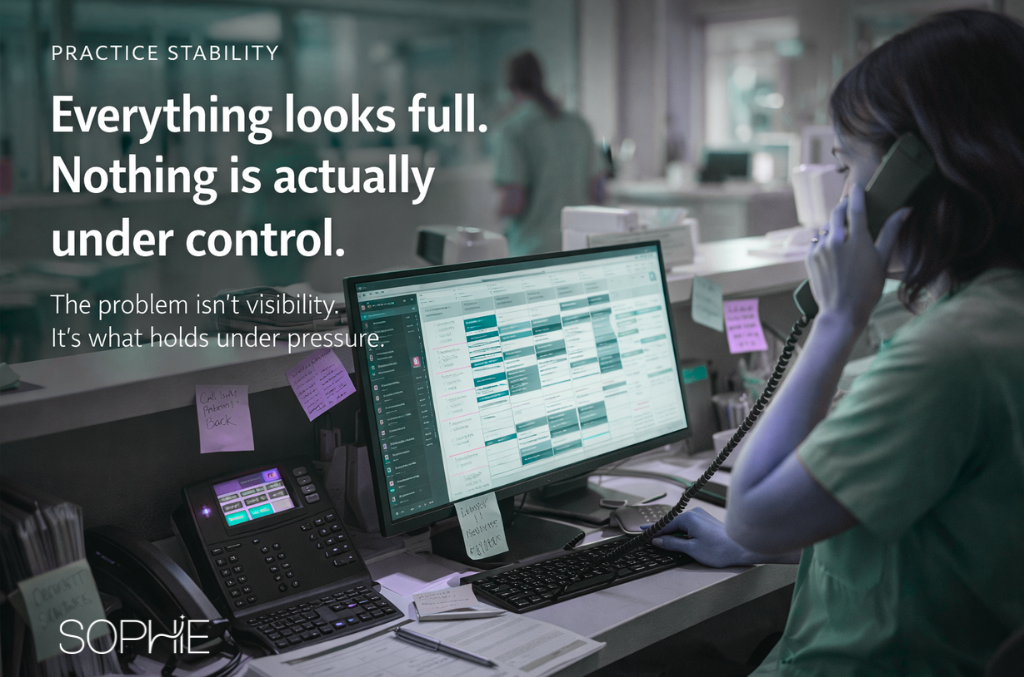
dental performance software
April 2, 2026
Most small to midsize dental practices don’t have a growth problem. They have operational leaks costing $100K–$300K+ per year. Learn why visibility doesn’t fix it and how to measure what actually holds.
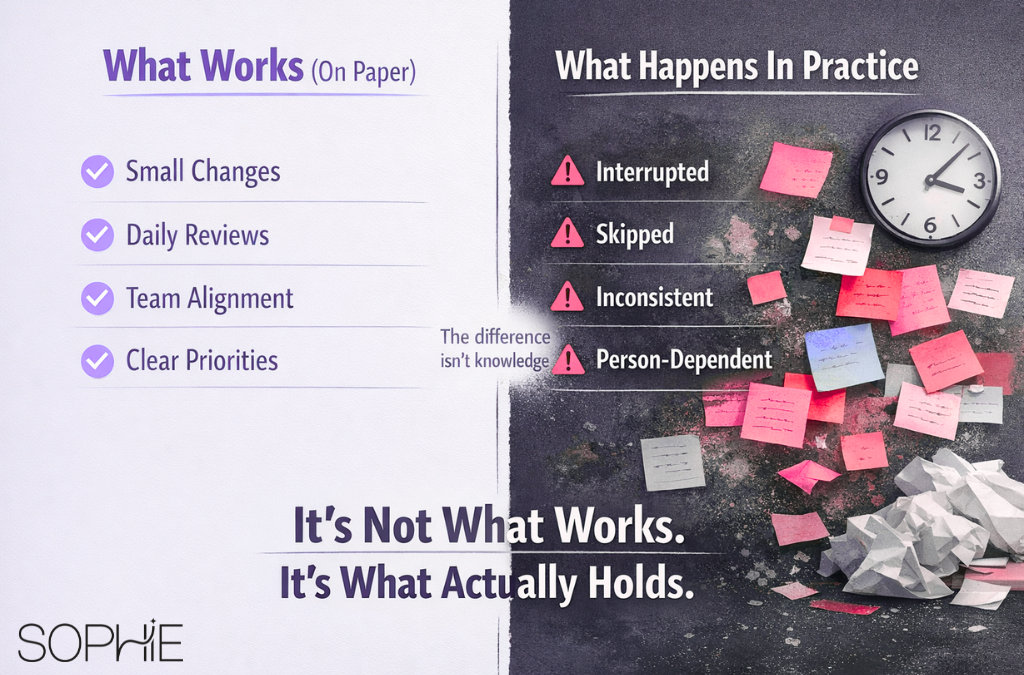
dental coaching insights
April 2, 2026
A dentist spent $50K on coaching and found the real driver of performance wasn’t strategy...it was execution. Here’s what most practices miss.

dental practice sofware
March 24, 2026
Most dental practice software tracks activity—but doesn’t ensure execution. Learn why case acceptance, unscheduled treatment, and insurance aging persist—and what actually fixes it.
dental practice operational improvements
March 24, 2026
If your dental practice improves—but never stays consistent—this explains why. Discover the hidden reason execution keeps breaking (and what actually fixes it).

dental consultant
March 23, 2026
Dental consultants drive improvement—but why doesn’t it last? Discover the real reason change fades and what’s missing inside dental practice operations.
dental training fails
March 23, 2026
You trained your team. So why isn’t the work happening consistently? The real reason training fails in dental practices—and what actually fixes it.
dental task management
March 21, 2026
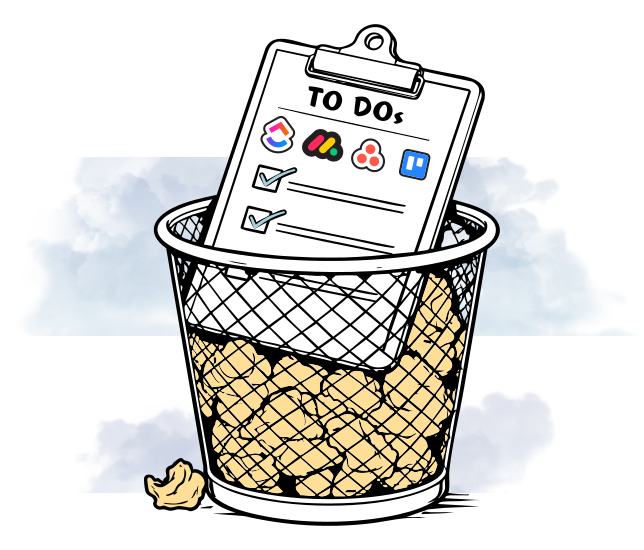
Task tools are built for projects—not real-time clinical operations. Here’s why they break in dental practices and what actually works instead.
dental analytics practice intelligence
March 20, 2026
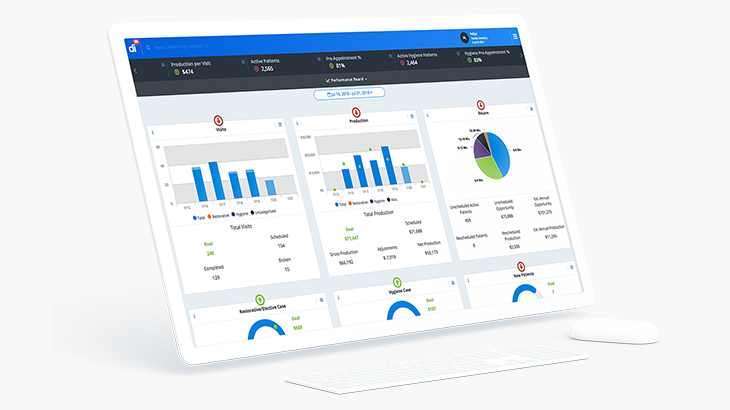
Your reports show exactly what’s wrong—but nothing changes. Here’s why dental analytics tools fail to improve performance.
Show More