Why Flexible Dental Staffing Fails Without Operational Standards (And How to Fix It)
Flexible staffing solves access to talent. It does not solve execution inside the practice.
Modern workforce platforms have made it easier for dental practices to find verified professionals across temp, part-time, and full-time roles. That is real progress.
But many practices discover a second problem the moment staffing changes: The office can get coverage, yet performance still slips.
Not because the clinician or team member is bad.
Not because the practice lacks effort.
But because the office itself is not operationally ready for variable staffing.
That is where breakdown begins.
What actually goes wrong when staffing changes
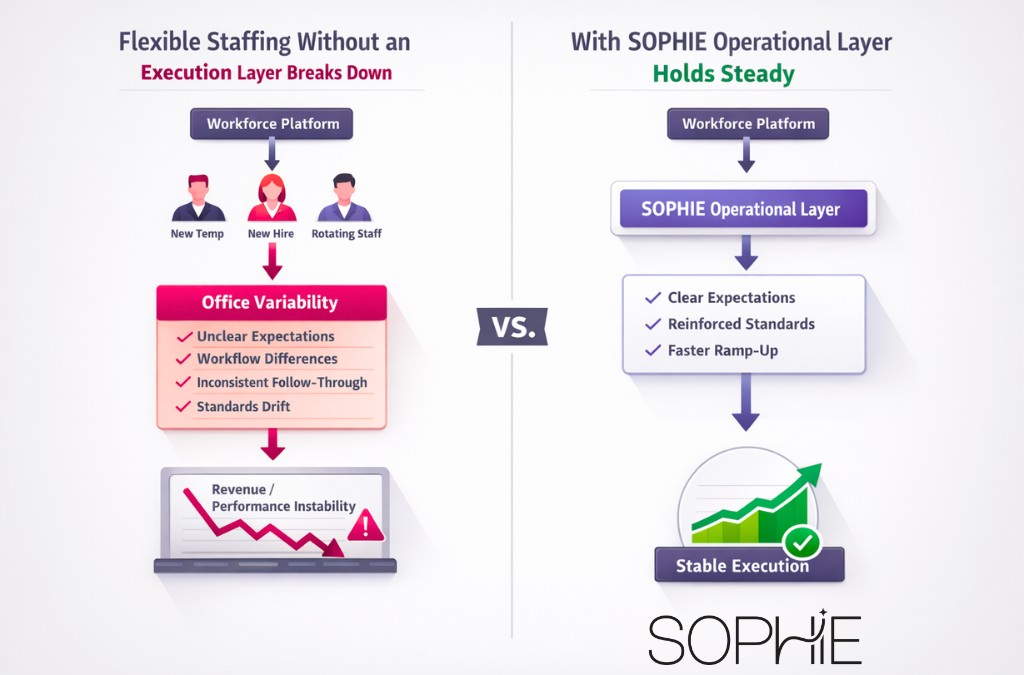
When a new, temp, or rotating team member enters the practice, the issue is rarely just “onboarding.” It is that the office often has no reliable way to translate its standards into daily execution fast enough.
What that looks like in practice:
- onboarding is inconsistent
- role expectations are implied, not explicit
- workflows vary by person
- standards drift over time
- team members interpret “how we do it here” differently
Those are the exact issues practices have identified working with companies like Cloud Dentistry: dental teams adopting flexible staffing models often struggle with inconsistent onboarding, unclear role expectations, workflow variability, and operational standards drifting over time.
That is not a staffing marketplace problem. It is an operational layer problem.
The hidden mistake practices make after a staffing change
Most practices assume the problem is one of these:
- “We just need a better temp”
- “We need to train them faster”
- “They need more time”
- “They don’t know our systems yet”
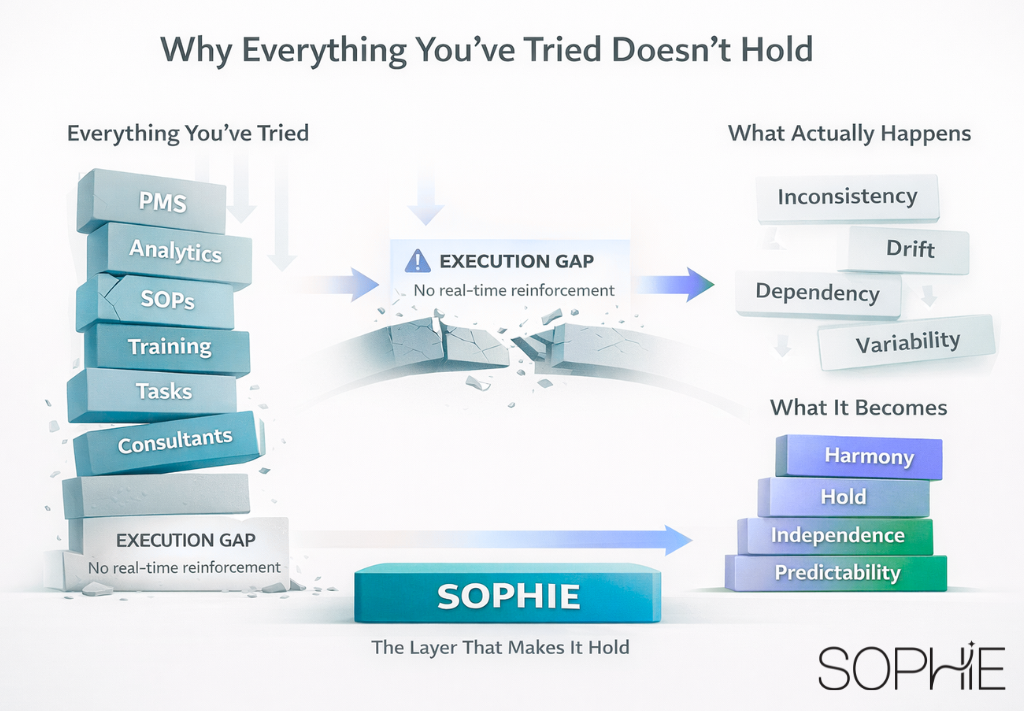
Sometimes that is true. But often, the deeper issue is this: The practice has no embedded mechanism for making standards visible, actionable, and reinforced when a new person steps in. So the office depends on: verbal handoff memory personality whoever happens to be supervising that day That works until it doesn’t.
Sometimes that is true. But often, the deeper issue is this:
The practice has no embedded mechanism for making standards visible, actionable, and reinforced when a new person steps in.
So the office depends on:
- verbal handoff
- memory
- personality
- whoever happens to be supervising that day
That works until it doesn’t.
Why this gets expensive fast
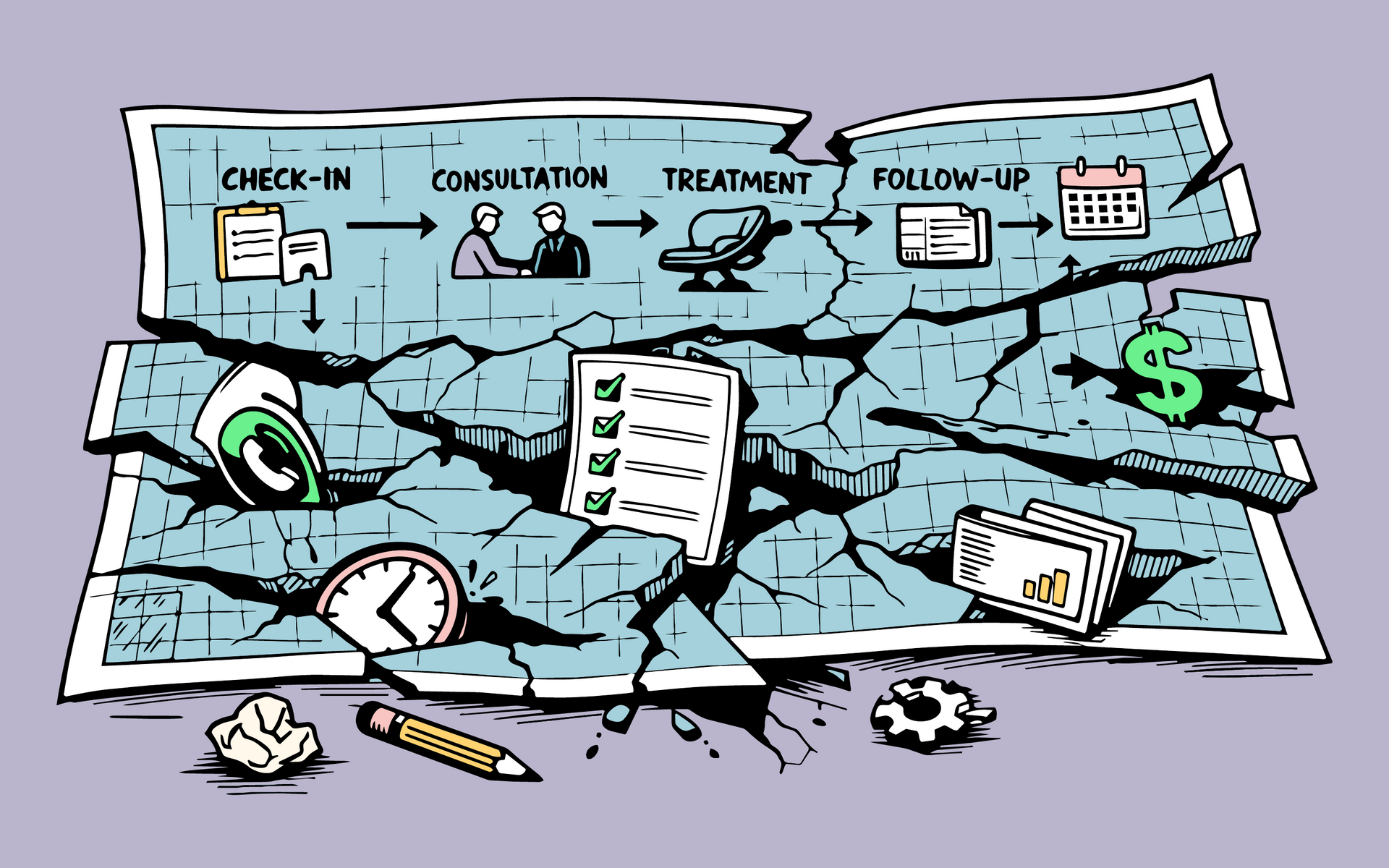
When staffing changes hit a practice without enforced operational standards, the fallout does not usually show up as one dramatic failure.
It shows up as drag:
- treatment follow-up slows down
- unscheduled treatment sits longer
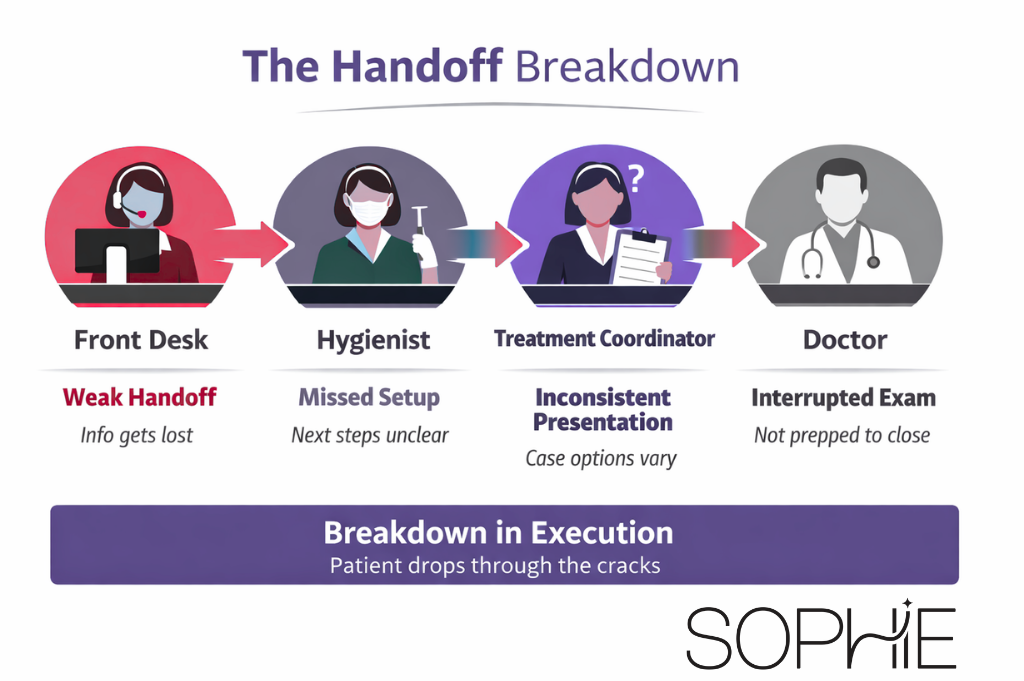
- front desk handoffs get messy
- insurance follow-up becomes uneven
- daily priorities collapse by the afternoon
- the owner or manager starts compensating manually
That is how revenue leakage happens.
Not because no one is working. Because work is no longer happening to standard.
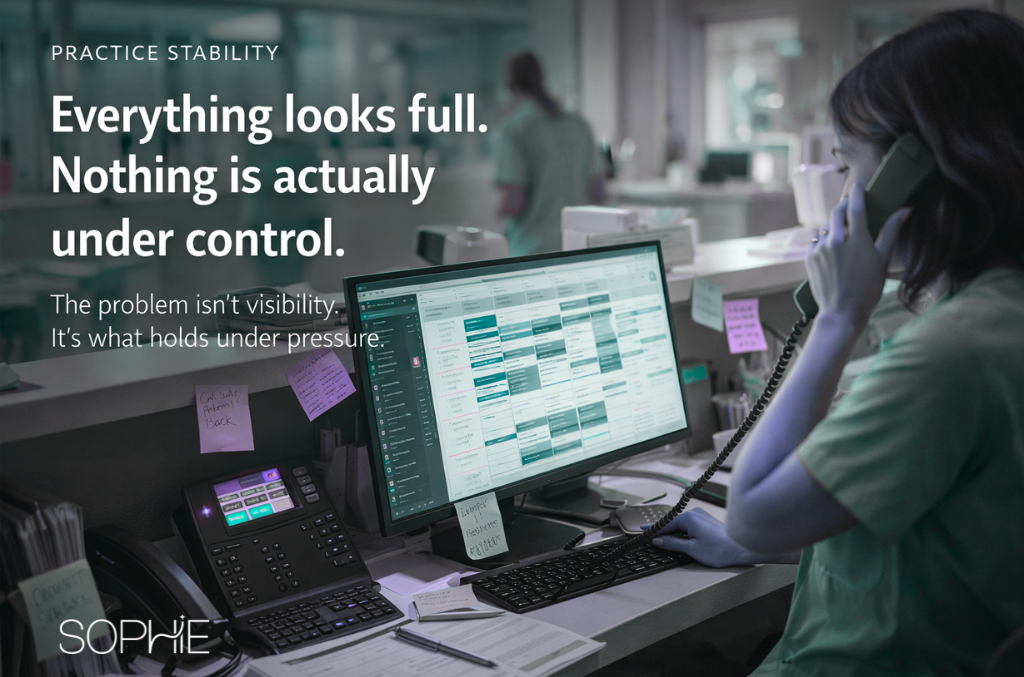
This is the real issue: the office is person-dependent
Every conversation we have always points to a strong insight: practices need operational stability even when staffing shifts. It frames SOPHIE’s role as embedding standards into daily work so execution remains consistent regardless of staffing changes.
That means the real question is not: “Can we find staff?”
It is: “Can our practice maintain standard when the people change?”
If the answer is no, then your performance was never system-stable. It was person-dependent.
That is why:
- one temp fits in and another struggles
- one coordinator ramps quickly and another misses steps
- one office can absorb staffing shifts and another loses production
The difference is not just people quality. It is system readiness.
The staffing platform and the operational layer do different jobs
This distinction matters. A workforce platform helps practices access labor. That is valuable. But access to labor is not the same thing as stability in execution.
A staffing platform answers:
- Who is available?
- Are they verified?
- Can we fill the role?
An operational layer answers:
- What does this role need to do here?
- What standards must hold from day one?
- What priorities need to be visible now?
- How does the office prevent drift as people rotate in and out?
Those are different categories. And they should stay different.

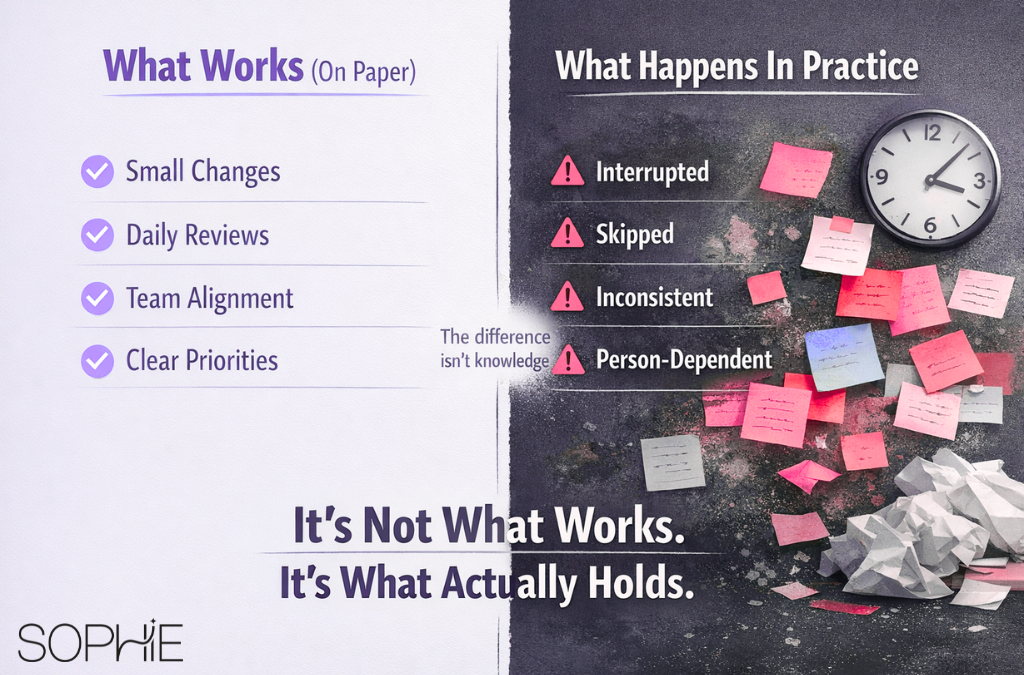
Why training alone does not solve this
One of the strongest insights from our industry feedback is that training does not equal execution.
That matters even more in variable staffing environments.
You can train someone on:
- systems
- scripts
- protocols
- checklists
But the real breakdown happens after training, when the person is in the live environment and has to execute under speed, pressure, interruption, and office-specific nuance.
That is where standards are either reinforced—or lost.
This is why “more training” is often a weak answer to staffing variability.
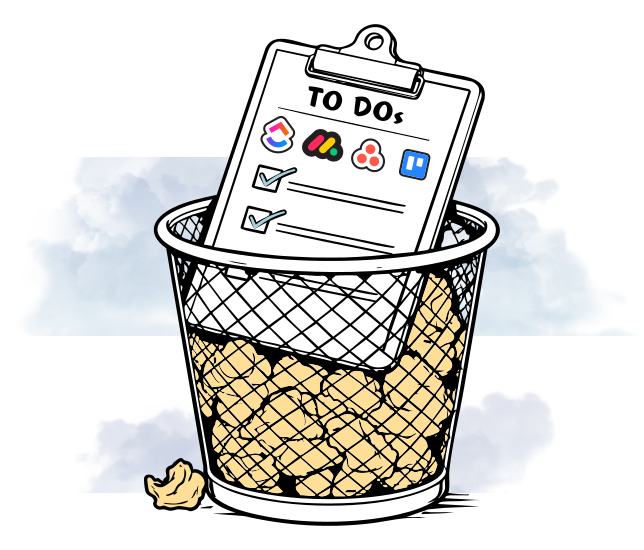
Training explains. It does not enforce.
What practices actually need when staffing is flexible
Practices using temp, part-time, rotating, or newly hired staff need more than access to people.
They need:
- clear role expectations before day one
- practice-specific protocols that are visible
- operational priorities that are surfaced in context
- reinforcement of standards during real work
- reduced dependence on the owner or office manager to keep everything aligned
That is the operational readiness layer most practices do not have.
And that is the layer SOPHIE addresses.
New or temp team members should be able to understand standards before their first day, role expectations and protocols should be clearly defined and reinforced, and operational standards should stay consistent even when staffing changes.
What SOPHIE changes in a variable-staffing environment
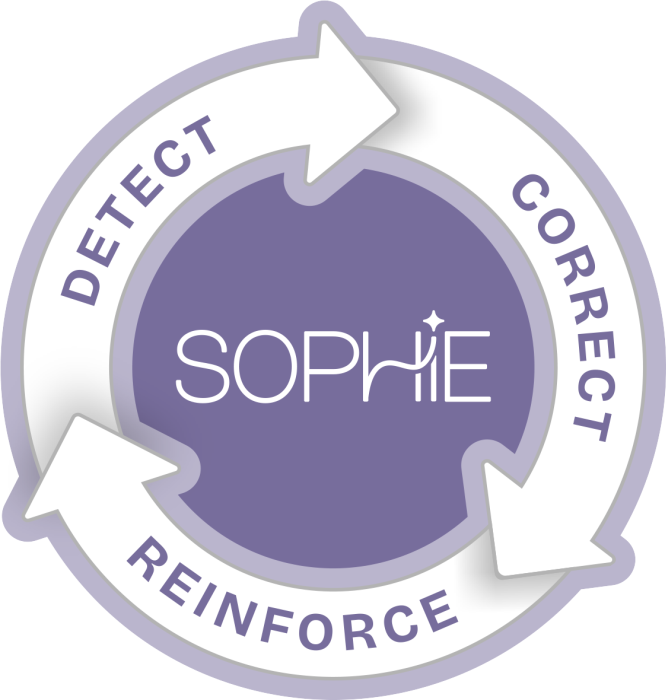
1. Detect
SOPHIE helps surface where execution is starting to break:
- unclear ownership
- missed follow-through
- inconsistent handoffs
- role confusion
- drifting priorities
2. Correct
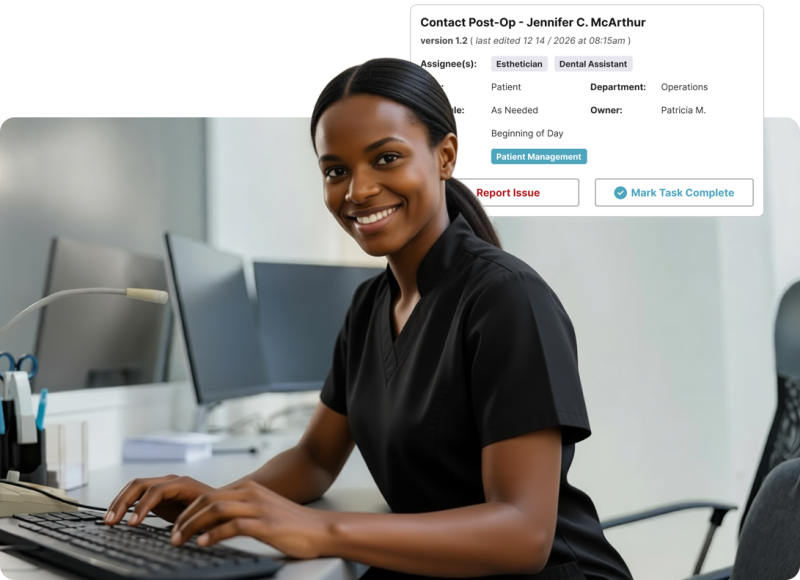
SOPHIE helps make the right expectations visible:
- what this office expects
- how this role should operate here
- what needs attention now
- what standard must hold
3. Reinforce
SOPHIE helps ensure standards stay embedded in live execution, not just in documents or training sessions. That matters most when:
- a temp is filling in
- a new hire is ramping
- a manager is absent
- the team is stretched
- the office is under pressure
Why this is valuable to practices, professionals, and staffing networks
Our industry feedback surfaced a broader opportunity that is worth making more explicit.
For practices
Flexible staffing becomes more usable because the office can absorb variation without losing control.
For dental professionals
They get clearer visibility into how an office operates, faster ramp-up, and a better chance to demonstrate reliability inside a structured environment.
For workforce platforms and staffing ecosystems
There is a longer-term intelligence opportunity: execution signals could eventually support stronger talent-to-practice matching, better workforce readiness signals, and differentiated marketplace intelligence.
That is a much bigger idea than “software for dental offices.”
It is infrastructure for workforce reliability.
This is why some practices “fall apart” after staff changes
They do not fall apart because staffing platforms failed. They fall apart because the office never had an embedded execution layer.
So when:
- authority diffuses
- handoffs increase
- new people enter
- routines get interrupted
.....the standards no longer hold.
And when standards do not hold, performance does not hold.
The real fix is not better staffing alone.
It is operational stability.
A practice that relies on flexible staffing needs two things:
- Access to capable people
- A system that helps those people execute to the office standard quickly and consistently
Without the second, the first creates friction. That is the opportunity.
And that is exactly why SOPHIE belongs next to platforms like Cloud Dentistry—not as a competitor, but as the operational layer that makes flexible workforce models work better inside the practice.
If your practice depends on familiar people to stay stable, your system is incomplete
That is the hard truth.
If performance drops when:
- one person leaves
- a temp steps in a role shifts
- leadership attention moves elsewhere
....then your practice is not operationally stable yet.
You do not just need staffing. You need standards that hold.
See how SOPHIE stabilizes your practice
SOPHIE is the Practice Stability System that helps dental practices maintain consistent execution regardless of staffing changes. If your practice can fill roles but still struggles to hold standards, this is the missing layer.