The Hidden Risk of Person-Dependent Dental Systems
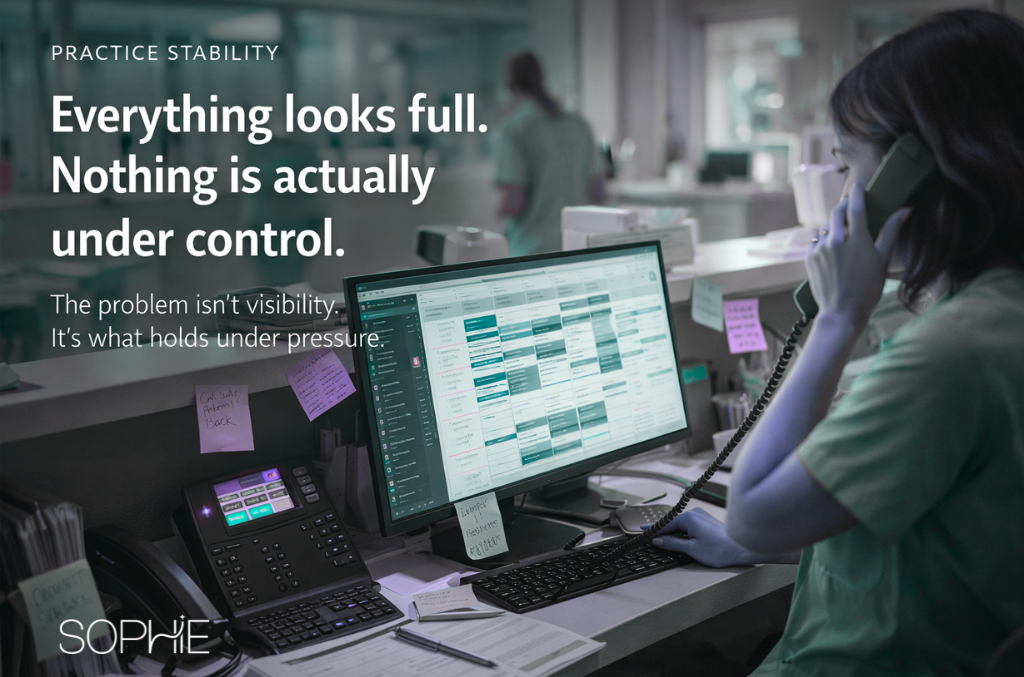
Your Practice Might Look Stable...
But That Doesn’t Mean It Is

Your Practice Might Be Performing Well...
For the Wrong Reason
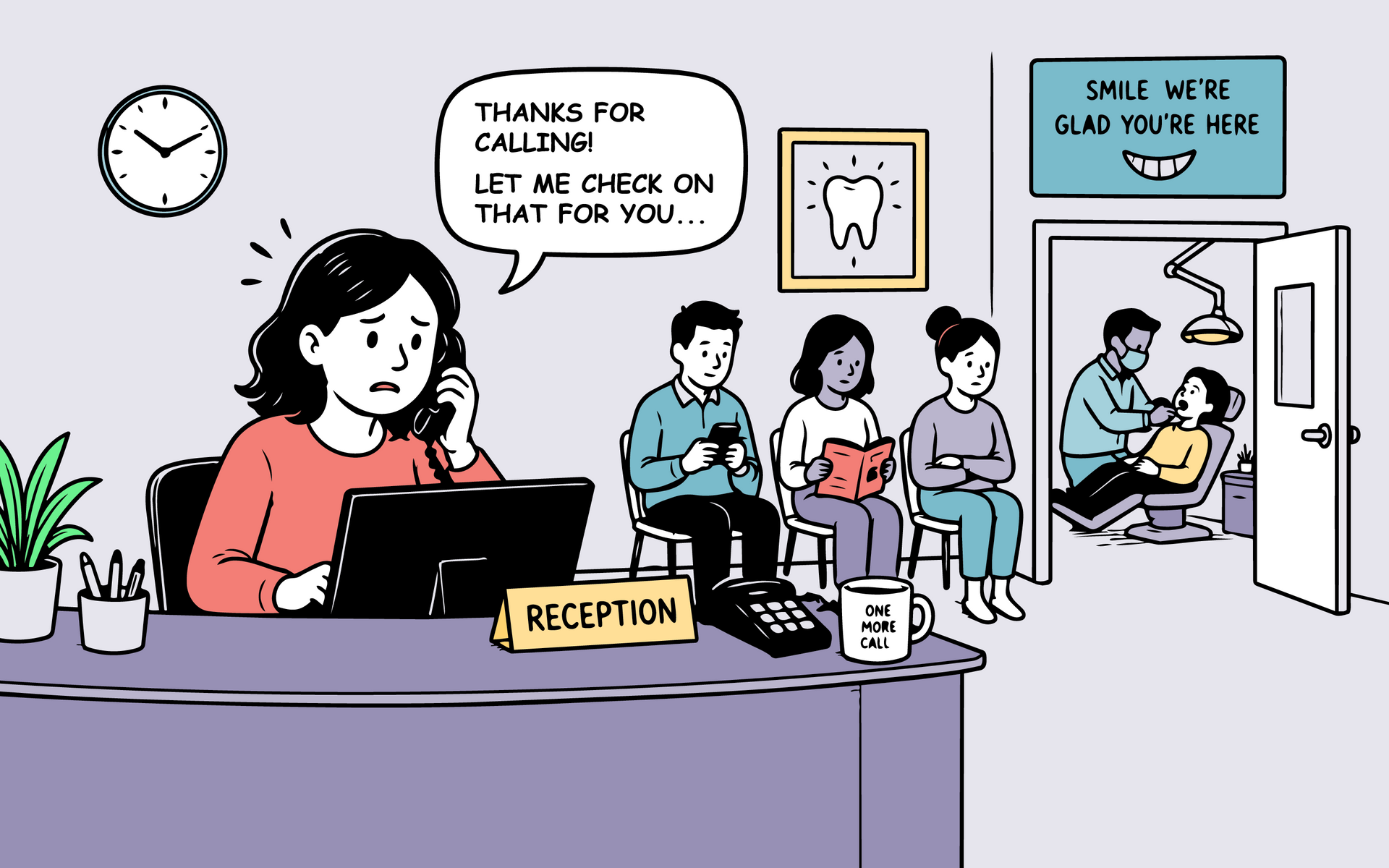
Most practices don’t think they have an execution problem.
On paper, things look fine:
- Production is steady
- The schedule is mostly full
- Insurance is getting worked
- The team “knows what to do”
Then something small changes:
- a coordinator leaves
- a temp fills in
- a manager steps back
- you’re less involved for a week
And suddenly:
- treatment isn’t getting scheduled
- insurance follow-up slows down
- priorities start slipping
- performance becomes inconsistent
Nothing new was introduced. So why did everything change?
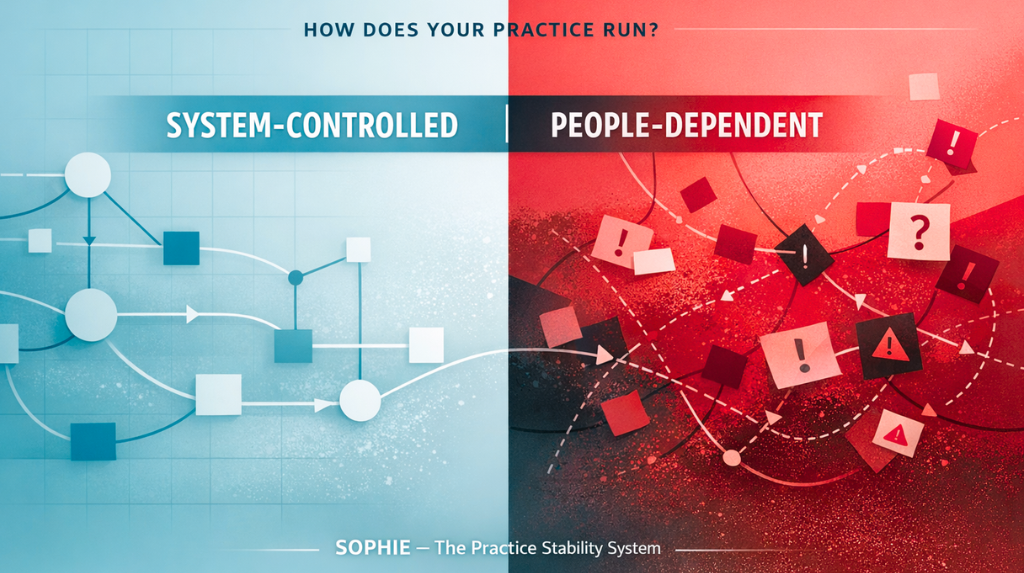
Because Your Stability Was in People...Not the System
This is the hidden risk:
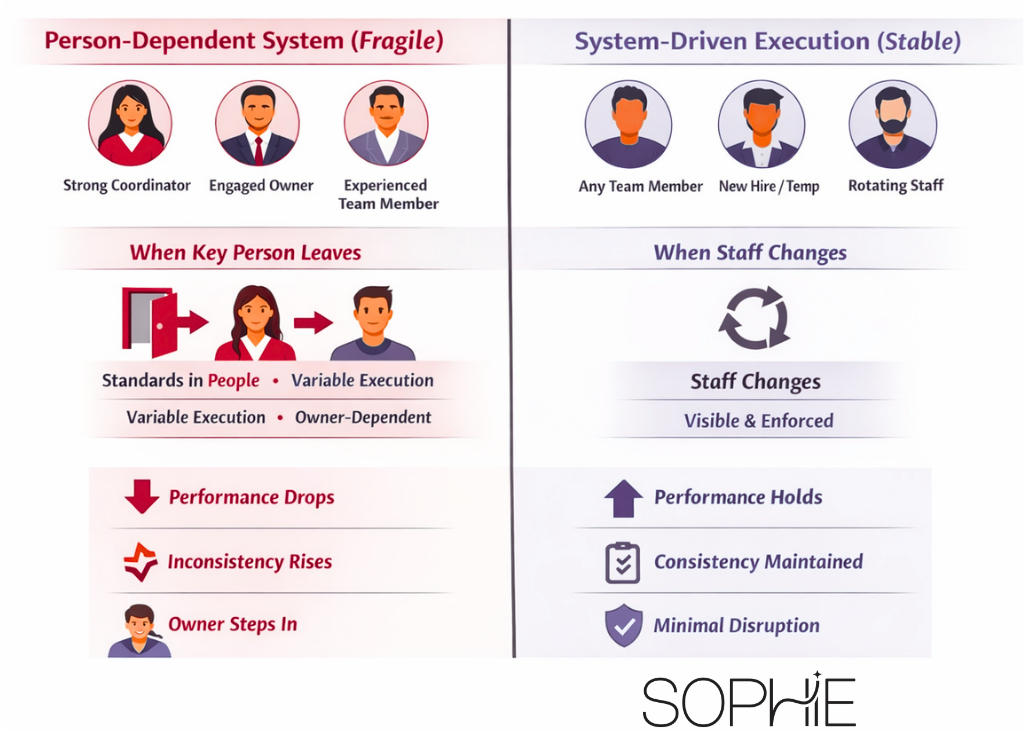
What feels like a stable practice is often a fragile system being held together by specific individuals.
That could be:
- a strong office manager
- a high-performing coordinator
- a detail-oriented insurance lead
- or you
As long as they’re present:
- standards hold
- work gets done
- performance looks consistent
But when they’re not: the system doesn’t carry the load—they were.
Most practices believe they’ve built strong systems because:
processes are documented
roles are defined
expectations are clear
Which mirrors exactly how the industry teaches operational maturity.
But if performance drops the moment one person steps away—
what you have isn’t a system.
It’s a dependency.
The Pattern Most Practices Miss
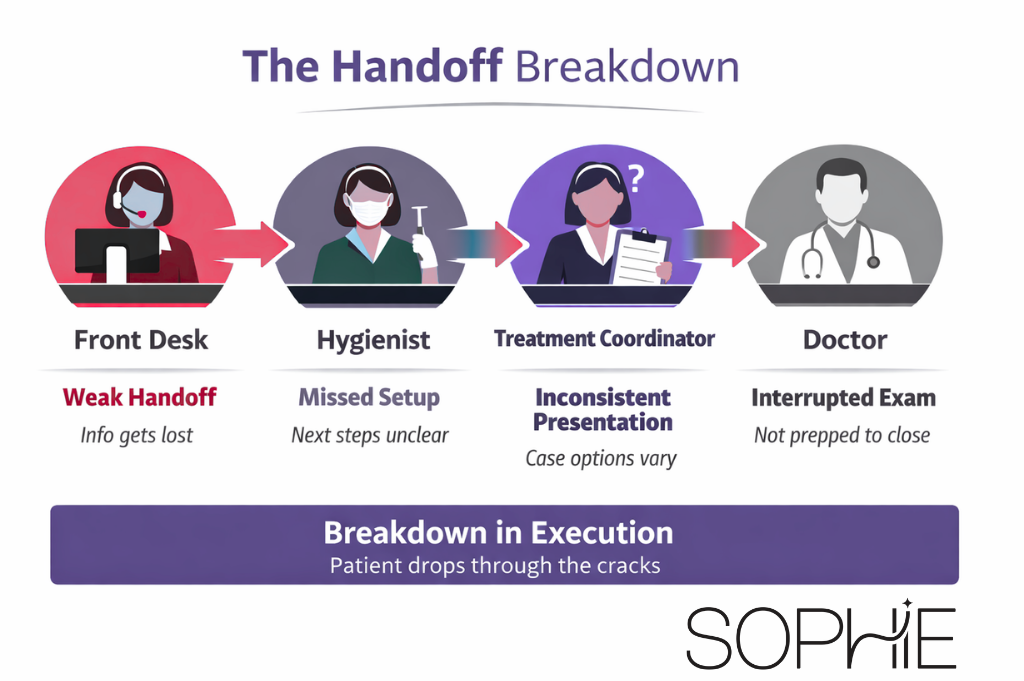
Across practices, this shows up in subtle but consistent ways:
🚩 Case acceptance varies significantly by coordinator
🚩 Insurance follow-up depends on one person “staying on top of it”
🚩 New hires take too long to reach baseline performance
🚩 Daily priorities are clear in the morning—but drift by afternoon
Things run well when you’re present—but slip when you’re not Individually, these feel like normal operational noise.
Together, they point to something specific:
Execution is not system-driven. It’s person-dependent.

Why This Becomes a Bigger Problem With Staffing Changes
This is where our insights in, "Why Flexible Dental Staffing Fails Without Operational Standards (And How to Fix It)" becomes critical.
Modern staffing platforms solve one problem well:
👉 Access to talent
But they expose another:
👉 Most practices are not operationally ready for variability
When a new, temp, or rotating team member enters the practice:
- expectations are implied, not explicit
- workflows vary by person
- standards are interpreted differently
- onboarding is inconsistent
- follow-through depends on who’s supervising
The result isn’t failure. It’s drift. And drift compounds quickly.
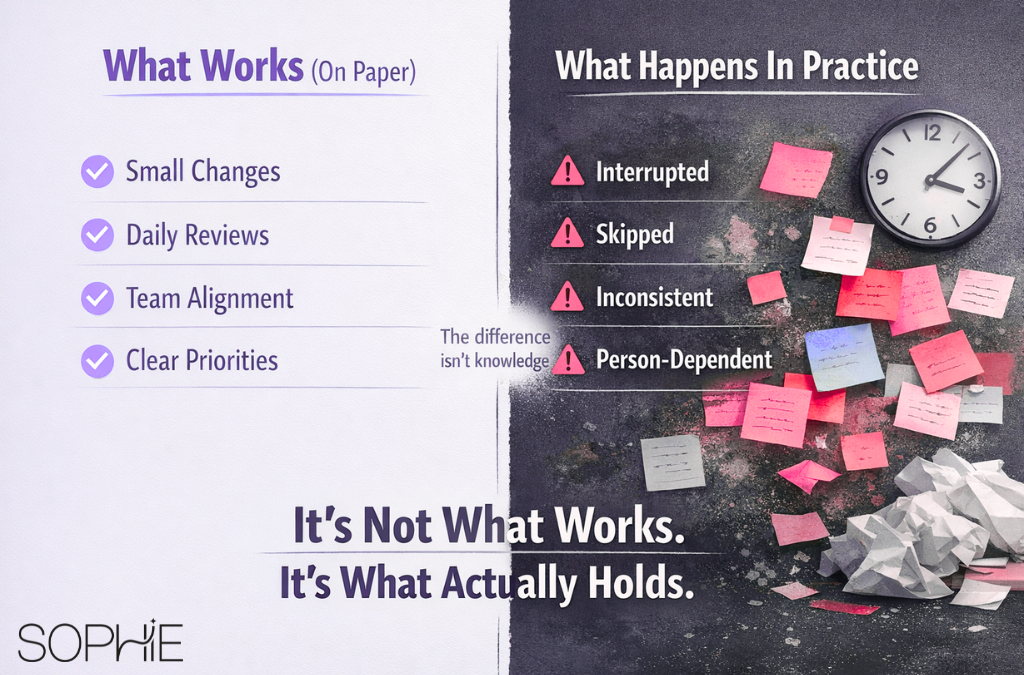
This Is Why Training and SOPs Don’t Solve It
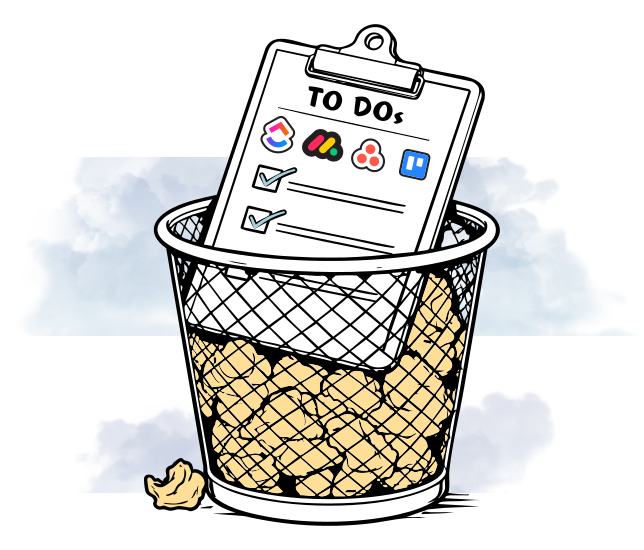
Most practices try to fix this with:
- more training
- better SOPs
- additional meetings
- clearer instructions
But those approaches assume: If people understand what to do, execution will follow.
In reality:
- training explains
- SOPs document
But neither ensures:
- consistency under pressure
- alignment across roles
- follow-through throughout the day
That's why:
...training doesn’t hold when conditions change.
This Is Not a Reporting Problem Either
You may already have:
- strong reporting
- dashboards
- KPIs
- analytics tools
But those systems do one thing:
👉 practice analytics and intelligence tell you what happened
They don’t:
- prevent breakdown
- correct execution in real time
- ensure standards are followed
So you end up with:
- visibility without control
- insight without correction
What’s Actually Breaking: Execution at the Point of Work
Person-dependency exists because:
Your standards are not embedded into how work actually happens.
They exist in:
- training
- documentation
- expectations
But not in:
- real-time decision-making
- daily prioritization
- enforced follow-through
So when variability increases:
- new staff
- role changes
- distributed work
- reduced oversight
Execution becomes inconsistent.
This Is Operational Drift—And It’s Usually Invisible at First
This pattern has a name: Operational Drift.
Where:
- work gets done differently across people
- priorities shift throughout the day
- follow-through becomes inconsistent
- performance depends on who is working
This is how:
- 30–50% of diagnosed treatment goes unscheduled
- 10–20% of production sits unused
- insurance aging creeps beyond 30–45 days
Not because people don’t know what to do.
Because the system doesn’t ensure they do it consistently.
What a Non-Person-Dependent Practice Actually Looks Like
In a system-driven practice:
- expectations are clear before work begins
- priorities stay visible throughout the day
- follow-through is consistent across roles
- new hires and temps align quickly
- performance holds—even when staffing changes
The key difference:
Execution is reinforced by the system—not carried by individuals.
The Missing Layer: Execution That Holds Under Variability
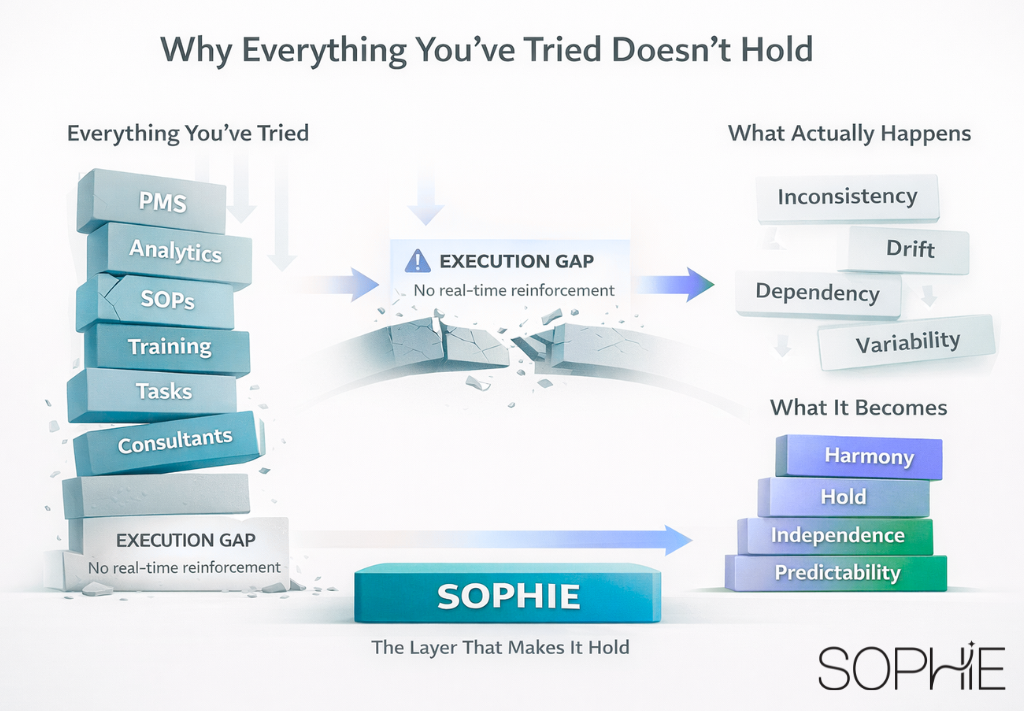
Most practices already have:
But they lack a system that:
- detects execution gaps early
- corrects priorities in real time
- reinforces standards across roles
This is the gap between:
- knowing what should happen, and
- ensuring it actually does
How SOPHIE Removes Person-Dependency
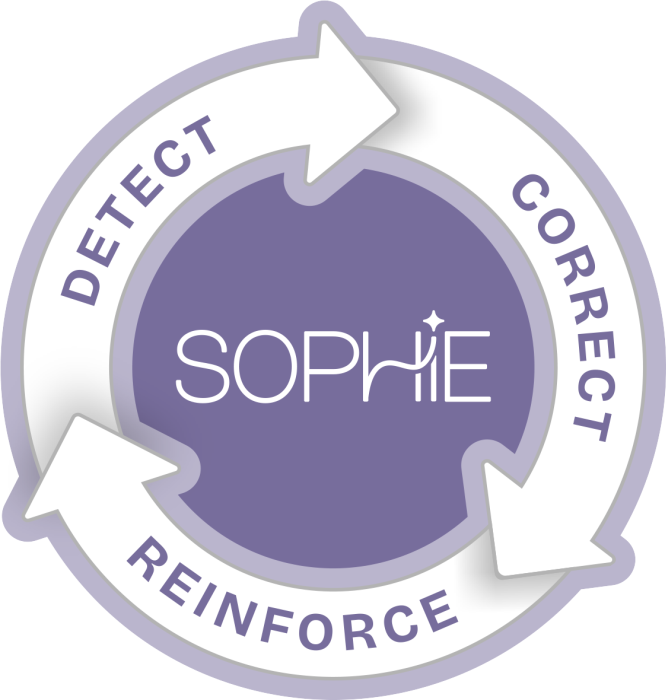
SOPHIE is the Practice Stability System designed to make execution hold—regardless of who is working.
1. Detect
Identifies where execution is starting to break:
- missed follow-ups
- unclear ownership
- dropped priorities
2. Correct
Surfaces the right actions:
- to the right role
- at the right time
So work doesn’t rely on memory or supervision.
3. Reinforce
Ensures standards are consistently executed in real work—not just defined.
So:
- treatment follow-up happens
- insurance stays on track
- execution remains stable
If Your Practice Needs Specific People to Stay Stable...
It’s Not Stable Yet
That’s the hard truth.
If performance drops when:
- one person leaves
- someone calls out
- a new hire steps in
- you step away
Then your system isn’t holding. It's being held. And that's a huge risk.
See How SOPHIE Stabilizes Your Practice
SOPHIE ensures your practice runs to standard—across every role, regardless of staffing changes.
If your performance depends on the “right people” being present, this is the system you’re missing.